AI Answering Service For Barber Shops

Catch the calls that come in while every chair is full

420 calls per month modeled
+53 more conversions per month
$28,350 annual upside modeled

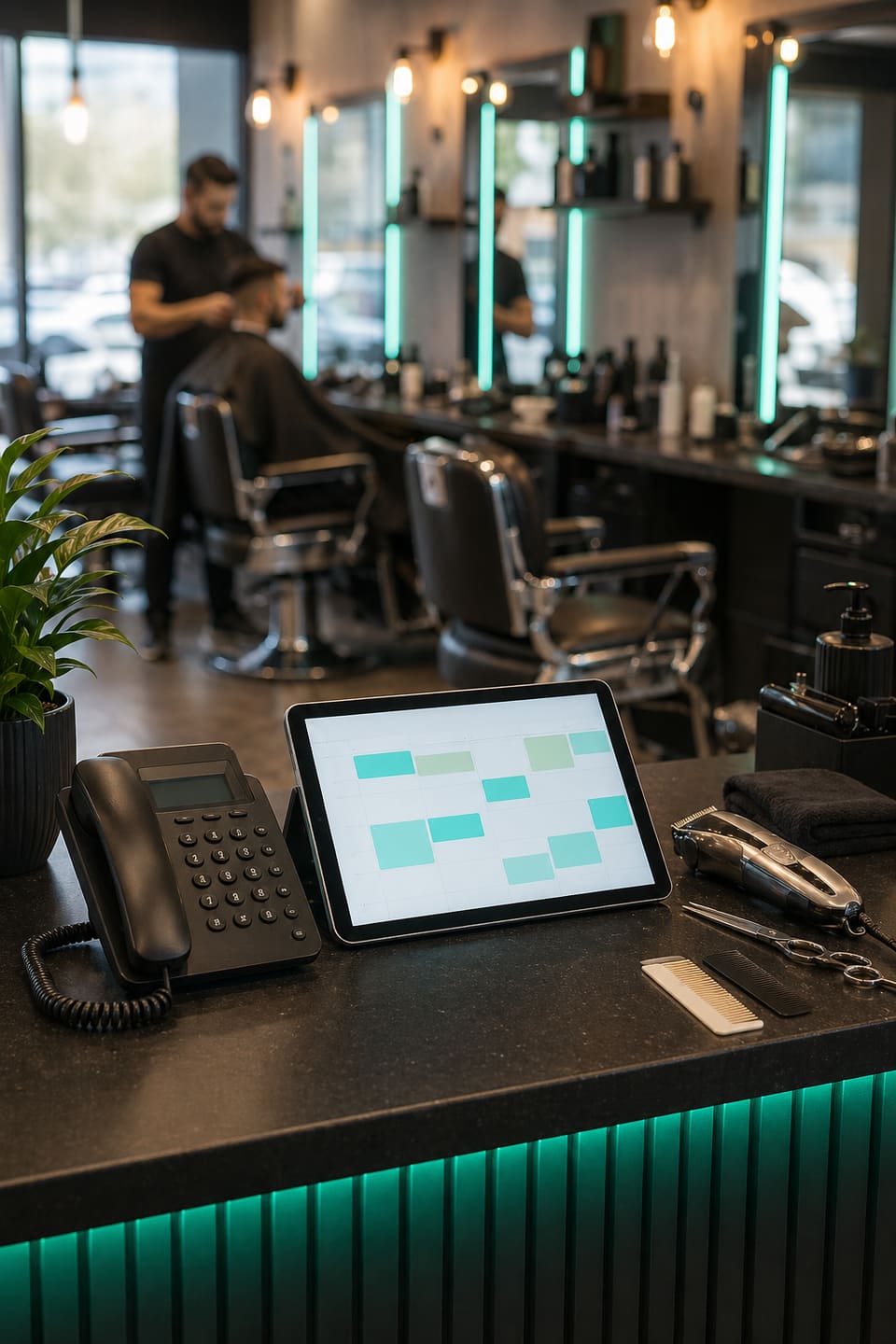
iando.ai answers barber-shop calls when the crew is cutting, fading, shaping, and checking clients out. It handles same-day slot requests, walk-in and wait-time questions, pricing questions, and repeat rebooking without breaking flow on the floor.

Built for shops where a missed call often means a same-day customer walks into the next place instead.

Built around the jobs your phone has to do: answer, schedule, route, handle approved Q&A, and recover missed-call revenue.

  • Same-day haircut and beard-trim requests covered
  • Walk-in, wait-time, and barber-availability questions handled
  • Recurring rebooking support for loyal clients
  • After-hours demand captured before it drifts to another shop
Revenue Lift 24/7
Monthly revenue upside

Edit call volume, buyer intent, 25% lift, and ticket AOV.

$2,363/mo
+53 chair bookings/mo
90-day guarantee: book 20% more business or your money back.
Run your numbers
420 calls/mo, 50% intent, 25% lift 24/7 coverage captures the calls that happen after hours, during peaks, and while staff are busy.
$45 ticket AOV Average revenue per converted booking, job, consult, or appointment.
$28,350/yr Annualized upside from recovered appointment conversions.

Planning model only. Update with the shop's actual call volume, walk-in mix, ticket size, rebooking value, and specific-barber demand.

Industry ROI

The business case for barber shops

Start with the calls the business already earned, then estimate which ones can become appointments, jobs, consults, or useful follow-ups.

Same-day chair revenue
A missed barbershop call is often a customer asking for the next available chair.

For barber shops, ROI is tied to same-day cuts, beard trims, walk-ins, specific-barber requests, and repeat rebooking that should not depend on a barber stopping mid-service.

Missed calls x bookable intent x average appointment value x recovery rate
  • Missed same-day calls during full-chair hours
  • Average ticket by cut, beard trim, and combo service
  • Repeat-client rebooking value
  • Recovered appointments from immediate answer and callback
What to recover first
Prioritize the calls with direct revenue or schedule impact.
  • Protect same-day demand that is ready to spend now.
  • Reduce interruptions without turning the shop into a cold experience.
  • Make it easier for repeat clients to book their next visit.
  • Capture after-hours interest for the next business day.
Where Revenue Leaks

What missed calls actually look like for barber shops

These are the moments where demand slips away because the team is already busy serving customers, patients, or active jobs.

The phone hits when the shop is already in motion

Barbers cannot stop mid-cut to answer every question about walk-ins, wait times, prices, and which barber is available without slowing the whole floor down.

Same-day demand does not wait around

A caller looking for a fade before work, a beard trim on lunch, or a Saturday slot is usually ready to decide immediately. If nobody answers, they try another shop.

Repeat customers still need easy rebooking

Recurring grooming businesses win on consistency and convenience. If rebooking takes effort, loyalty starts to erode.

Proof And Context

What public data says about this buying behavior

Every stat references a public source below, so the revenue argument stays grounded instead of padded with invented benchmarks.

64%
of beauty bookings were scheduled outside a typical 9-5 window 1

If nobody answers after hours, the calendar loses real demand.

57%
of beauty clients who tried another provider said scheduling friction pushed them there 1

Scheduling friction is not a small issue. It changes who gets the booking.

85%
of loyal beauty clients cited easy booking as a key reason they stay 1

Convenience compounds into retention for recurring-service businesses.

Why This Industry Is Different

Barber Shops need phone coverage built around their actual calls

The phone experience should match how the business earns trust, books revenue, and routes exceptions.

Convenience is part of the brand

Clients might stay for the cut, but easy booking and clear communication are a big part of why they keep coming back.

Walk-in shops still live on the phone

Even shops that take walk-ins get constant calls asking about wait times, available barbers, prices, and same-day slots.

A barbershop floor should not double as a call center

The phone should support the shop, not force every barber to break rhythm to answer repetitive questions.

How It Works

How iando.ai handles these calls

The best first layer is fast answer, clear qualification, then booking or escalation based on your operating rules.

01

Find out what the caller wants right away

Haircut, fade, beard trim, kid's cut, line-up, or a specific barber request. The first job is to get the call into the right lane fast.

02

Handle recurring shop-floor questions

It covers same-day availability, barber preference, wait-time questions, hours, pricing basics, and reschedules that usually interrupt the team.

03

Move the client toward a booking or callback

If the shop can take the booking, great. If not, the AI captures the exact context so the follow-up is fast and useful.

Calls It Handles

Calls iando.ai can answer, route, or recover

These conversations are the highest-leverage starting point because they connect directly to revenue, schedule protection, or staff capacity.

Same-day haircut requests

Callers asking for the next available slot before work, on lunch, or later the same day.

Outcome: Capture high-intent demand while the floor stays focused on current clients.

Walk-in and wait-time questions

People checking whether the shop is busy, whether they should come now, or who is open.

Outcome: Set clear expectations and keep the shop from losing easy traffic.

Specific-barber requests

Clients asking whether a preferred barber is in, how late they are booked, or when they can get back on that chair.

Outcome: Make rebooking easier for repeat clients who drive recurring revenue.

Price and service questions

Beard trim, fade, line-up, kids cut, combo services, and shop-hour questions.

Outcome: Resolve routine questions without making barbers stop what they are doing.

Outcomes

What operators actually care about

Win more same-day bookings

The missed calls most likely to become same-day revenue are the ones that need speed, not a voicemail box.

Keep the floor focused on cuts, not call interruptions

Routine availability and pricing questions stop pulling barbers in and out of service.

Strengthen repeat booking behavior

Loyal clients want easy rebooking, not friction every time they need the next appointment.

Recovered Value

Where the payoff shows up operationally

  • Protect same-day demand that is ready to spend now.
  • Reduce interruptions without turning the shop into a cold experience.
  • Make it easier for repeat clients to book their next visit.
  • Capture after-hours interest for the next business day.
Before And After

How the operation changes when the phone stops leaking revenue

Before

Calls interrupt the floor or get ignored when the shop is busy.

After

The phone gets handled without breaking service rhythm.

Before

Same-day callers drift to the next shop that picks up.

After

High-intent callers get an immediate answer and booking path.

Before

Repeat clients have to chase the shop to rebook.

After

Rebooking becomes simpler and more consistent.

Before

Hours, prices, and barber-availability questions repeat all day.

After

Routine calls are handled cleanly so staff can stay on the floor.

Operator Questions

Questions before putting AI on the phone

Our shop is personal. We do not want a stiff phone experience

That is exactly why the copy and call path have to sound grounded and direct. The system should feel like a capable shop assistant, not a novelty demo.

What if people ask for a specific barber?

That should be a standard branch in the call flow. Collect the preference and move the caller toward the right schedule or callback path.

We mostly rely on walk-ins

That does not make missed calls harmless. Walk-in heavy shops still get constant traffic around wait times, shop hours, and same-day availability.

Recover Missed Revenue

Turn more calls into booked revenue for barber shops.

iando.ai is built for businesses that depend on the phone and lose money when callers do not get a fast, useful answer. Book a demo and map the call plan to your call volume, hours, and booking logic.

FAQ

Frequently asked questions

Can this work for a barbershop that mixes appointments and walk-ins?

Yes. That is a strong fit because the phone traffic is usually a mix of same-day availability, wait-time, pricing, and specific-barber requests.

Will it help if our problem is mostly missed calls during busy periods?

Yes. The highest-leverage use case is covering calls when the team is physically busy and nobody can answer without disrupting service.

Can it handle rebooking and reschedules for repeat clients?

That is one of the cleaner call paths for a recurring-service business and a strong reason to use AI phone coverage in the first place.

What if the shop wants every call to feel personal?

Then the script has to be written like your brand and stay focused on useful outcomes, not hype. The system should feel sharp, not overproduced.

Why use a dedicated barber page instead of generic salon copy?

Because barber calls are not the same as medical or office calls. Same-day demand, walk-in questions, and specific-barber loyalty change both the message and the call path.

Supporting Guides

Deeper articles for barber shops

Each guide supports the ICP landing page with practical, search-focused depth around staffing, routing, conversion, and operational efficiency.

How to Reduce Nail Salon Missed Calls Without Slowing Down Service

Nail salons miss calls because the team is doing the work that generates revenue. The fix is not more interruptions. It is a better call path for booking, rescheduling, pricing, and walk-in questions.

Read article

Barbershop Missed Call Revenue: The Same-Day Booking Problem

For barbershops, missed calls are often same-day intent. A caller asking about wait times, a specific barber, or the next available slot may book wherever someone answers first.

Read article

A pet grooming missed-call model for salons, mobile groomers, and repeat bookings

Pet groomers lose revenue when appointment-ready owners reach voicemail while staff are bathing, drying, clipping, checking pets in, driving mobile routes, or handling pickups. The fix is a call path that captures pet details before the callback.

Read article
Sources

Research behind this page

These references support the phone-demand, local-search, and response-speed claims above.

1. New Square Survey Finds 1 in 3 Consumers are in an Open Relationship with Their Hair Stylist

Square • 2024-06-26 • Accessed 2026-03-31

Square survey of 2,009 US adults and 1,002 Canadian adults, plus transaction analysis across hundreds of thousands of beauty sellers.

Open source
2. Consumer Services Call Conversion Benchmarks Report 2025

Invoca • 2025 • Accessed 2026-03-31

Invoca benchmark report based on AI analysis of more than 60 million phone calls in consumer services.

Open source
3. 5 Strategies to Fix Your Call Answer Rate and Stop Losing Revenue

Invoca • 2025-08-18 • Accessed 2026-03-31

Invoca analysis showing live answer-rate benchmarks across industries and calling behavior for high-stakes purchases.

Open source
4. Consumer Search Behavior: Where Are Your Customers?

BrightLocal • 2025 • Accessed 2026-03-31

Survey of 1,000 US consumers about general and local search behavior, maps usage, and business information expectations.

Open source