
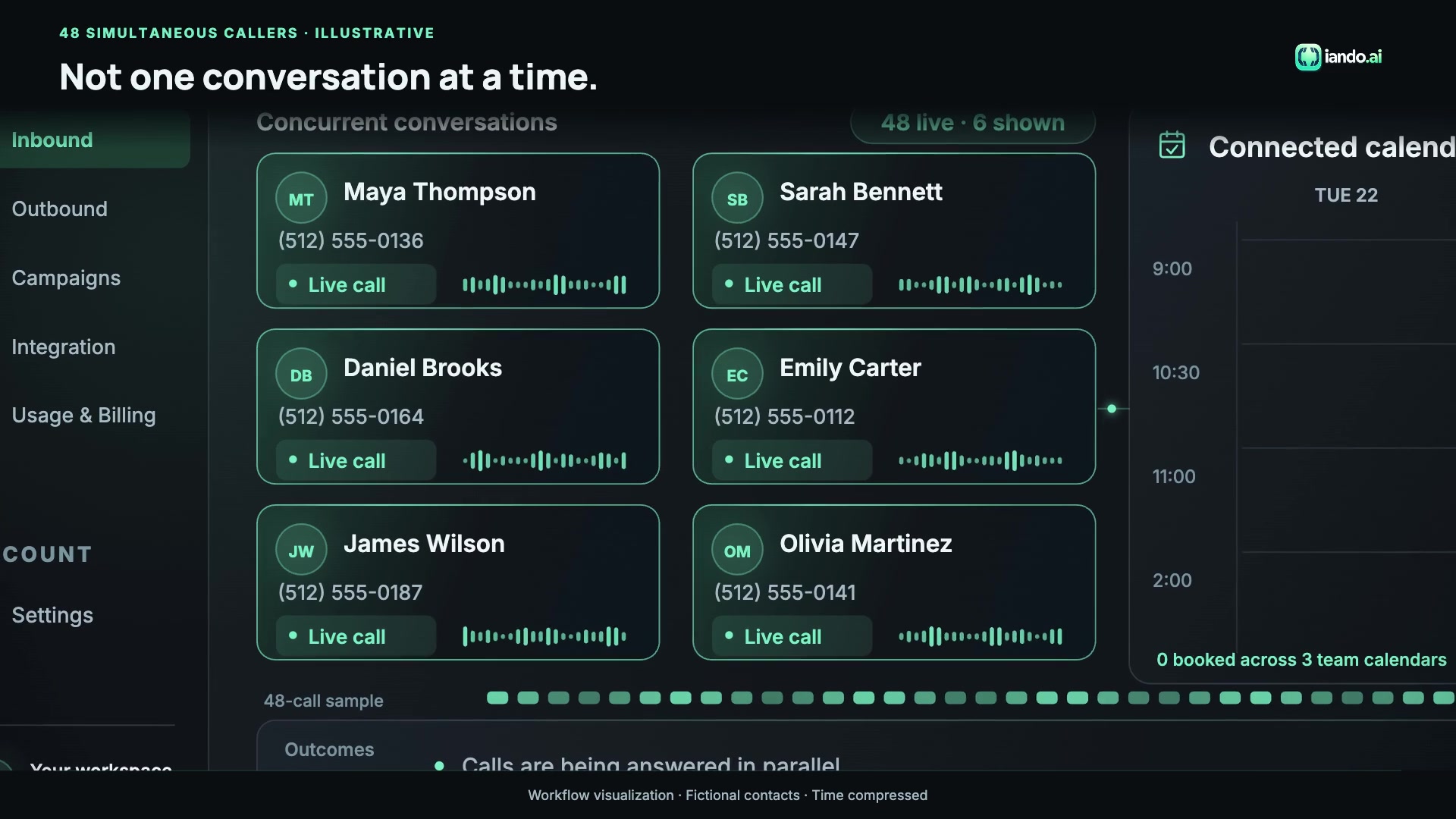
Inbound AI

Automate scheduling and support. Turn missed calls into revenue 24/7.

iando Inbound AI answers live, overflow, after-hours, and missed calls, captures approved context, handles scheduling and support paths, and routes staff-owned exceptions to the right person.

Lane Live, overflow, missed

Answer the phone demand buyers already create through search, referrals, ads, repeat customers, and reputation.

Owner Staff keeps judgment

Urgent, sensitive, regulated, pricing-exception, and policy calls route to people with caller context attached.

Measure Booked or routed result

Track handled calls, booked next steps, routed handoffs, recovered demand, and AI minute cost before adding lanes.

Inbound Source Match

Match the call source to the first lane.

Inbound AI should start with the caller source already in hand: overflow, after-hours, appointment, estimate, urgent, or missed-call demand with a visible owner and next step.

Overflow Staff is busy or already on a call

Use when callers still need booking, intake, dispatch, or support while the front desk, sales desk, or service team is occupied.

Check call reason, staff owner, approved answers, and whether the next step can be booked or routed. Open inbound lane
After Hours Closed-office demand with real intent

Use when evenings, weekends, lunch, or holiday coverage should capture appointments, estimates, urgent issues, or callback requests.

Check caller need, location, contact window, urgency boundary, and the staff handoff path. Recover the call
Appointment Booking, reschedule, or consult request

Use when the caller wants a visit, demo, consult, tour, estimate, recall, or callback that can follow approved scheduling rules.

Check appointment type, required intake fields, booking link, exceptions, and owner for conflicts. Open scheduling
Estimate Quote, project, or service request

Use when the caller needs price-safe intake, project details, photos, service area checks, or estimator-ready context.

Check service fit, address, scope, timing, price boundary, and the staff-only question. Map estimate
Urgent High-intent issue that needs routing

Use when urgency, safety, clinical, legal, account, or service-risk signals require fast capture and a person-owned exception path.

Check urgency rules, stop lines, escalation destination, callback window, and handoff detail. Open routing
Missed Call Voicemail or abandoned caller with value

Use when paid search, local SEO, referrals, repeat customers, or campaign traffic already produced a call that did not get answered.

Check source, time missed, buyer intent, average value, staff owner, and follow-up permission. Model value
Inbound AI Engagement

Make every first call feel answered, organized, and moving.

Inbound AI should feel like a polished front-desk layer: quick answer, clean context, useful scheduling, and staff handoff for anything that needs judgment.

Answer

Catch the call before voicemail.

Live calls, overflow, after-hours demand, and missed-call callbacks start with a calm answer.

Schedule

Move ready callers into a slot.

Appointments, consults, estimates, tours, service requests, and callbacks get the next step.

Support

Handle approved questions cleanly.

Hours, location, service basics, preparation, forms, and policy-safe answers stay consistent.

Escalate

Send staff the calls they should own.

Urgent, sensitive, regulated, or judgment-heavy calls route to people with useful notes.

Caller Journey

From ringing phone to booked, routed, or summarized outcome.

The experience should be simple for the caller and useful for the team. That means fewer generic promises and more clearly packaged outcomes.

1
Identify intent

New booking, estimate, urgent issue, support question, callback, or staff-only exception.

2
Collect the right details

Name, need, location, timing, urgency, source, preferred next step, and any approved intake fields.

3
Move the call forward

Book what is ready, send the caller to the right path, or route a complete handoff to staff.

Buyer FAQ

Fast answers for buyers comparing inbound ai.

Use these checks to choose the first inbound lane, keep staff in control, and measure whether the phone path is worth expanding.

What is inbound AI phone answering?

Inbound AI phone answering uses an AI voice agent to answer live, overflow, after-hours, and missed calls, capture caller context, book approved next steps, answer routine questions, and route staff-owned exceptions.

What should inbound AI answer first?

Start with one high-value lane such as appointments, estimates, consults, quote intake, urgent service requests, after-hours demand, support questions, or missed-call recovery where the next step is already known.

How does iando keep staff in control?

The call path uses approved answers, routing rules, scheduling links, escalation rules, and staff owners. Urgent, sensitive, regulated, pricing-exception, and judgment-heavy calls route to people with caller context.

How should teams measure inbound AI answering?

Measure answered calls, booked appointments, routed handoffs, recovered missed calls, caller intent, staff time saved, and AI minute cost against the value of the first call lane before expanding coverage.

Revenue

Turn unanswered demand into measurable revenue

Inbound AI keeps referral, search, ad, repeat, and reputation-driven calls from falling into voicemail when staff are busy, closed, or already on another call.

See missed-call ROI
Scheduling

Book the routine next step without making staff chase

The caller should know whether they are booked, routed, qualified, or getting a callback with useful context attached.

Model pricing value
Support

Answer approved questions and route the rest

Use approved answers for routine service, scheduling, intake, and status questions while staff keep sensitive, urgent, pricing, policy, and judgment-heavy decisions.

See industries
Inbound Fit

Use inbound AI where the phone already creates revenue.

The right first lane is usually the call type your team already wants handled faster: new appointments, estimates, consults, urgent requests, after-hours demand, or missed-call recovery.

  • Start with one call path and one approved booking or routing rule.
  • Keep urgent, sensitive, regulated, and judgment-heavy calls with staff.
  • Measure answered calls, booked next steps, escalations, and staff time saved.
Next Step

Map the first inbound lane before expanding coverage.

Pick one phone workflow, define the approved answers and handoff, then expand once the caller experience and booking path are clean.