
Answer new-patient, skin-check, acne, rash, referral, refill, result, billing, and cosmetic consult calls before patients move to the next clinic.
Capture visit reason, timing, payer or referral context, callback window, and staff-only clinical flags without diagnosing, advising treatment, approving refills, or deciding urgency.
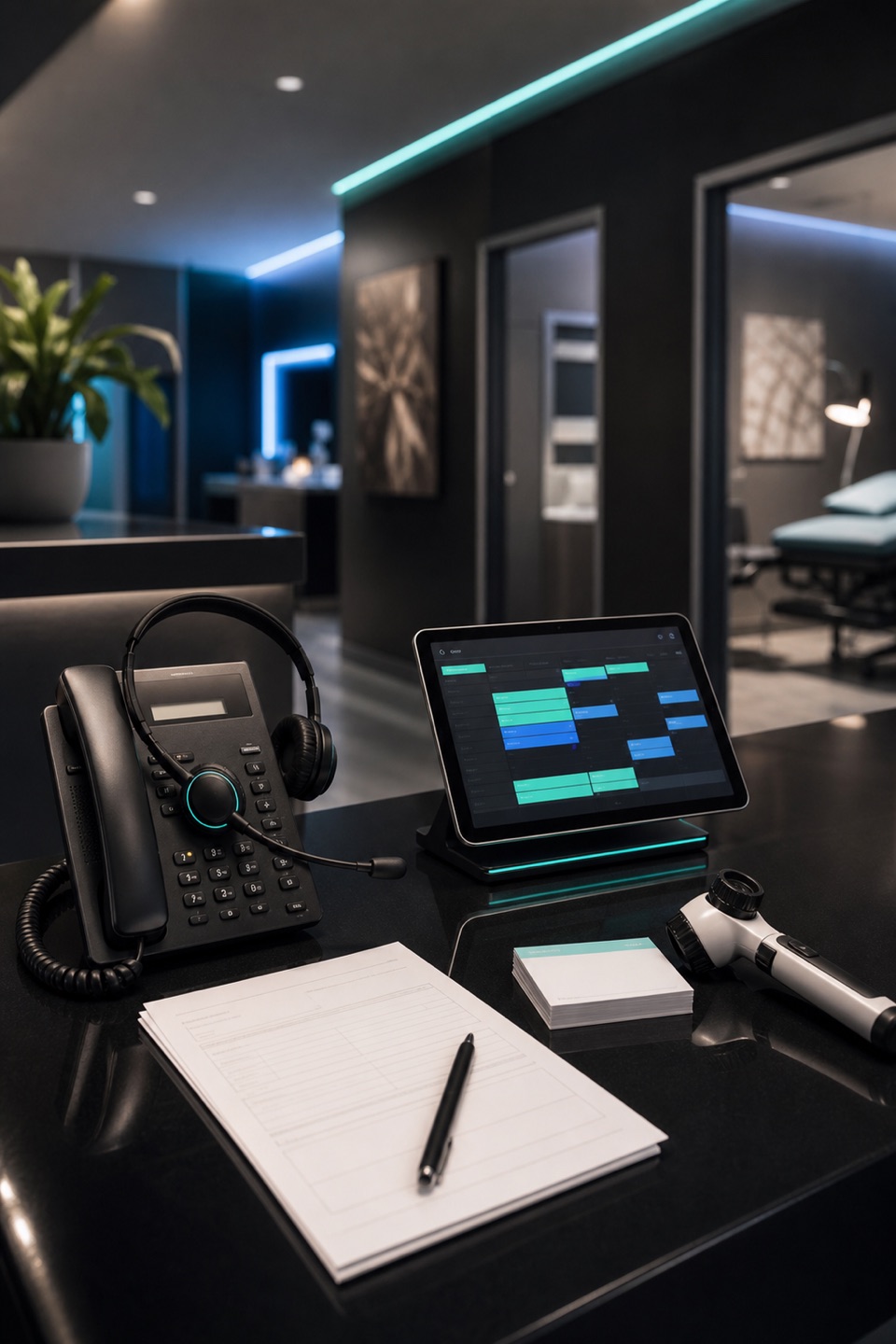
Dermatology intake
Patient calls become clinic-ready intake.
Skin-check, acne, rash, referral, refill, result, billing, and cosmetic consult context stays attached before staff responds.
Fastest path to revenue
Start with one high-intent call lane: appointments, estimates, emergencies, consults, recalls, renewals, or after-hours demand.
Use this lane when new-patient, skin-check, acne, rash, referral, refill, billing, or cosmetic consult calls should become staff-ready next steps.
Revenue Lift 24/7
Monthly modeled value
Edit call volume, qualified intent, 25% lift, and average visit, consult, or review value.
Monthly lift
$17,875/mo
Recovered calls that turn into booked, escalated, or staff ready next steps.
Annualized return Live estimate
$214,500/yr
The number operators use to decide whether better call coverage is worth it.
+65 visits, consults, and staff-ready callbacks/mo
90-day proof review: compare answered calls, captured next steps, and staff handoffs.
Run your numbers Adjust the four inputs. The return updates instantly.
650 calls/mo, 40% intent, 25% lift
24/7 coverage captures the calls that happen after hours, during peaks, and while staff are busy.
$275 average visit, consult, or review value
Average value per converted booking, job, consult, appointment, or documented next step.
90-day review
Compare answered calls, captured next steps, booked outcomes, and staff handoffs against the model.
Planning model only. Replace with the practice's call logs, new-patient versus existing-patient mix, referral volume, cosmetic consult value, payer mix, provider capacity, callback speed, and booked-appointment rate.
More approved paths
Calls Coming In
New-patient dermatology appointments
Acne, eczema, psoriasis, hair loss, rash, mole check, skin exam, pediatric dermatology, and referral-driven...
Cosmetic consults and procedure questions
Botox, fillers, laser, scar treatment, hair removal, tattoo removal, chemical peels, and other cosmetic interest...
Prescription, refill, and admin questions
Medication refill requests, pharmacy issues, prior authorization questions, referral status, forms, insurance, and...
Post-procedure and urgent-sounding concerns
Bleeding, infection concerns, severe reactions, rapidly changing symptoms, or worried skin-check callers that need...
Revenue Path
Reach the buyer while intent is still hot.
iando answers fast, captures why they raised their hand, books or routes the next step, and gives staff the context to close.
What Staff Gets
New-patient dermatology appointments
Capture the reason for visit and move qualified patients toward the right scheduling path.
Cosmetic consults and procedure questions
Turn high-intent cosmetic calls into consult requests without tying up medical scheduling staff.
Prescription, refill, and admin questions
Collect the right details and route the request to the right internal call path.
Post-procedure and urgent-sounding concerns
Identify escalation language quickly and route according to staff-approved rules.
Dermatology Revenue Paths
Separate bookable visits, cosmetic consults, referrals, and staff-only concerns.
A dermatology answering service should identify the caller lane, capture the details staff need, and move appointment-ready demand toward the right booking or callback path without crossing clinical boundaries.
New-patient medical dermatology
Skin checks, acne, eczema, psoriasis, rash, hair loss, pediatric concerns, referrals, payer context, and location preference.
Cosmetic consult and treatment interest
Botox, filler, laser, scar, pigment, hair removal, treatment-plan, pricing-boundary, and consult scheduling context.
Existing-patient admin and follow-up
Refill, result, referral, form, portal, pharmacy, prior authorization, billing, and post-procedure callback context.
Staff-only clinical concerns
Changing spots, bleeding, infection words, severe reactions, result interpretation, treatment questions, and urgent-sounding symptoms.
Dermatology Practices missed-call recovery model
See how unanswered patient demand becomes a booked or staff-ready next step.
Start with the demand the business already earned, then replace each assumption with phone logs and completed outcomes. The model follows one direct path: total demand, calls not answered live, and recaptured next steps.
Modeled recovered value / month
$20,109
Gross modeled value from visits, consults, and staff-ready callbacks. The model excludes uncollected revenue and outcomes the team cannot fulfill.
73
modeled booked / staff-ready / month
$241,313
annualized gross modeled value
Quote after review
monthly lane plan
Demand
650
inbound calls
Unanswered share
163
calls not answered live
Booked / staff-ready
73
45% of unanswered calls
Model inputs
Planning volume for dermatology practices. Replace with your phone logs.
Assumes the team already answers 75% of calls live.
I&O operating scenario; replace with booked, routed, or staff-ready outcomes from your logs.
Planning input for average visit, consult, or review value; replace with completed or collected outcome value.
Method, assumptions, and value source
Model: monthly inbound calls × calls not answered live (%) × unanswered calls recovered (%) × average visit, consult, or review value.
Pricing is scoped after lane review using coverage, expected volume, workflow depth, integrations, and staff handoff. The value model excludes setup, labor, cancellations, refunds, and uncollected revenue.
Revenue leaks
Where dermatology practices loses calls
Demand slips away while the team is already serving customers, patients, or active jobs.
New-patient calls get mixed with clinical noise
Dermatology phones carry everything at once: new patients, existing patients, referral questions, prescription requests, procedure follow-ups, cosmetic consults, billing, and urgent-sounding skin concerns.
The highest-intent callers keep comparing clinics
A patient worried about a changing spot, rash, acne flare, hair loss, or cosmetic consult rarely wants to leave voicemail. The first credible answering service often wins the next step.
Front-desk capacity controls growth
A clinic can invest in SEO, paid search, referral relationships, and provider capacity, then still leak demand when the phone queue slows down or staff are helping patients in the office.
Proof
What public data shows
Every statistic links to a public source, keeping the revenue case grounded.
$22.3K/mo
Use practice call logs, provider capacity, payer mix, show rate, referral rules, and cosmetic consult value before treating this as a forecast.
84.5M
Broad skin, hair, nail, and cosmetic demand gives dermatology practices a wide range of appointment-intake calls to classify safely.
36.5 days
average dermatology appointment wait time in AMN Healthcare's 2025 metro survey
2
When access is tight, a fast first answer, waitlist path, and clean callback summary can protect appointment-ready callers.
50M
Americans affected by acne each year according to AAD's acne guidance release
5
Acne calls are a high-frequency medical dermatology intake lane that should move toward scheduling without treatment advice.
76%
of the most time-consuming medical-practice phone tasks in MGMA's March 2026 poll were eligibility/prior authorization or scheduling
3
Urgent care access coverage should prioritize payer, scheduling, intake, and document context while staff retain clinical, benefit, eligibility, cost, records, and exception decisions.
12%
projected medical assistant employment growth from 2024 to 2034
6
Medical assistants often help answer telephones and schedule appointments, so repetitive phone work competes with clinical and administrative duties.
67%
of consumers called when making a high-stakes purchase in 2025
7
When money or urgency is involved, buyers still reach for the phone.
61%
of business calls are answered by a live person across industries
7
A broad benchmark for what buyers experience when they call businesses today.
85%
of consumers say contact info and opening hours matter in local-business research
8
Phone-driven SMB pages still need strong local-search and trust signals.
Industry fit
Dermatology Practices, handled.
Call handling should match how the business earns trust, books revenue, and hands off exceptions.
Dermatology demand is broad
AAD reports that skin disease affected 84.5 million Americans in its burden study, and dermatologists care for skin, hair, nail, and cosmetic concerns across a wide range of patient needs.
Patients face access friction
AMN Healthcare's 2025 physician appointment survey reported a 36.5-day average dermatology wait across 15 large metro areas, so callers keep comparing until one practice gives a credible next step.
Phones still drain practice capacity
MGMA describes phones as a continuing medical-practice bottleneck, and BLS notes medical assistants often answer telephones and schedule appointments.
Cosmetic demand is appointment driven
ASPS reported more than 28.5 million minimally invasive procedures in 2024, including injectables and skin treatments that often start with consult and pricing-boundary calls.
Dermatology callers need clear routing
A cosmetic consult, a prescription refill, a rash question, a surgical follow-up, and a changing spot should not enter the same generic voicemail path.
Clinical judgment stays with the clinic
The AI should answer, gather context, schedule, route, and deliver practice-approved information. It should not diagnose, recommend treatment, or replace staff judgment.
Local search only works if calls convert
Patients compare dermatology options quickly. If one practice answers and another sends callers to voicemail, the responsive practice often gets the appointment.
Workflow
How I&O handles these calls
The best first layer is fast answer, clear qualification, then booking or escalation based on your operating rules.
Answer and classify the call immediately
iando.ai identifies whether the caller is a new patient, existing patient, referral partner, cosmetic lead, refill request, billing question, or urgent-sounding concern.
Use practice-approved questions and guardrails
It gathers the visit reason, preferred timing, provider preference, location, contact details, referral or insurance context, and any escalation signals your clinic defines.
Schedule, route, or create a clean callback
Bookable calls move toward the calendar. Clinical or urgent calls route to staff. Exceptions get a useful summary instead of a bare missed-call notification.
Calls It Handles
Calls I&O can answer, escalate, or recover
These conversations are the highest-leverage starting point because they connect directly to revenue, schedule protection, or staff capacity.
New-patient dermatology appointments
Acne, eczema, psoriasis, hair loss, rash, mole check, skin exam, pediatric dermatology, and referral-driven appointment requests.
Outcome: Capture the reason for visit and move qualified patients toward the right scheduling path.
Cosmetic consults and procedure questions
Botox, fillers, laser, scar treatment, hair removal, tattoo removal, chemical peels, and other cosmetic interest that needs fast qualification.
Outcome: Turn high-intent cosmetic calls into consult requests without tying up medical scheduling staff.
Prescription, refill, and admin questions
Medication refill requests, pharmacy issues, prior authorization questions, referral status, forms, insurance, and portal access.
Outcome: Collect the right details and route the request to the right internal call path.
Post-procedure and urgent-sounding concerns
Bleeding, infection concerns, severe reactions, rapidly changing symptoms, or worried skin-check callers that need clinic-defined escalation.
Outcome: Identify escalation language quickly and route according to staff-approved rules.
Outcomes
What operators actually care about
Recover appointment demand that would otherwise shop around
New-patient and cosmetic callers are often comparing options. A fast, human-sounding answer gives the practice a real chance to convert the call.
Reduce administrative drag on clinical teams
Routine scheduling, location, insurance, refill, referral, and portal questions stop consuming the same front-desk bandwidth as calls that need human judgment.
Route clinical concerns with better structure
The AI does not make medical decisions. It helps separate routine scheduling from escalation-worthy language so the practice can respond through its own protocols.
Recovered Value
Where the payoff shows up operationally
- Capture more new-patient, referral, and cosmetic consult calls.
- Reduce missed calls during peak clinic hours, lunch, and after hours.
- Route clinical questions to staff with a cleaner summary.
- Use approved Q&A for hours, locations, services, preparation instructions, and next steps.
Before And After
How the operation changes when the phone stops leaking revenue
New-patient and cosmetic calls wait behind refill, portal, and billing traffic.
AfterThe dermatology answering service classifies each call and moves it into the right scheduling or routing path.
Worried patients leave vague voicemails about changing spots or post-procedure symptoms.
AfterEscalation signals are captured and routed according to practice rules.
Front-desk staff repeat the same prep, hours, location, and insurance answers all day.
AfterApproved Q&A handles routine questions while staff focus on exceptions.
SEO and referral demand leaks when nobody can answer.
AfterEvery caller gets a response, a route, and a next step.
Operator Questions
Questions before putting AI on the phone
We cannot let AI give medical advice
Correct. The call flow should avoid diagnosis and treatment advice, stay inside practice-approved language, and route clinical concerns to the team.
Dermatology calls are too varied
That variation is exactly why classification matters. The first job is to separate new-patient scheduling, cosmetic consults, refills, billing, referrals, and urgent-sounding issues.
We already have a front desk
This is overflow, after-hours, and missed-call recovery. It protects staff from repetitive call volume while keeping the practice reachable.
First Revenue Lane
Pick the call path most likely to create a customer this week.
Book a demo, talk to Adam, or start with one lane: the demo request, quote form, missed call, renewal, no-show, or follow-up list your team already earned but cannot reach fast enough.
Buyer FAQ
Fast answers for dermatology answering service.
Use these checks to decide whether this call lane is worth modeling, what staff keeps, and where the next step should route.
What does iando.ai do for dermatology practices?
iando.ai works as a 24/7 AI dermatology answering service.
It answers new-patient, skin-check, acne, rash, referral, refill, result, billing, after-hours, and cosmetic consult calls, captures caller context, moves approved appointment or callback paths forward, and sends diagnosis, treatment, refill approval, result interpretation, urgency, medication, and clinical judgment questions to clinic staff.
What is a dermatology answering service?
A dermatology answering service answers patient, referral, refill, result, billing, and cosmetic consult calls, captures the context staff need, and moves approved scheduling or callback paths forward without giving medical advice.
Can AI answer dermatology patient calls safely?
It can answer and route calls safely when the call path avoids diagnosis, uses practice-approved language, and escalates clinical concerns according to the clinic's rules.
What should a dermatology answering service handle?
A dermatology answering service should answer quickly, identify whether the caller is a new patient, existing patient, cosmetic consult, referral partner, refill request, billing caller, or clinical concern, then schedule or route the call using practice-approved rules.
Can a dermatology answering service cover after-hours calls?
Yes.
After-hours coverage can answer, classify, and summarize new-patient, skin-check, acne, rash, cosmetic, referral, refill, form, result, and billing calls while urgent-sounding or clinical questions follow staff-approved handoff rules.
More questions
Is this a dermatologist answering service or a generic receptionist?
It is built around dermatology call paths: skin checks, acne, rashes, referrals, cosmetic consults, refills, post-procedure concerns, insurance questions, and staff-safe escalation language.
Does iando work as an answering service for dermatologists?
Yes.
iando works as an answering service for dermatologists by answering calls, capturing patient and consult context, moving approved scheduling or callback paths forward, and sending diagnosis, treatment, refill, result, urgency, and clinical questions to staff.
What if someone searches for an answering service for dermatologist offices?
That usually means the practice needs dermatology-specific call coverage, not a generic message taker.
The call path should handle skin checks, acne, rashes, cosmetic consults, referrals, refills, insurance, forms, results, and staff-safe escalation.
How should dermatology practices measure answering service ROI?
Start with monthly patient calls, the share that is appointment-ready or staff-review-worthy, the lift from immediate answering, and the average value of a visit, consult, or staff-ready callback.
Can it schedule dermatology appointments?
Yes.
AI appointment scheduling can collect visit reason, patient status, timing, provider or location preference, and route the caller into the right scheduling path.
Can it handle cosmetic dermatology consult calls?
Yes.
Cosmetic calls are a strong fit because the caller often needs service information, timing, pricing boundaries, consult requirements, and a fast next step.
What happens with changing moles or urgent symptoms?
The AI should not diagnose the concern.
It should identify the escalation language your practice defines, gather context, and route the caller to staff or the right emergency instruction path.
Does this replace dermatology front-desk staff?
No.
It covers overflow, after-hours, routine Q&A, scheduling, and missed-call recovery so staff can spend more time on patient-sensitive work.
Supporting Guides
Deeper guides for dermatology practices
Each guide gives operators practical depth around staffing, call handling, conversion, and operational efficiency.
Use a dermatology answering service to recover patient bookings before callers choose another clinic
Dermatology calls are not generic admin traffic. They mix new-patient demand, skin checks, cosmetic consults, refill questions, referrals, billing, and urgent-sounding skin concerns that need clean staff handoffs.
Read resource
How short-staffed dermatology teams recover capacity without losing patient demand
A short-staffed dermatology front desk does not need more calls to manage. It needs fewer low-value interruptions, cleaner staff handoffs, and more bookable demand handled before patients move on.
Read resource
Skin-check, rash, acne, referral, and cosmetic callers need a fast answer and clear staff handoffs
Dermatology call coverage should protect appointment-ready demand while keeping diagnosis, treatment, results, refills, and urgent medical judgment with clinic staff.
Read resource
Sources
Research behind this page
These references support the phone demand, local search, and response speed claims above.
American Academy of Dermatology • Accessed 2026-05-14
AAD burden research reporting that 84.5 million Americans were impacted by skin disease in the studied claims data, with one in three seen by a dermatologist.
Open sourceAMN Healthcare • 2025 • Accessed 2026-05-14
AMN Healthcare survey of physician appointment wait times in 15 major metropolitan areas, including a 36.5-day average dermatology wait time in 2025.
Open sourceMedical Group Management Association • 2026-03-11 • Accessed 2026-05-14
MGMA Stat article reporting a March 2026 poll where practice leaders named eligibility/prior authorization, scheduling, intake, refills, and other patient questions as time-consuming phone tasks.
Open sourceAmerican Academy of Dermatology • Accessed 2026-05-05
AAD patient education describing dermatologists as medical doctors who specialize in skin, hair, and nail conditions, cosmetic concerns, and care across many patient needs.
Open sourceAmerican Academy of Dermatology • 2024-01-31 • Accessed 2026-05-14
AAD news release stating that acne affects nearly 50 million Americans each year and that updated evidence-based acne care guidance was published in JAAD.
Open sourceU.S. Bureau of Labor Statistics • 2025-08-28 • Accessed 2026-05-14
BLS Occupational Outlook Handbook profile for medical assistants covering scheduling, phone-answering and administrative duties, employment, projected growth, and annual openings.
Open sourceInvoca • 2025-08-18 • Accessed 2026-05-16
Invoca analysis showing live answer-rate benchmarks across industries and calling behavior for high-stakes purchases.
Open sourceBrightLocal • 2025 • Accessed 2026-05-16
Survey of 1,000 US consumers about general and local search behavior, maps usage, and business information expectations.
Open sourceAmerican Academy of Dermatology • 2023-05-15 • Accessed 2026-05-14
AAD patient guidance encouraging people to contact a board-certified dermatologist when a spot is different, changing, itching, or bleeding.
Open sourceMedical Group Management Association (MGMA) • 2025-12-09 • Accessed 2026-05-12
MGMA Stat poll of 236 applicable medical-practice responses showing no-shows, online scheduling, phone access, and wait times as leading patient-access priorities heading into 2026, with phone-access guidance on AI-enabled answering, call handling, callback, and queueing tools.
Open sourceAmerican Society of Plastic Surgeons • 2025-06-25 • Accessed 2026-05-14
ASPS 2024 procedural statistics release reporting more than 28.5 million minimally invasive procedures, including neuromodulator injections, HA fillers, skin resurfacing, skin treatments, and lip augmentation.
Open sourceInvoca • 2025 • Accessed 2026-05-14
Invoca benchmark report based on AI analysis of more than 60 million phone calls in consumer services.
Open source