

Turn Calls Into Jobs.
Answer calls. Capture the details. Book or route the next step using your calendar and rules.
Plumbing emergencies do not wait. Neither should your service.
Answer urgent calls as they happen. Follow up on approved estimates and missed opportunities. One human-sounding system works both ways.
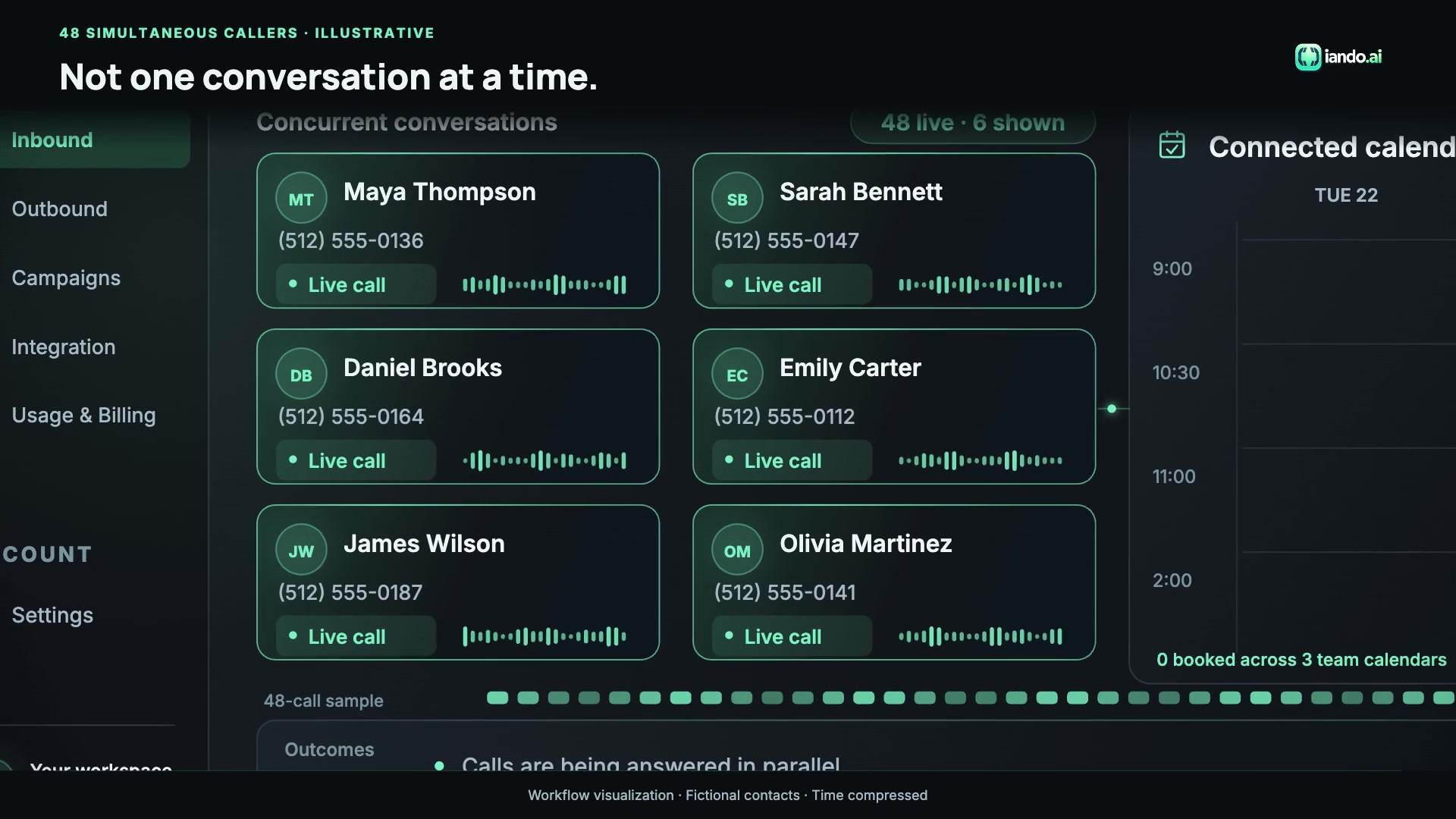 Inbound AI call lane
 Every plumbing call moves forward.
I&O answers homeowners, captures approved plumbing context, and books or routes the next step.
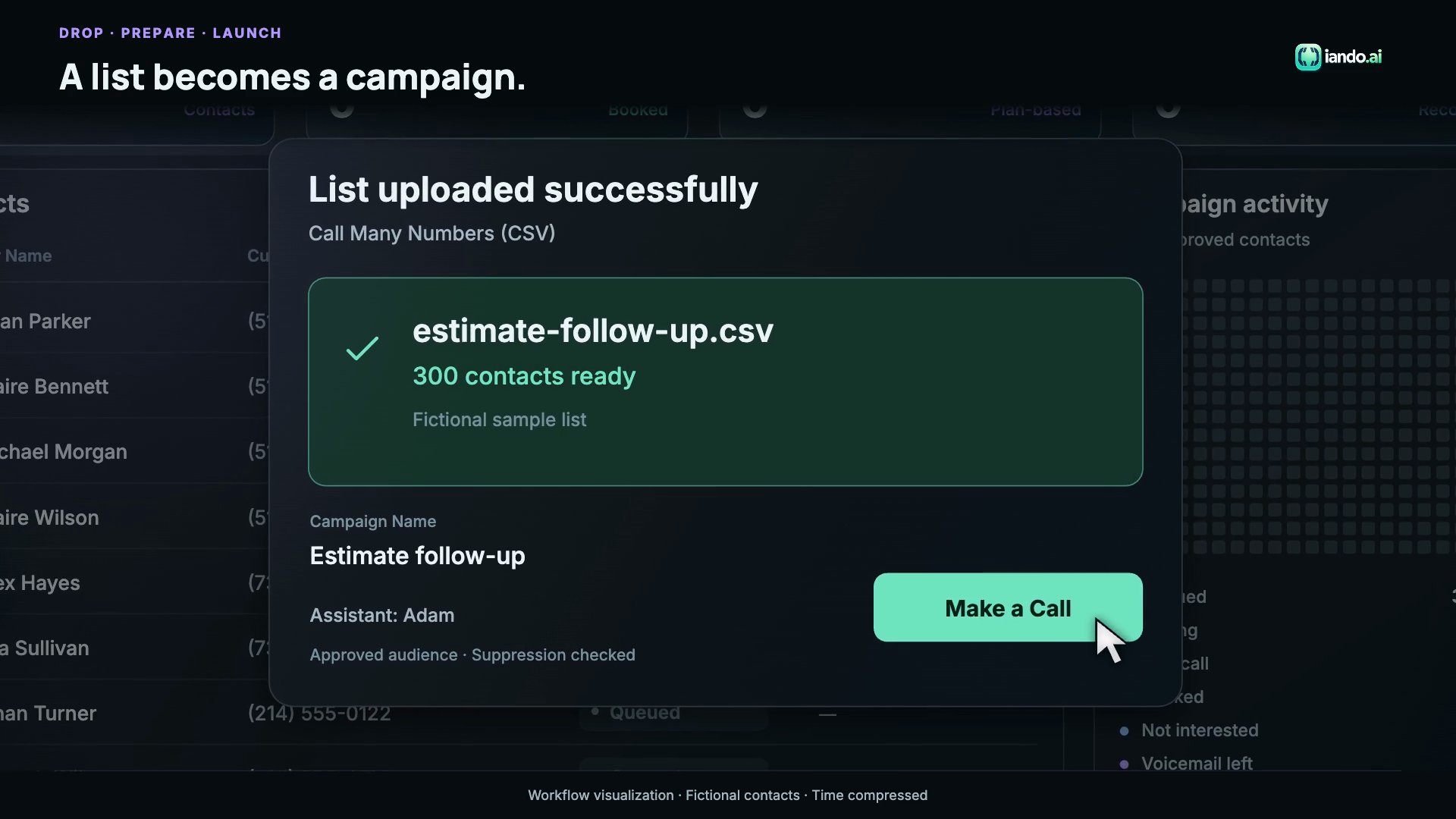 Outbound AI call lane
 Approved opportunities keep moving.
I&O follows up approved homeowners, preserves source and contact rules, and books the next conversation.
From the first ring to the next job.
Explore a few of the conversations your team can prepare I&O to handle.
There is water under the sink and I need a plumber.
I can collect the details and route your service request. What is the service address?
We need a water heater replaced. Can we arrange a visit?
I can help start the request. Where is the property, and when would you like your team to follow up?
We have your estimate. We just have a question before booking.
Let’s get that question to the right person so you can decide on the next step.
Example conversations show an intended workflow, not a recording or a guaranteed outcome. Your approved configuration determines what happens.
See the modeled monthly impact.
Illustrative planning model. Replace every assumption with your own call volume and booking value.
How this model works
Model: monthly inbound calls × calls not answered live × calls recovered × average job or estimate-ready value. Replace the assumptions with phone logs, booked outcomes, capacity, and actual invoice value. This is a planning scenario—not a claimed industry average or performance promise.
How I&O works for plumbers.
I&O learns the operation once, then answers, books, follows up, and routes every approved conversation within your rules.
Set the operating rules.
Services, coverage, hours, booking, routing, approved answers, and escalation paths are defined first.
Pick up every call.
Human-sounding AI answers homeowners without sending valuable demand to voicemail.
Create the next step.
Every conversation becomes a booked job, a dispatch-ready call, or a complete staff handoff.
See business impact.
Answered demand, booked outcomes, routed conversations, and modeled value stay visible.
Turn the next call into revenue.
Start with missed demand or approved follow-up. Expand after the booked outcomes and recovered value are visible.
Clear before the first call.
What I&O answers, what your team controls, how calls route, and how recovered value is measured.
What does I&O do for plumbers?
I&O works as a 24/7 AI plumbing answering service. It answers urgent and routine calls, captures caller and job details, checks your service and scheduling rules, then books, routes, or hands off the next step.
Can AI answer emergency plumbing calls?
Yes. It can answer immediately, capture approved urgency details such as active water, location, and shutoff status, then follow your documented escalation path. It does not diagnose the problem or replace licensed judgment.
How do plumbers calculate answering-service ROI?
Start with monthly inbound calls, the share not answered live, the percentage your team can realistically recover, and the average value of a booked job or estimate-ready opportunity. The calculator on this page makes those assumptions visible and editable.
What should a call handler collect before dispatch calls back?
Your rules decide the intake. Common fields include caller name, callback number, service address, issue type, active-water status, urgency, access constraints, customer status, and the preferred next step.
Can it schedule plumbing appointments?
Yes. I&O can offer approved appointment types and available times when a verified calendar or scheduling workflow is connected. Your business controls what can be booked and what requires staff review.
Can it route calls by job type?
Yes. Calls can follow different paths for active leaks, sewer backups, drain work, water heaters, no-water calls, estimates, warranties, service areas, and any other routing logic you approve.
Will it sound human enough for a stressed homeowner?
That is the standard: calm, direct, and useful. The voice, pace, approved answers, and handoff rules are tested before the lane goes live, with a clear path to a person whenever the call needs one.
Is this only for large plumbing companies?
No. It can be especially useful for smaller operators that cannot staff every lunch window, after-hours call, overflow period, and field-service peak without adding headcount.
Deeper guides for plumbers.
Practical depth around staffing, call handling, conversion, and operational efficiency.

High-paying inbound call markets are won where urgency, value, and staff bottlenecks meet.
Protect urgent, high-value calls first: home services, legal intake, healthcare access, insurance shopping, and property emergencies.
Read guide →Build your plumbing answering workflow
Define service areas, intake questions, booking permissions, and dispatcher handoffs before forwarding calls.
Read guide →
Every urgent plumbing caller needs a next step before they call someone else
The answering-service ROI case starts with speed, clean handoffs, and job-value math—not another generic voicemail box.
Read guide →Keep moving to the next useful call plan.
Source-backedResearch behind this page View 9 sources
Plumbers, Pipefitters, and Steamfitters
U.S. Bureau of Labor StatisticsOccupational profile covering employment, openings, emergency on-call work, and evening or weekend schedules.
Open source ↗Fix a Leak Week
U.S. Environmental Protection Agency WaterSenseNational guidance and data on the scale and impact of household water leaks.
Open source ↗How Much Does an Emergency Plumber Cost?
Forbes HomePricing guide covering emergency plumbing scenarios and after-hours trip fees.
Open source ↗Super-Efficient Water Heater
ENERGY STARHome-upgrade guidance on water-heater energy use and replacement economics.
Open source ↗Plumbing Cost Estimates
HomeAdvisorCommon repair and replacement cost categories used only as outside market context.
Open source ↗Consumer Services Call Conversion Benchmarks 2025
InvocaConsumer-services phone-call benchmark research based on aggregated call analysis.
Open source ↗Strategies to Improve Call Answer Rate
InvocaAnalysis of live answer rates and phone behavior for high-stakes purchases.
Open source ↗Consumer Search Behavior
BrightLocalU.S. consumer research on local search, maps, and business-information expectations.
Open source ↗Plumbing Answering Service
JobberOverview of plumbing call paths for emergency calls, dispatch alerts, scheduling, and missed-call capture.
Open source ↗See what your missed calls could become.
Bring a week of call logs. We will map the calls, the approved next steps, and the decisions that should stay with your team.