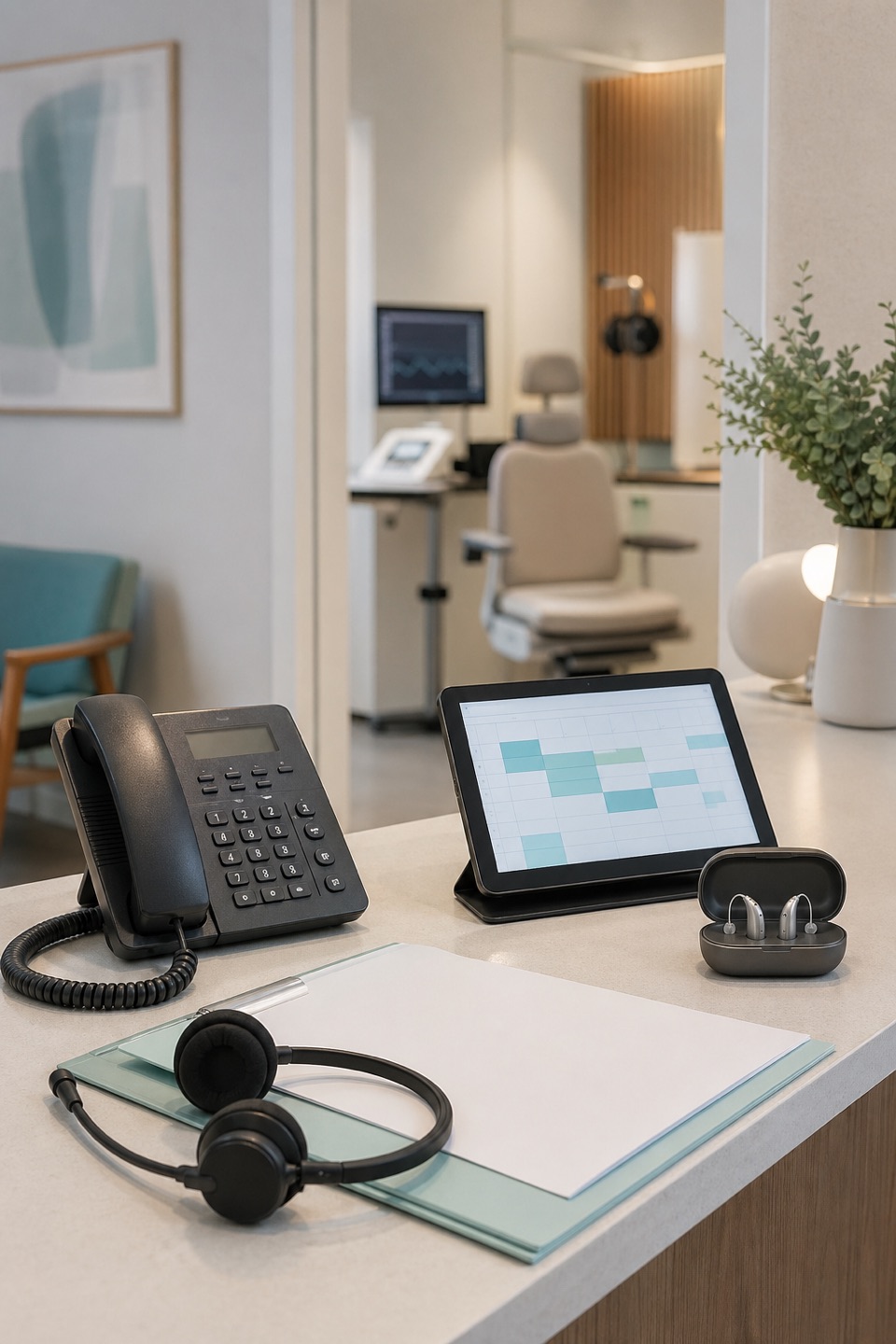
AI For Audiology Clinics

Capture hearing-test, tinnitus, and hearing-aid calls before they go cold

320 calls per month modeled
+26 more conversions per month
$368,640 annual upside modeled

iando.ai answers audiology clinic calls 24/7, handles common appointment and device questions, captures symptom context, routes clinical exceptions, and gives staff cleaner notes for consults, fittings, repairs, and follow-up.

Built for clinics where one unanswered call can be a hearing evaluation, hearing-aid consult, tinnitus question, device repair, caregiver conversation, or referral follow-up.

Built around the jobs your phone has to do: answer, schedule, route, handle approved Q&A, and recover missed-call revenue.

  • 24/7 coverage for hearing-test and device consult calls
  • Tinnitus, balance, repair, insurance, and caregiver context captured
  • Approved Q&A for hours, services, financing, and next steps
  • Clinical and urgent exceptions routed to the right staff path
Revenue Lift 24/7
Monthly revenue upside

Edit call volume, buyer intent, 25% lift, and average first engagement value.

$30,720/mo
+26 hearing-care calls/mo
90-day guarantee: book 20% more business or your money back.
Run your numbers
320 calls/mo, 32% intent, 25% lift 24/7 coverage captures the calls that happen after hours, during peaks, and while staff are busy.
$1,200 average first engagement value Average revenue per converted booking, job, consult, or appointment.
$368,640/yr Annualized upside from recovered appointment conversions.

Planning model only. Replace with actual missed-call data, referral volume, hearing-test bookings, device consult rate, repair visits, tinnitus consults, insurance mix, close rate, and bundled-care value.

Industry ROI

The business case for audiology clinics

Start with the calls the business already earned, then estimate which ones can become appointments, jobs, consults, or useful follow-ups.

Hearing-care revenue recovery
Model the leak: calls/month x hearing-care intent x first engagement value x 25% conversion lift.

For audiology clinics, ROI is not generic call volume. It is recovered evaluations, hearing-aid consults, repair visits, tinnitus inquiries, referral calls, and follow-up conversations that would otherwise hit voicemail.

Missed calls x bookable intent x average appointment value x recovery rate
  • Missed, after-hours, lunch, referral, and staff-overflow calls
  • Hearing-test, device consult, repair, tinnitus, and caregiver intent
  • 25% conversion-lift planning assumption from immediate answering
  • Average first engagement value, device mix, follow-up value, and staff capacity
What to recover first
Prioritize the calls with direct revenue or schedule impact.
  • Capture hearing-test, hearing-aid consult, tinnitus, repair, referral, caregiver, and insurance calls when staff cannot answer.
  • Collect patient status, symptom context, device type, warranty or repair issue, referral source, insurance question, and preferred appointment time.
  • Answer approved questions about hours, services, appointment preparation, device follow-up, and financing next steps.
  • Route sudden hearing changes, dizziness, pediatric concerns, medical referrals, complex device problems, complaints, and clinical questions to staff.
Where Revenue Leaks

What missed calls actually look like for audiology clinics

These are the moments where demand slips away because the team is already busy serving customers, patients, or active jobs.

Prospective patients compare clinics by phone

Callers often ask about hearing tests, hearing-aid options, insurance, financing, tinnitus, repairs, caregiver involvement, and next availability. If nobody answers clearly, they may book the next clinic that does.

Front desks get pulled into complex questions

Hearing care calls can mix scheduling, device troubleshooting, warranty questions, referral details, Medicare or insurance confusion, and clinical symptoms in one conversation.

Follow-up value leaks after hours

Repairs, fittings, clean-and-check visits, earmold questions, tinnitus consults, caregiver callbacks, and referral follow-up do not always arrive during a staffed phone window.

Proof And Context

What public data says about this buying behavior

Every stat references a public source below, so the revenue argument stays grounded instead of padded with invented benchmarks.

28.8M
U.S. adults who could benefit from hearing aids 1

Large untreated hearing-aid need makes first-call capture important when patients are comparing hearing tests, devices, insurance, and follow-up care.

<1 in 3
adults 70+ with hearing-aid benefit who have ever used them 1

Many potential patients still need education and scheduling support before they commit to a hearing evaluation or device consultation.

25M
U.S. adults with recent tinnitus experience 12

Tinnitus calls should be captured with symptom context and routed carefully instead of being treated like generic appointment requests.

9%
projected audiologist employment growth from 2024 to 2034 3

Demand is growing while clinical capacity remains limited, so call handling needs to qualify, prioritize, and protect appointment inventory.

$3.6B
U.S. hearing aid stores market size in 2025 4

Hearing-aid consultations, fittings, and follow-up care represent meaningful commercial value when qualified callers reach the clinic.

$3.4K
average prescription hearing-aid pair price in a 2026 survey 5

Use the clinic's own device mix and bundled-care model for ROI, but hearing-aid purchase value explains why lost consult calls matter.

Why This Industry Is Different

Audiology Clinics need phone coverage built around their actual calls

The phone experience should match how the business earns trust, books revenue, and routes exceptions.

The need is large and often untreated

NIDCD reports that 28.8 million U.S. adults could benefit from hearing aids, while fewer than one in three adults age 70 and older who could benefit have ever used them.

Audiology is more than a device sale

ASHA describes audiology scope across hearing, balance, tinnitus, auditory processing, diagnostics, and treatment. The call plan needs to respect that clinical context.

Clinical capacity is finite

BLS projects audiologist employment growth, but clinics still need to protect provider time by qualifying calls, capturing context, and routing exceptions before staff call back.

How It Works

How iando.ai handles these calls

The best first layer is fast answer, clear qualification, then booking or escalation based on your operating rules.

01

Answer quickly and identify call intent

iando.ai picks up right away and captures whether the caller needs a hearing test, hearing-aid consultation, repair, fitting follow-up, tinnitus help, balance question, referral appointment, or caregiver callback.

02

Collect the details staff need

It gathers patient status, symptoms, device status, referral source, insurance or financing question, preferred time, communication needs, and whether a clinician must review the case.

03

Book, route, or create a clean callback

Simple appointments move toward the schedule. Repairs, urgent symptoms, pediatric concerns, balance issues, medical red flags, and complex device questions route with context instead of a vague voicemail.

Calls It Handles

Calls iando.ai can answer, route, or recover

These conversations are the highest-leverage starting point because they connect directly to revenue, schedule protection, or staff capacity.

Hearing-test and consultation calls

New patients, returning patients, and caregivers asking about hearing evaluations, provider availability, referrals, accepted plans, financing, and what happens at the first visit.

Outcome: Capture fit and move qualified callers toward a scheduled evaluation or consult.

Hearing-aid, fitting, and repair calls

Questions about device options, batteries, charging, cleaning, warranty, earmolds, lost devices, fit problems, feedback, and follow-up adjustments.

Outcome: Document device context and route toward repair, fitting, or clinician review.

Tinnitus and balance questions

Callers describing ringing, buzzing, dizziness, imbalance, sudden changes, or symptoms they do not know how to categorize.

Outcome: Capture symptom language and route according to clinic-approved clinical guardrails.

Referral, caregiver, and insurance calls

Physician referrals, spouse or adult-child callers, insurance questions, documentation requests, and appointment logistics.

Outcome: Give staff a clear follow-up note with contact, authorization, and scheduling context.

Outcomes

What operators actually care about

Recover qualified hearing-care demand

Hearing-test, hearing-aid, tinnitus, repair, and referral callers get an immediate answer and a specific next step before they shop elsewhere.

Reduce staff interruption without lowering care quality

Routine scheduling, device, hours, preparation, and policy questions are handled consistently so staff can focus on patients already in the clinic.

Route clinical exceptions with better context

Sudden changes, dizziness, pediatric concerns, medical referral issues, and complex device problems arrive with the information staff need to prioritize.

Recovered Value

Where the payoff shows up operationally

  • Capture hearing-test, hearing-aid consult, tinnitus, repair, referral, caregiver, and insurance calls when staff cannot answer.
  • Collect patient status, symptom context, device type, warranty or repair issue, referral source, insurance question, and preferred appointment time.
  • Answer approved questions about hours, services, appointment preparation, device follow-up, and financing next steps.
  • Route sudden hearing changes, dizziness, pediatric concerns, medical referrals, complex device problems, complaints, and clinical questions to staff.
  • Turn voicemail into documented follow-up so teams can prioritize bookable consults and clinical exceptions.
Before And After

How the operation changes when the phone stops leaking revenue

Before

Hearing-test and consult calls hit voicemail during exams and fittings.

After

Every caller gets an answer, basic qualification, and a documented next step.

Before

Device repair and fitting questions interrupt staff repeatedly.

After

Device context is captured before staff decide whether to book, troubleshoot, or escalate.

Before

Tinnitus and dizziness language arrives as vague voicemail.

After

Symptom context is collected and routed according to clinic-approved guardrails.

Before

Referral and caregiver calls arrive without insurance or scheduling details.

After

Staff receive the referral source, contact details, availability, and payer questions up front.

Operator Questions

Questions before putting AI on the phone

Hearing care questions can become clinical

Correct. The AI should answer approved operational questions, capture context, and route clinical symptoms, sudden changes, balance issues, pediatric concerns, and device decisions to qualified staff.

Our patients need empathy, not a phone tree

The call experience should be calm, plain-spoken, and human-sounding. The purpose is to answer immediately, reduce confusion, and give callers a useful path without making them wait on voicemail.

We already call people back

Callbacks work better when the clinic knows why the person called, whether they are new or returning, what device or symptom is involved, and whether the call is a qualified consult, repair, or clinical escalation.

Recover Missed Revenue

Turn more calls into booked revenue for audiology clinics.

iando.ai is built for businesses that depend on the phone and lose money when callers do not get a fast, useful answer. Book a demo and map the call plan to your call volume, hours, and booking logic.

FAQ

Frequently asked questions

Can AI answer hearing-aid questions?

It can answer approved operational questions about appointments, preparation, repairs, warranties, clean-and-check visits, and next steps. Device recommendations, programming decisions, medical symptoms, and clinical advice should route to staff.

Can it schedule hearing tests and consults?

Yes, when calendar and clinic rules allow it. It can capture patient status, reason for visit, referral source, insurance question, communication needs, and preferred time before booking or routing.

How should tinnitus or dizziness calls be handled?

The call path should capture symptom language and urgency, then follow clinic-approved routing rules. It should not diagnose or tell the caller that a symptom is harmless.

Does this replace front desk staff?

No. The strongest use case is overflow, after-hours coverage, repetitive Q&A, and better call notes so staff can prioritize patients, consults, and exceptions.

Why build a dedicated audiology page instead of generic healthcare copy?

Audiology callers ask about hearing tests, hearing aids, tinnitus, repairs, fittings, caregivers, insurance, referrals, and clinical symptoms. The call plan needs that context.

Supporting Guides

Deeper articles for audiology clinics

Each guide supports the ICP landing page with practical, search-focused depth around staffing, routing, conversion, and operational efficiency.

Recover hearing-test, hearing-aid, repair, and tinnitus calls before they disappear

Audiology clinic missed-call ROI starts with high-intent, education-heavy calls. A hearing-test, tinnitus, repair, or hearing-aid caller often needs reassurance and a clear next step before they book.

Read article
Sources

Research behind this page

These references support the phone-demand, local-search, and response-speed claims above.

1. Quick Statistics About Hearing, Balance, & Dizziness

National Institute on Deafness and Other Communication Disorders • Accessed 2026-04-27

NIDCD statistics covering U.S. hearing loss, tinnitus, hearing-aid candidacy, hearing-aid use, cochlear implants, and balance or dizziness prevalence.

Open source
2. Scope of Practice in Audiology

American Speech-Language-Hearing Association • 2018 • Accessed 2026-04-27

ASHA policy describing audiologists' clinical scope across hearing, balance, tinnitus, auditory processing, case history, diagnostics, and treatment.

Open source
3. Audiologists

U.S. Bureau of Labor Statistics • 2025-08-28 • Accessed 2026-04-27

BLS Occupational Outlook Handbook profile for audiologists covering duties, doctoral education, 2024 jobs, median pay, and projected employment growth.

Open source
4. Hearing Aid Stores in the US Market Size Statistics

IBISWorld • 2025-04 • Accessed 2026-04-27

IBISWorld market-size page reporting public U.S. hearing-aid stores market-size and growth figures for 2024 and 2025.

Open source
5. How much do hearing aids cost in 2026?

HearingTracker • 2026-01-11 • Accessed 2026-04-27

HearingTracker survey of more than 1,100 hearing-aid purchasers reporting average paid prices for OTC, Costco, and prescription hearing aids.

Open source
6. Hearing Aids For Adults

American Speech-Language-Hearing Association • Accessed 2026-04-27

ASHA practice portal guidance noting audiologists' role in screening, assessment, diagnosis, and treatment for adults who are deaf or hard of hearing.

Open source
7. MarkeTrak 2025: Consumer Perspectives on Hearing Health in an Evolving Market

Hearing Industries Association / Seminars in Hearing • 2025 • Accessed 2026-04-27

MarkeTrak 2025 research describing hearing-aid adoption, satisfaction, professional support, coverage, and consumer behavior after the OTC rule.

Open source
8. 5 Strategies to Fix Your Call Answer Rate and Stop Losing Revenue

Invoca • 2025-08-18 • Accessed 2026-03-31

Invoca analysis showing live answer-rate benchmarks across industries and calling behavior for high-stakes purchases.

Open source
9. Consumer Search Behavior: Where Are Your Customers?

BrightLocal • 2025 • Accessed 2026-03-31

Survey of 1,000 US consumers about general and local search behavior, maps usage, and business information expectations.

Open source