
iando.ai answers urgent care calls across wait time, insurance, online check-in, testing, injury, X-ray, occupational medicine, results, notes, and callbacks so visit-ready demand gets a useful next step instead of voicemail.
Built for clinics where phone demand spikes during lobby rushes, seasonal illness, evenings, weekends, employer deadlines, pediatric questions, and post-visit follow-up pressure.
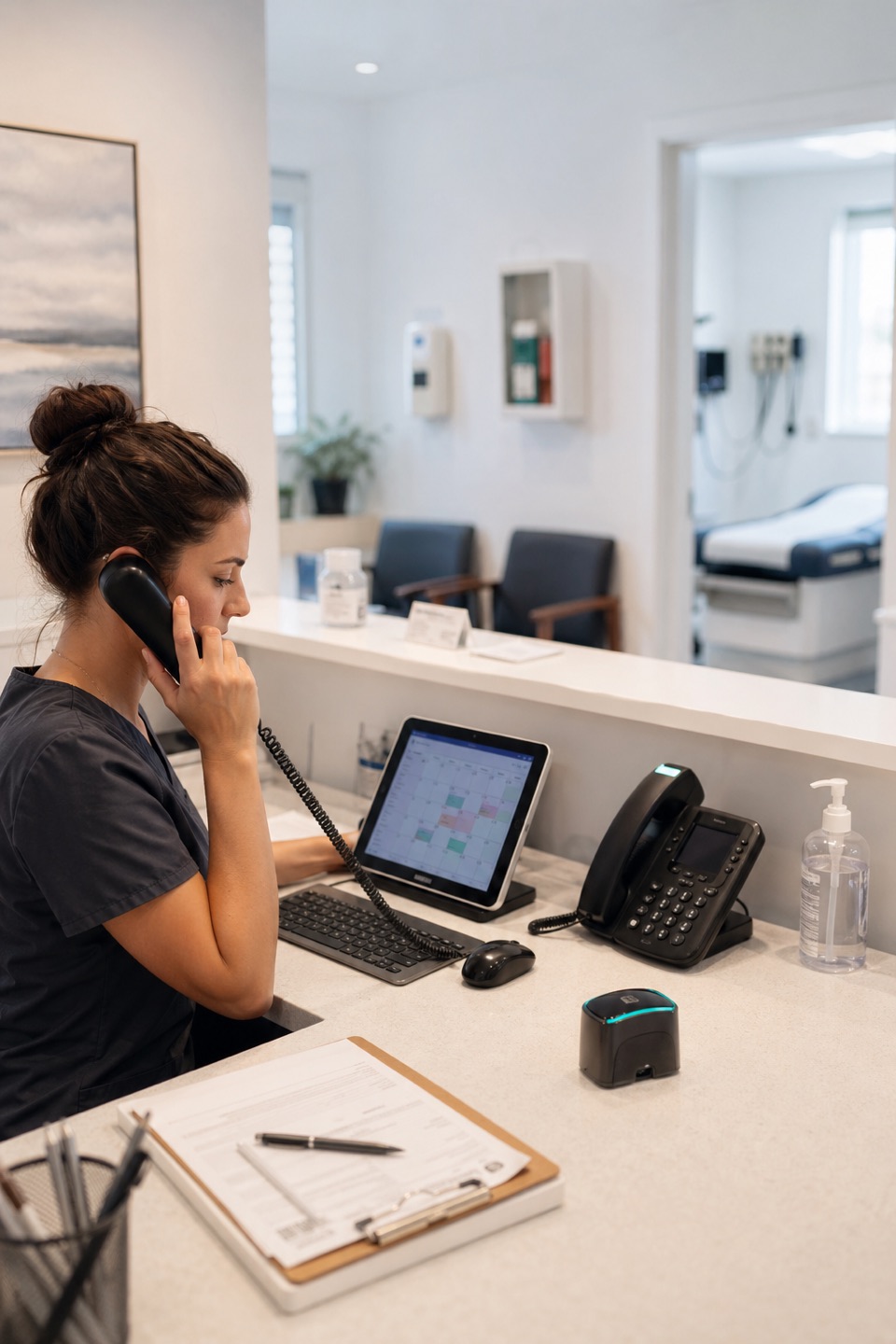
Urgent care sorter
Same-day callers become clinic-ready handoffs.
Wait-time, insurance, testing, injury, X-ray, work-note, school-note, and callback context stays attached before staff responds.
Fastest path to revenue
Start with one high-intent call lane: appointments, estimates, emergencies, consults, recalls, renewals, or after-hours demand.
Start with the buyer's reason for calling. iando captures intent, books what is ready, and hands staff the context that closes.
Revenue Lift 24/7
Monthly modeled value
Edit call volume, qualified intent, 25% lift, and average net revenue per visit.
Monthly lift
$13,068/mo
Recovered calls that turn into booked, escalated, or staff ready next steps.
Annualized return Live estimate
$156,816/yr
The number operators use to decide whether better call coverage is worth it.
+99 visits and staff-ready next steps/mo
90-day proof review: compare answered calls, captured next steps, and staff handoffs.
Run your numbers Adjust the four inputs. The return updates instantly.
900 calls/mo, 44% intent, 25% lift
24/7 coverage captures the calls that happen after hours, during peaks, and while staff are busy.
$132 average net revenue per visit
Average value per converted booking, job, consult, appointment, or documented next step.
90-day review
Compare answered calls, captured next steps, booked outcomes, and staff handoffs against the model.
Planning model only. Replace these assumptions with your call volume, conversion, capacity, cost, and collected revenue.
More approved paths
Calls Coming In
Same-day illness and injury calls
Fever, cough, sore throat, ear pain, urinary symptoms, minor cuts, sprains, rashes, and callers asking whether...
Wait time, hours, and location questions
Callers asking about open hours, holiday hours, walk-ins, online check-in, wait time, parking, nearby location,...
Arrival, insurance, payment, and cost questions
Questions about accepted insurance, self-pay basics, deductibles, copays, lab or X-ray charges, online check-in,...
Testing, injury, and X-ray calls
Flu, strep, COVID, RSV, sore throat, cough, fever, sprain, fall, cut, stitches, possible fracture, and X-ray...
Revenue Path
Reach the buyer while intent is still hot.
iando answers fast, captures why they raised their hand, books or routes the next step, and gives staff the context to close.
What Staff Gets
Same-day illness and injury calls
Capture intent and move the caller toward the right visit, appointment, or approved next step.
Wait time, hours, and location questions
Answer repetitive questions without pulling staff away from check-in.
Arrival, insurance, payment, and cost questions
Use approved guardrails and send billing, eligibility, benefit, exact-cost, consent, or coverage exceptions to staff.
Testing, injury, and X-ray calls
Capture same-day intent and caller context while test choice, imaging need, result interpretation, treatment, and...
Urgent Care Revenue Path
Move same-day demand before the patient keeps searching
The first answer should separate visit-ready callers, online-check-in questions, repeat front-desk requests, and staff-only decisions. That keeps flu, strep, COVID, RSV, injury, X-ray, employer, document, and result demand moving without clinical or payer promises.
Access and wait-time calls
Hours, location, online check-in, wait-time language, accepted-plan basics, self-pay basics, parking, and what-to-bring questions.
Testing and symptom calls
Flu, strep, COVID, RSV, sore throat, cough, fever, exposure, result, school-note, and work-note questions captured inside approved limits.
Injury and X-ray calls
Sprains, falls, cuts, stitches, possible fracture, X-ray availability, and same-day visit requests organized before staff review.
Employer and document calls
Drug screens, DOT physicals, workers' compensation, employer authorization, records, forms, return notes, and deadline pressure.
Urgent Care Clinics missed-call recovery model
See how unanswered patient demand becomes a booked or staff-ready next step.
Start with the demand the business already earned, then replace each assumption with phone logs and completed outcomes. The model follows one direct path: total demand, calls not answered live, and recaptured next steps.
Modeled recovered value / month
$13,365
Gross modeled value from visits and staff-ready next steps. The model excludes uncollected revenue and outcomes the team cannot fulfill.
101
modeled booked / staff-ready / month
$160,380
annualized gross modeled value
Quote after review
monthly lane plan
Demand
900
inbound calls
Unanswered share
225
calls not answered live
Booked / staff-ready
101
45% of unanswered calls
Model inputs
Planning volume for urgent care clinics. Replace with your phone logs.
Assumes the team already answers 75% of calls live.
I&O operating scenario; replace with booked, routed, or staff-ready outcomes from your logs.
Planning input for average net revenue per visit; replace with completed or collected outcome value.
Method, assumptions, and value source
Model: monthly inbound calls × calls not answered live (%) × unanswered calls recovered (%) × average net revenue per visit.
Pricing is scoped after lane review using coverage, expected volume, workflow depth, integrations, and staff handoff. The value model excludes setup, labor, cancellations, refunds, and uncollected revenue.
Revenue leaks
Where urgent care clinics loses calls
Demand slips away while the team is already serving customers, patients, or active jobs.
Same-day patients keep comparing
A caller asking about fever, strep testing, a sprain, stitches, X-rays, school forms, occupational medicine, or whether they can walk in today may call several clinics. If the first answer is voicemail, the next action is often another nearby option.
The desk gets hit during lobby surges
Phones spike while staff are checking patients in, confirming insurance, collecting copays, coordinating labs, rooming patients, and answering in-person questions. The highest-value call is often waiting while the team is already doing the work.
Sensitive calls need clear staff handoff
Chest pain, breathing trouble, severe bleeding, possible stroke symptoms, major trauma, result interpretation, medication questions, and records requests need approved handoff language, not a generic booking answer.
Proof
What public data shows
Every statistic links to a public source, keeping the revenue case grounded.
15,032
A large urgent care footprint means patients often have multiple same-day options when one clinic misses the call.
200M+
urgent care patient visits annually
2
Urgent care demand is a high-volume access category where phone answering, scheduling, and insurance Q&A affect revenue capture.
$132
average net revenue per urgent care visit in HIDA's 2025 overview
2
Recovered calls should be modeled around visit value, payer mix, visit type, testing, imaging, occupational medicine, and repeat-patient value.
$46.7B
U.S. urgent care market size in 2024
2
Urgent care is a mature, competitive access market where answer speed can influence which clinic captures same-day demand.
67%
urgent care centers open seven days a week
1
Extended access expectations make unanswered evening, weekend, and holiday-adjacent calls commercially expensive.
27/day
average daily visits per urgent care clinic in Experity's early-2026 data
3
Visit volume rises with seasonal illness but remains broad across non-respiratory conditions, so call paths should not only handle flu questions.
155M
Patients often need help deciding whether urgent care is appropriate or whether symptoms require emergency care, so safe staff handoff language matters.
$280
estimated average walk-in urgent care cost without insurance
6
Cost, insurance, deductible, testing, and imaging questions are common high-friction calls that should be answered only with approved guardrails.
76%
of the most time-consuming medical-practice phone tasks in MGMA's March 2026 poll were eligibility/prior authorization or scheduling
7
Urgent care access coverage should prioritize payer, scheduling, intake, and document context while staff retain clinical, benefit, eligibility, cost, records, and exception decisions.
12%
projected medical assistant employment growth from 2024 to 2034
8
Medical assistants often help answer telephones and schedule appointments, so repetitive phone work competes with clinical and administrative duties.
53%
medical group leaders citing candidate-finding as their top staffing challenge
9
Staffing pressure makes overflow call handling and clean call summaries more valuable for clinics that cannot simply add desk capacity.
Industry fit
Urgent Care Clinics, handled.
Call handling should match how the business earns trust, books revenue, and hands off exceptions.
Urgent care is a large access market
UCA reported 15,032 open urgent care centers in January 2025, and HIDA reports more than 200 million annual urgent care visits nationwide.
Core demand is broader than flu season
Experity's 2026 visit-volume data shows seasonal respiratory surges, but also says non-respiratory visits remain the largest share of volume year-round.
Visit value is measurable
HIDA's 2025 urgent care overview lists $132 in average net revenue per visit, giving clinics a concrete starting point for modeling recovered calls.
Patients expect extended access
UCA's 2025 snapshot reports that 67% of urgent care centers are open seven days a week, so callers expect evening and weekend answers to be fast.
Workflow
How I&O handles these calls
The best first layer is fast answer, clear qualification, then booking or escalation based on your operating rules.
Answer fast and identify the patient need
iando.ai picks up immediately and separates same-day access, hours, wait-time, insurance, intake, testing, injury, X-ray, occupational medicine, result, note, records, and symptom-sensitive calls.
Handle common questions inside clinic rules
It answers approved questions about location, hours, services, accepted plans, online check-in, what to bring, age limits, forms, documentation paths, and basic visit next steps.
Book, escalate, or create a clean handoff
Visit-ready calls move toward the approved schedule, walk-in, online check-in, or callback path. Emergency-level symptoms, result interpretation, clinical judgment, payer exceptions, records issues, and medication questions go forward with notes.
Calls It Handles
Calls I&O can answer, escalate, or recover
These conversations are the highest-leverage starting point because they connect directly to revenue, schedule protection, or staff capacity.
Same-day illness and injury calls
Fever, cough, sore throat, ear pain, urinary symptoms, minor cuts, sprains, rashes, and callers asking whether urgent care can help today.
Outcome: Capture intent and move the caller toward the right visit, appointment, or approved next step.
Wait time, hours, and location questions
Callers asking about open hours, holiday hours, walk-ins, online check-in, wait time, parking, nearby location, and what to bring.
Outcome: Answer repetitive questions without pulling staff away from check-in.
Arrival, insurance, payment, and cost questions
Questions about accepted insurance, self-pay basics, deductibles, copays, lab or X-ray charges, online check-in, forms, guardian context, employer authorization, and billing follow-up.
Outcome: Use approved guardrails and send billing, eligibility, benefit, exact-cost, consent, or coverage exceptions to staff.
Testing, injury, and X-ray calls
Flu, strep, COVID, RSV, sore throat, cough, fever, sprain, fall, cut, stitches, possible fracture, and X-ray availability questions.
Outcome: Capture same-day intent and caller context while test choice, imaging need, result interpretation, treatment, and care-level decisions stay with staff.
Occupational medicine and forms
Drug screens, DOT physicals, workers' compensation, return-to-work notes, school forms, sports physicals, and employer account questions.
Outcome: Capture employer, form, authorization, deadline, and appointment context before handoff.
Results, notes, and portal callbacks
Result callback requests, school notes, work notes, visit summaries, portal blockers, prescription callbacks, records questions, and return-visit questions.
Outcome: Capture the request, visit, deadline, and callback context while interpretation, release, clearance, medication, and privacy decisions stay with staff.
Outcomes
What operators actually care about
Recover visits from demand you already created
Maps, local search, referrals, employer relationships, seasonal illness, and local awareness send patients to the phone. Fast answering keeps those callers from choosing another clinic before your team can respond.
Protect staff during patient surges
Routine Q&A, online-check-in help, payer context, document details, and callback notes stop eating check-in time while staff handle patients who are already in the lobby.
Send sensitive calls with clearer context
Emergency-level symptoms, clinical exceptions, occupational medicine, and billing issues arrive with a summary instead of a missed call with no context.
Recovered Value
Where the payoff shows up operationally
- Catch more same-day illness, injury, testing, form, note, and callback calls during peak hours and after closing.
- Answer hours, wait-time, online check-in, insurance, location, and what-to-bring questions immediately.
- Send emergency-level symptoms, result interpretation, medication, records, and clinical judgment calls through clinic-approved rules.
- Collect employer, authorization, form, insurance, visit-type, document deadline, and callback details before staff follow up.
- Free front-desk staff to focus on patients already inside the clinic.
Before And After
How the operation changes when the phone stops leaking revenue
Patients with same-day intent hit voicemail and call another clinic.
AfterEvery caller gets an immediate answer and a clear visit, booking, or callback path.
Staff repeat hours, directions, insurance, forms, and wait-time answers all day.
AfterRoutine questions are handled while the front desk stays focused on check-in.
Testing, injury, symptom-sensitive, result, and note calls mix with routine scheduling traffic.
AfterVisit-ready calls, documentation requests, and staff-only exceptions are separated early.
Occupational medicine and forms calls arrive without employer or authorization details.
AfterStaff receive cleaner context before deciding the next step.
Operator Questions
Questions before putting AI on the phone
Urgent care calls can be clinical
The AI should not diagnose. It should use approved handoff language, identify emergency-level symptoms, answer nonclinical questions, and hand off anything requiring clinical judgment.
Wait times change constantly
Correct. The system should use the clinic's approved answer, send live wait-time exceptions to staff, and avoid promising timing that staff cannot control.
Insurance and billing are complicated
The AI should answer only approved plan, payment, and self-pay basics, collect the right details, and send eligibility, benefit, claim, and dispute questions to staff.
First Revenue Lane
Pick the call path most likely to create a customer this week.
Book a demo, talk to Adam, or start with one lane: the demo request, quote form, missed call, renewal, no-show, or follow-up list your team already earned but cannot reach fast enough.
Buyer FAQ
Fast answers for urgent care call AI.
Use these checks to decide whether this call lane is worth modeling, what staff keeps, and where the next step should route.
Can AI answer urgent care patient calls safely?
Yes, when it stays inside approved nonclinical answers, identifies emergency-level language, and sends clinical judgment calls to staff instead of diagnosing or giving medical advice.
Can it book same-day urgent care visits?
It can move callers toward the clinic's approved appointment, online check-in, walk-in, or callback path.
The depth depends on calendar and system setup.
Can it answer insurance and self-pay questions?
It can answer approved basics and collect plan, payer, employer, and visit context.
Eligibility, benefits, claims, disputes, or unusual billing questions should go to staff.
What happens if the caller describes an emergency symptom?
The call path should use clinic-approved language for emergency-level symptoms and escalate or direct the caller according to policy.
Does this replace front-desk staff?
No.
It covers missed calls, overflow, after-hours questions, and repetitive call handling so staff can focus on patients in the clinic.
Supporting Guides
Deeper guides for urgent care clinics
Each guide gives operators practical depth around staffing, call handling, conversion, and operational efficiency.
Top 5 urgent care clinics in San Antonio to check first
San Antonio urgent care searches become phone calls because patients want same-day answers. This sourced shortlist helps patients compare public options while showing clinics how fast answering protects visits.
Read resource
Top 5 urgent care clinics in Dallas to check first
Dallas urgent care demand is high-intent and phone-led. This sourced shortlist helps patients compare public clinic options while showing operators why fast answering protects same-day visits.
Read resource
Top 5 urgent care clinics in Raleigh to check first
Raleigh urgent care searches often turn into phone calls because patients want wait time, insurance, symptom fit, pediatric availability, and same-day next steps before choosing where to go.
Read resource
Sources
Research behind this page
These references support the phone demand, local search, and response speed claims above.
Urgent Care Association • 2025 • Accessed 2026-05-14
UCA one-page industry snapshot reporting 15,032 open urgent care centers in January 2025, 670 openings in 2024, ownership mix, center classification, and seven-day operating patterns.
Open sourceHealth Industry Distributors Association • 2025-06 • Accessed 2026-05-14
HIDA urgent care market overview citing market size, projected growth, 15,000+ centers, more than 200 million annual visits, average visits per clinic per day, and average net revenue per visit.
Open sourceExperity • 2026-05-06 • Accessed 2026-05-14
Experity visit-volume dashboard, last updated May 6, 2026, showing 27 average daily visits per urgent care clinic, seasonal respiratory surges, geographic variability, and broad non-respiratory demand.
Open sourceCDC / National Center for Health Statistics • 2024-08 • Accessed 2026-05-11
NCHS Data Brief No. 503 reporting an estimated 155 million U.S. emergency department visits in 2022 and visit-rate patterns by age, sex, race and ethnicity, payment source, and COVID-19 mention.
Open sourceKFF Health News • 2024-08-01 • Accessed 2026-05-14
KFF Health News brief on combined urgent care and emergency facilities, patient confusion about care level and billing, and the role of triage in directing patients to the right service.
Open sourceMira Health • 2025-02-25 • Accessed 2026-05-12
Mira Health cost guide estimating average walk-in urgent care cost, insured and uninsured ranges, and cost drivers such as visit complexity, labs, and imaging.
Open sourceMedical Group Management Association • 2026-03-11 • Accessed 2026-05-14
MGMA Stat article reporting a March 2026 poll where practice leaders named eligibility/prior authorization, scheduling, intake, refills, and other patient questions as time-consuming phone tasks.
Open sourceU.S. Bureau of Labor Statistics • 2025-08-28 • Accessed 2026-05-14
BLS Occupational Outlook Handbook profile for medical assistants covering scheduling, phone-answering and administrative duties, employment, projected growth, and annual openings.
Open sourceMedical Group Management Association • 2024-10-07 • Accessed 2026-05-12
MGMA Stat article reporting that finding candidates was the top staffing challenge for 53% of responding medical group leaders in an October 2024 poll.
Open sourceMedical Group Management Association (MGMA) • 2025-12-09 • Accessed 2026-05-12
MGMA Stat poll of 236 applicable medical-practice responses showing no-shows, online scheduling, phone access, and wait times as leading patient-access priorities heading into 2026, with phone-access guidance on AI-enabled answering, call handling, callback, and queueing tools.
Open sourceCenters for Disease Control and Prevention • 2025-08-18 • Accessed 2026-05-14
CDC public guidance explaining that respiratory-virus testing can inform next steps, that antigen tests often return results quickly, that NAAT/PCR tests detect genetic material, and that multiplex tests can detect more than one virus.
Open sourceCenters for Disease Control and Prevention • 2025-03-10 • Accessed 2026-05-13
CDC COVID-19 testing guidance explaining NAAT/PCR and antigen test differences, repeat-test guidance after a negative antigen result, and result interpretation boundaries.
Open sourceCenters for Disease Control and Prevention • 2025-08-07 • Accessed 2026-05-13
CDC testing guidance explaining rapid strep tests, throat culture, when children and teens may need culture after a negative rapid result, and why result and antibiotic decisions belong with healthcare providers.
Open sourceInvoca • 2025-08-18 • Accessed 2026-05-16
Invoca analysis showing live answer-rate benchmarks across industries and calling behavior for high-stakes purchases.
Open sourceBrightLocal • 2025 • Accessed 2026-05-16
Survey of 1,000 US consumers about general and local search behavior, maps usage, and business information expectations.
Open source