
Learn
Set the operating rules.
Services, coverage, hours, booking, routing, approved answers, and escalation paths are defined first.
I&O identifies every caller, captures the issue, and routes one complete record to the right manager.
See property call ROIGive every caller a fast, consistent response while your team keeps control of judgment and exceptions.
I&O answers residents, owners, and vendors, captures approved property management companies context, and books or routes the next step.
I&O follows up approved residents, owners, and vendors, preserves source and contact rules, and books the next conversation.
Illustrative planning model. Replace the assumptions with your own call volume and booking value.
Model: monthly inbound calls × calls not answered live (%) × unanswered calls recovered (%) × recovered opportunity value. Replace every assumption with your phone logs and collected outcomes.
Meet Adam, your around-the-clock call handling employee that feels human.
I&O learns the operation once, then answers, books, follows up, and routes every approved conversation within your rules.
Services, coverage, hours, booking, routing, approved answers, and escalation paths are defined first.
Human-sounding AI answers residents, owners, and vendors without sending valuable demand to voicemail.
Each handled conversation becomes resolved property call loops or a complete staff-ready handoff.
Answered demand, booked outcomes, routed conversations, and modeled value stay visible as performance improves.
Start with the calls that shape trust, then expand after the experience and handoff are proven.
Use these checks to decide whether this call lane is worth modeling, what staff keeps, and where the next step should route.
It can capture the property, unit, issue, severity, access notes, resident contact details, and escalate based on the company's emergency and routine maintenance rules.
It can collect the prospect's desired property, budget, move date, household basics, pet context, preferred tour time, and move the caller toward a booking or leasing-agent callback.
Details like rent ranges, fees, pet policy, parking, application steps, and office hours should come from the company.
It covers immediate answering, common questions, tour intake, maintenance context, and routing so staff can focus on decisions, relationships, owners, vendors, and exceptions.
Demand slips away while the team is already serving customers, patients, or active jobs.
Prospects ask about availability, rent, tours, pet rules, income requirements, parking, and application steps. If nobody answers, the next property on the list often gets the tour.
A leak, no heat, lockout, appliance failure, or pest issue should not become a vague voicemail. The team needs location, severity, access details, photos if available, and the right urgency lane.
Managers and coordinators lose time repeating approved answers about rent, portals, move-out steps, vendors, lease terms, renewals, and property policies.
Every statistic links to a public source, keeping the revenue case grounded.
A large rental base keeps leasing, maintenance, renewal, payment, and resident-service calls flowing into property management teams.
Property managers coordinate residents, owners, vendors, leasing, maintenance, and emergencies, so avoidable phone work competes with high-touch management time.
Phone still matters in resident communication, especially when a maintenance issue, leasing question, or account problem needs a fast answer.
Maintenance responsiveness connects resident service with retention, which makes after-hours and overflow call handling commercially meaningful.
Call handling should match how the business earns trust, books revenue, and hands off exceptions.
BLS describes property managers as coordinating residents, owners, contractors, leasing, customer service, and emergencies. Phone coverage affects each of those jobs.
Buildium's renter research found that phone calls remain a preferred contact method for many renters, so a phone-first call path still matters even when portals and texts are available.
When residents are unsure about renewing, better maintenance response can be part of the reason they stay. The first answer should not be a dead end.
The best first layer is fast answer, clear qualification, then booking or escalation based on your operating rules.
I&O confirms whether the caller is a prospect, resident, owner, vendor, applicant, or emergency contact, then captures the property, unit, and reason for the call.
It answers allowed questions about tours, availability, rent ranges, application steps, office details, move-in basics, payment paths, and common resident policies.
Maintenance, safety, access, legal, owner, and vendor exceptions are summarized and sent according to the company's call path instead of landing as missed calls with no context.
These conversations are the highest-leverage starting point because they connect directly to revenue, schedule protection, or staff capacity.
Prospects asking about availability, rent, specials, pet policy, parking, neighborhood details, applications, and tour times.
Outcome: Capture high-intent renters and move them toward a tour, application, or callback.
Leaks, no heat, no AC, lockouts, appliance failures, electrical concerns, pests, and other resident issues that need urgency classification.
Outcome: Collect the right context and escalate urgent issues without waking managers for every routine item.
Questions about rent payment, portal access, lease dates, renewal steps, move-out instructions, amenity access, and office hours.
Outcome: Resolve common questions consistently while keeping staff focused on higher-judgment work.
Owners asking about performance, statements, vacancies, approvals, and vendors coordinating access, timing, invoices, or job details.
Outcome: Identify the relationship and send the call with enough context for a useful follow-up.
Prospects get a fast answer, a clear next step, and a path toward touring instead of another voicemail while they compare nearby rentals.
Approved Q&A and routine resident requests stop consuming the same manager time needed for owners, vendors, leasing decisions, and urgent problems.
The first response captures the property, unit, issue, severity, access details, and requested next step before a manager or vendor gets involved.
Prospect calls hit voicemail while leasing staff are on tours.
AfterTour interest gets answered immediately and moved to a next step.
Maintenance voicemails arrive without severity, access, or unit context.
AfterEach maintenance call is classified and summarized before routing.
Managers repeat the same policy and portal answers all day.
AfterApproved Q&A covers routine questions without tying up staff.
Owners, vendors, residents, and prospects mix in one callback queue.
AfterCaller type, property, issue, and next step are captured at the first answer.
Portals help when residents use them correctly. Calls still happen when people are worried, confused, moving, comparing properties, locked out, or trying to reach a real next step.
That is why the call path should classify urgency, collect context, avoid unsafe advice, and send exceptions according to company-approved rules.
The AI should use property-approved details: availability rules, qualification basics, pet policy, application steps, office hours, fees, and when a leasing agent needs to step in.
Start with the buyer's reason for calling. iando captures intent, books what is ready, and hands staff the context that closes.
Edit call volume, qualified intent, 25% lift, and recovered opportunity value.
Planning model only. Replace with the company's leasing calls, missed calls by property, tour-to-lease rate, renewal value, owner-lead value, maintenance costs, and team capacity.
iando answers fast, captures why they raised their hand, books or routes the next step, and gives staff the context to close.
The best first answer identifies who is calling, what property or unit they mean, whether the call can move toward a tour, and which maintenance, lockout, appliance, can-wait, owner, or vendor questions need approved staff review.
Each guide gives operators practical depth around staffing, call handling, conversion, and operational efficiency.
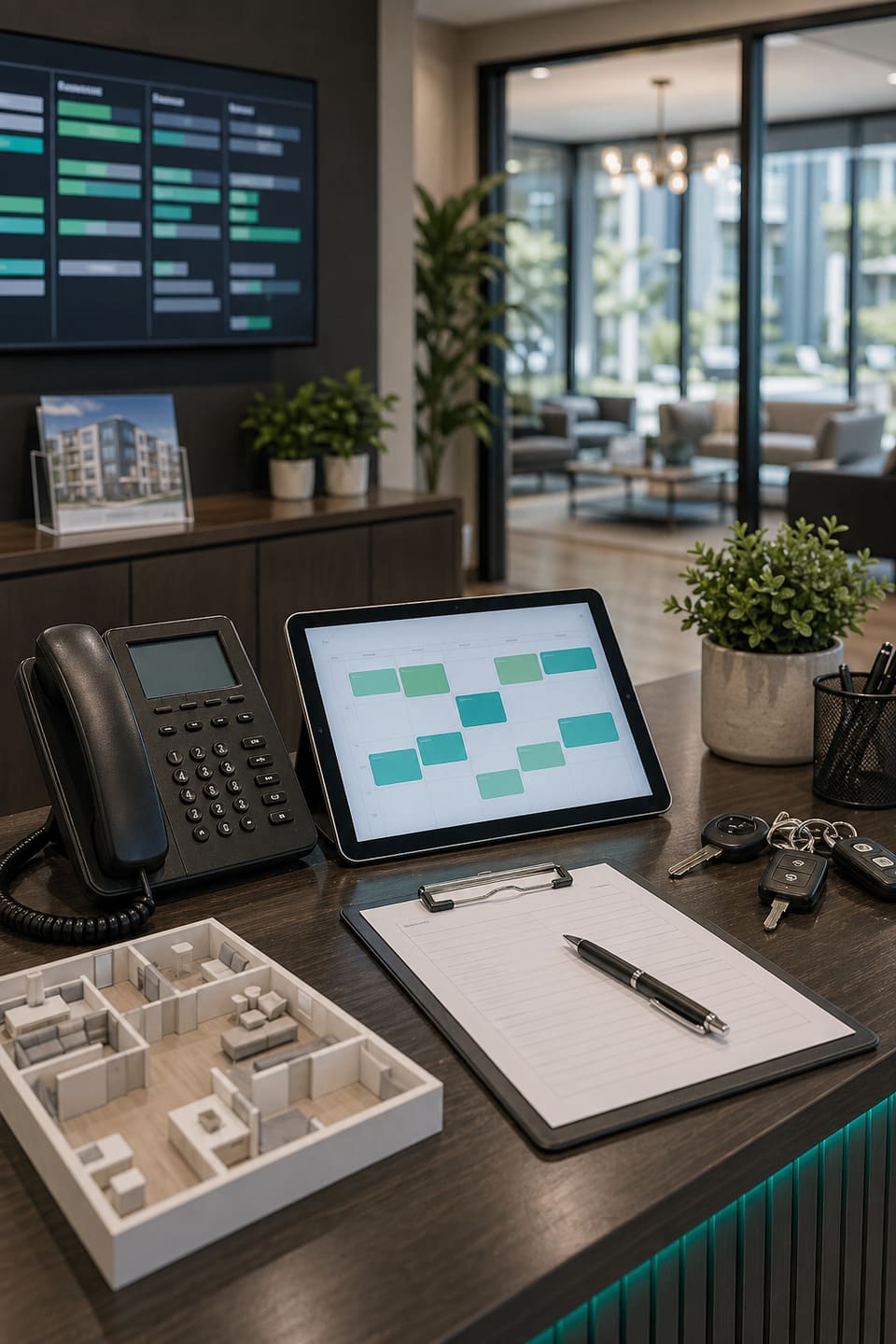
Property management calls are not one queue. Leasing prospects, residents, owners, vendors, appliance repairs, lockouts, and can-wait maintenance issues all need different next steps before the tour, repair, or owner thread gets harder to recover.
Read resource
Tenant appliance calls are not generic maintenance traffic. They combine resident urgency, vendor readiness, owner approval, warranty context, photos, access, and staff-only judgment.
Read resource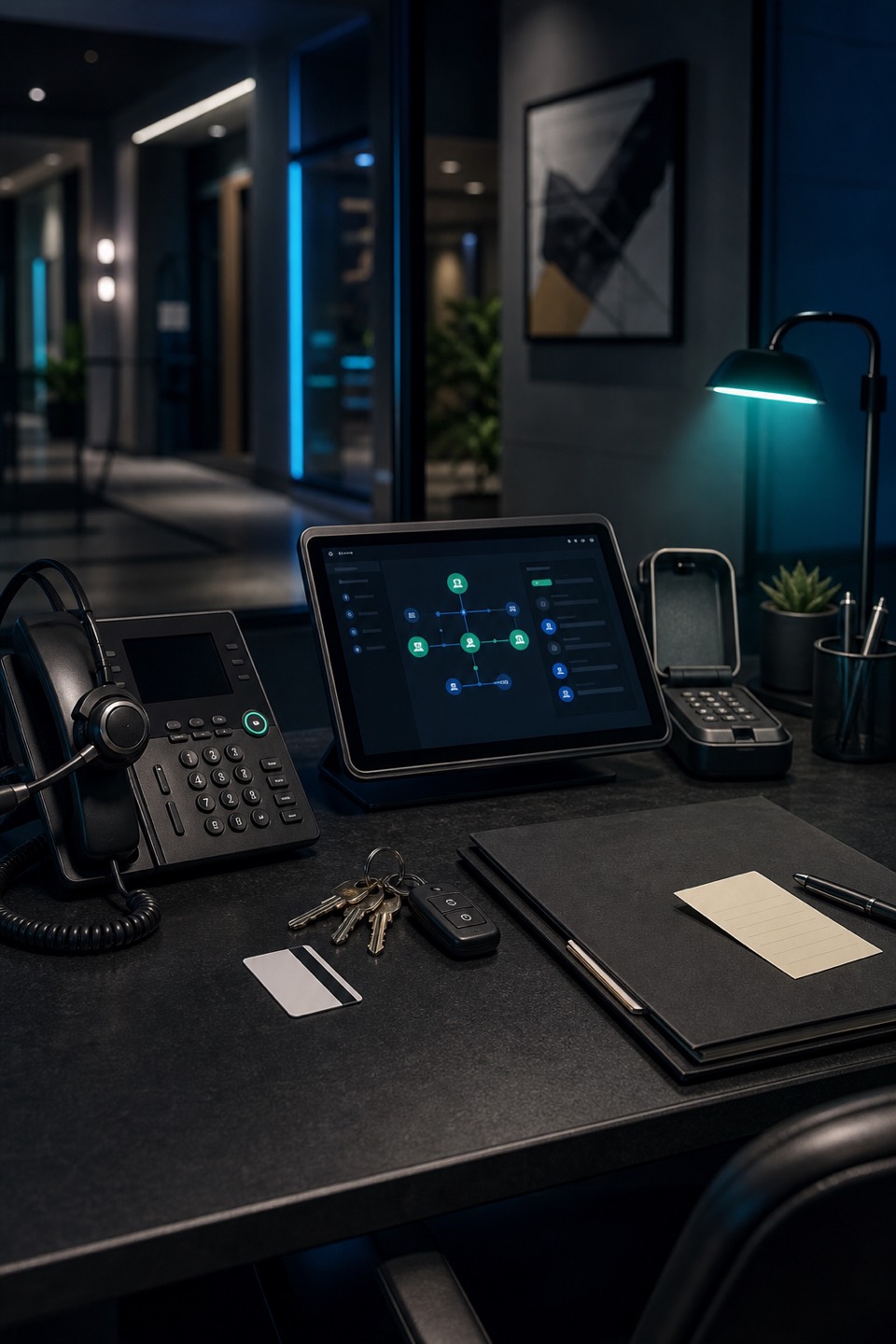
Resident lockout calls are urgent, trust-sensitive, and policy-sensitive. The first answer should capture access context without guessing authority, price, reimbursement, safety, or legal decisions.
Read resourceThese references support the phone demand, local search, and response speed claims above.
U.S. Census Bureau • 2024-12-12 • Accessed 2026-05-14
Census Bureau release for 2019-2023 ACS 5-year estimates reporting 42.4 million renter-occupied homes that paid cash rent and more than 20 million rented units spending over 30% of monthly income on housing costs.
Open sourceU.S. Bureau of Labor Statistics • 2025-08-28 • Accessed 2026-05-15
BLS Occupational Outlook Handbook profile for property, real estate, and community association managers covering duties, customer-service expectations, emergency/off-duty work, 2024 employment, projected growth, and annual openings.
Open sourceBuildium • 2025 • Accessed 2026-05-15
Buildium renter expectations report showing communication preferences, including 43% preferring phone calls as a contact method and 20% wanting more communication from their property manager or landlord.
Open sourceBuildium • 2025-10-31 • Accessed 2026-05-15
Buildium research article reporting rising rental-owner demand for compliance help and renter-retention findings tied to maintenance investment and responsiveness to maintenance requests.
Open sourceU.S. Department of Housing and Urban Development • Accessed 2026-05-14
HUD page describing the Multifamily Housing Complaint Line for resident complaints about poor maintenance, health and safety dangers, mismanagement, and related property-management issues.
Open sourceInstitute of Real Estate Management • Accessed 2026-05-14
IREM policy statement urging real estate managers to prepare for disasters and emergencies with procedures, teams, community relationships, and tenant/resident emergency communication.
Open sourceAppFolio • Accessed 2026-05-15
AppFolio maintenance operations guide describing real-time tracking, assignment, and completion of maintenance requests to improve communication between residents, vendors, and owners.
Open sourceInvoca • 2025-08-18 • Accessed 2026-05-16
Invoca analysis showing live answer-rate benchmarks across industries and calling behavior for high-stakes purchases.
Open sourceBrightLocal • 2025 • Accessed 2026-05-16
Survey of 1,000 US consumers about general and local search behavior, maps usage, and business information expectations.
Open source