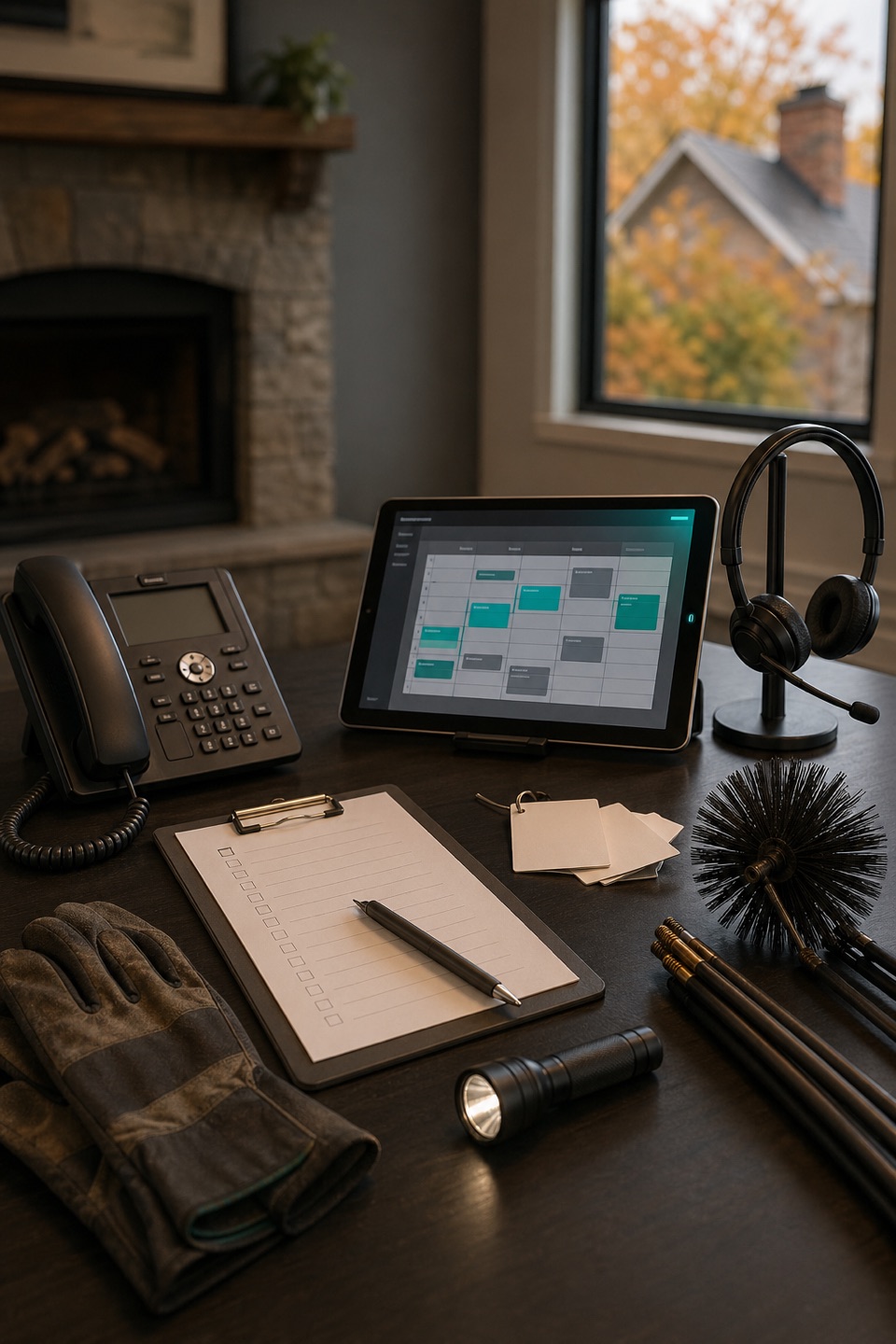
AI For Chimney Sweep Companies
iando.ai answers inbound calls for chimney sweeps, inspections, fireplace smoke issues, wood stove questions, annual maintenance, real estate inspections, and urgent safety concerns so homeowners do not wait on voicemail.
Built for chimney service teams where the owner, office, and certified technicians are often driving, on roofs, inside homes, or handling messy inspection notes when the next high-intent homeowner calls.
Built around the jobs your phone has to do: answer, schedule, route, handle approved Q&A, and recover missed-call revenue.
Edit call volume, buyer intent, 25% lift, and average sweep cost.
Planning model only. Replace with the company's missed-call report, booking rate, average sweep and inspection value, level 2 inspection mix, repair add-ons, service-area fit, seasonality, access constraints, and callback speed.
The business case for chimney sweep companies
Start with the calls the business already earned, then estimate which ones can become appointments, jobs, consults, or useful follow-ups.
For chimney sweep companies, ROI is not generic phone coverage. It is recovered fall booking demand, inspection add-ons, real estate timing, service-area fit, and fewer vague callbacks during the seasonal rush.
- Monthly chimney sweep, inspection, repair, smoke, and annual-service calls
- Buyer-intent share for homeowners ready to schedule or request an estimate
- Average chimney sweep or inspection value before repair and level-up add-ons
- A conservative 25% lift from immediate answering and better intake
- Capture annual sweep, inspection, smoke, draft, odor, repair, real estate, insurance, reschedule, and after-hours chimney calls.
- Collect appliance type, fuel, number of flues, last service date, symptoms, access, deadline, and preferred timing before callback.
- Answer approved pricing, service-area, preparation, inspection-level, maintenance, and scheduling questions without inventing safety advice.
- Route smoke in the home, carbon monoxide concerns, suspected chimney fire, damaged flue, active-use problems, and difficult access to staff.
What missed calls actually look like for chimney sweep companies
These are the moments where demand slips away because the team is already busy serving customers, patients, or active jobs.
Homeowners call when they are ready to schedule
A caller asking about a sweep, annual inspection, smoke smell, wood stove connection, or real estate deadline is usually comparing local options. If the phone goes to voicemail, the next company that answers can win the job.
Seasonal spikes overwhelm small offices
Fall, cold snaps, move-in dates, inspection deadlines, and smoke issues can concentrate demand into short windows. One scheduler cannot answer every call while also handling routes, technician notes, and existing customers.
Bad intake wastes technician time
Useful notes need appliance type, fuel type, last service date, smoke symptoms, access, roof pitch concerns, number of flues, inspection level, real estate timing, and whether repair or camera work may be needed.
What public data says about this buying behavior
Every stat references a public source below, so the revenue argument stays grounded instead of padded with invented benchmarks.
Average first-service value gives chimney sweep companies a practical missed-call recovery baseline before level 2 inspections, camera work, repairs, and add-ons are considered.
Routine sweep and inspection calls can be meaningful when missed calls happen during fall scheduling spikes, cold snaps, real estate deadlines, and safety concerns.
Annual inspection guidance supports recurring maintenance demand and makes after-hours, seasonal, and reminder calls worth capturing.
Seasonality matters because homeowners often call before and during cold-weather use, when calendars fill and response speed affects booking.
Call handling should capture symptoms and current appliance use while routing safety-sensitive concerns through company-approved human paths.
Chimney Sweep Companies need phone coverage built around their actual calls
The phone experience should match how the business earns trust, books revenue, and routes exceptions.
Chimney work is safety-sensitive
Annual inspection, creosote, draft, carbon monoxide, flue damage, and smoke-entry questions need approved language and careful routing. The call plan should gather context without making unsafe promises.
Inspection levels change the value
A basic sweep, level 1 inspection, level 2 real estate inspection, camera review, cap question, liner concern, or masonry repair estimate can all start with the same phone call but require different scheduling and pricing paths.
The first response shapes trust
Homeowners are inviting a technician into the home and often asking about fire or smoke risk. A fast, calm, specific response is a conversion event, not just an administrative task.
How iando.ai handles these calls
The best first layer is fast answer, clear qualification, then booking or escalation based on your operating rules.
Answer and identify the chimney need
iando.ai picks up right away and sorts the caller into annual sweep, level 1 inspection, level 2 real estate inspection, smoke or draft issue, stove question, cap or crown concern, repair estimate, reschedule, or urgent safety-sensitive route.
Capture the details before scheduling
It collects appliance type, fuel, number of fireplaces or stoves, last service date, symptoms, address, roof or access notes, preferred timing, photos or notes when useful, and whether the caller has a closing or insurance deadline.
Book, quote, route, or escalate
Simple jobs can move toward booking. Smoke in the home, carbon monoxide concerns, suspected chimney fire, damaged flue, difficult roof access, or pricing exceptions route to staff with the context attached.
Calls iando.ai can answer, route, or recover
These conversations are the highest-leverage starting point because they connect directly to revenue, schedule protection, or staff capacity.
Annual sweep and inspection calls
Wood-burning fireplaces, inserts, stoves, pellet units, gas appliances, last service date, use frequency, number of flues, and preferred service window.
Outcome: Move routine maintenance callers toward a booked appointment with fewer follow-up questions.
Real estate and insurance timing
Home purchase, sale, inspection report, lender or insurance request, deadline date, inspection level, access, and documentation needs.
Outcome: Protect deadline-sensitive work by capturing timing and routing the right inspection path.
Smoke, draft, odor, or blockage concerns
Smoke entering the room, poor draft, odor, water staining, visible damage, cap issues, venting questions, and whether the appliance is currently in use.
Outcome: Capture risk context and escalate safety-sensitive calls according to company rules.
Repair and add-on questions
Chimney caps, crowns, dampers, liners, masonry, flashing, waterproofing, camera inspection, animal guards, and follow-up repair estimates.
Outcome: Separate routine cleaning from work that needs a technician review or estimate.
What operators actually care about
Recover seasonal booking demand
Calls still get answered during route time, roof access, inspections, invoice work, and the fall rush when homeowners are trying to book before using the fireplace.
Give technicians better notes
The appointment starts with appliance, flue, fuel, symptoms, access, deadline, and safety context instead of a blank name and phone number.
Route sensitive calls clearly
Smoke, carbon monoxide concern, suspected chimney fire, damaged flue, and active-use issues follow approved escalation rules instead of being buried in voicemail.
Where the payoff shows up operationally
- Capture annual sweep, inspection, smoke, draft, odor, repair, real estate, insurance, reschedule, and after-hours chimney calls.
- Collect appliance type, fuel, number of flues, last service date, symptoms, access, deadline, and preferred timing before callback.
- Answer approved pricing, service-area, preparation, inspection-level, maintenance, and scheduling questions without inventing safety advice.
- Route smoke in the home, carbon monoxide concerns, suspected chimney fire, damaged flue, active-use problems, and difficult access to staff.
- Turn seasonal homeowner demand into booked sweeps, inspections, camera reviews, and qualified repair estimates.
How the operation changes when the phone stops leaking revenue
Sweep and inspection calls hit voicemail during inspections, route time, or fall spikes.
AfterEvery caller gets an immediate answer and a clear booking or callback path.
Callbacks start without appliance, fuel, flue, access, symptom, or deadline details.
AfterSchedulers and technicians receive practical notes before confirming the appointment.
Smoke, odor, carbon monoxide, and suspected fire concerns sit in the same queue as routine cleaning.
AfterSafety-sensitive calls are identified and routed under company-approved rules.
Real estate inspections are missed because timing is not captured quickly.
AfterDeadline-driven callers get sorted into the right inspection path fast.
Questions before putting AI on the phone
Chimney calls can be technical
That is why the AI should collect the details that affect inspection, scheduling, and routing, then stay inside company-approved language when safety or code questions appear.
We do not want safety promises made
The call plan should avoid guarantees. It should capture symptoms, current appliance use, visible issues, and urgency, then route smoke, carbon monoxide, and suspected fire concerns to the right human path.
Our busy season is unpredictable
The model should use your actual fall and winter call history, not an annual average. Overflow coverage matters most when the scheduler is already buried.
Turn more calls into booked revenue for chimney sweep companies.
iando.ai is built for businesses that depend on the phone and lose money when callers do not get a fast, useful answer. Book a demo and map the call plan to your call volume, hours, and booking logic.
Frequently asked questions
Can AI book chimney sweep appointments?
Yes, when the company's service area, calendar, and pricing rules allow it. At minimum, it can capture appliance, fuel, flue, access, timing, and symptom details so staff can confirm quickly.
Can it handle smoke or carbon monoxide concerns?
It should not diagnose. It should use approved safety language, capture the issue, ask whether the appliance is in use, and route urgent concerns to the right staff or emergency guidance path.
Can it answer inspection-level questions?
It can explain approved differences between routine sweep, level 1, level 2, real estate, camera, and repair-review paths, then route anything unusual to staff.
What should route to a human?
Smoke in the home, carbon monoxide concerns, suspected chimney fire, visible flue or masonry damage, active water entry, difficult roof access, real estate exceptions, complaints, and any code or safety-specific advice.
Why build a dedicated chimney sweep page instead of generic scheduling copy?
Because chimney calls involve seasonality, inspection levels, access, appliance type, fire-safety concerns, real estate timing, and repair add-ons. Generic scheduling language misses the real buying process.
Deeper articles for chimney sweep companies
Each guide supports the ICP landing page with practical, search-focused depth around staffing, routing, conversion, and operational efficiency.
Chimney sweep call ROI
Chimney sweep calls are seasonal, safety-sensitive, and often ready to book. A missed call can be an annual sweep, real estate inspection, smoke concern, repair estimate, or repeat maintenance customer.
Read articleMore phone-revenue pages
Research behind this page
These references support the phone-demand, local-search, and response-speed claims above.
HomeAdvisor • 2025-04-29 • Accessed 2026-04-27
HomeAdvisor chimney sweep cost guide reporting an average chimney cleaning cost of $254, a normal range of $129 to $380, and factors such as chimney type, access, buildup, inspection level, and seasonality.
Open sourceU.S. Environmental Protection Agency • 2025 • Accessed 2026-04-27
EPA Burn Wise maintenance guidance noting that fire officials recommend annual professional inspection of wood-burning appliances, chimneys, and vents, and advising homeowners to call a professional for smoke or venting issues.
Open sourceChimney Safety Institute of America • Accessed 2026-04-27
CSIA homeowner FAQ explaining that consumer cleaning products do not substitute for mechanical chimney cleaning and inspection, and that CSIA and NFPA recommend annual chimney inspections.
Open sourceU.S. Fire Administration / FEMA • 2022-01 • Accessed 2026-04-27
USFA topical fire report showing residential heating fire incidence peaking in January, with the lowest incidence in June, July, and August, and describing common heating-fire factors.
Open sourceChimney Safety Institute of America • Accessed 2026-04-27
CSIA homeowner guidance explaining creosote formation, draft and air-supply issues, chimney-fire risk, and the role of qualified annual chimney inspection in reducing safety hazards.
Open sourceU.S. Consumer Product Safety Commission • 1997-09-24 • Accessed 2026-04-27
CPSC consumer safety release urging professional annual inspection of fuel-burning appliances, including fireplaces and stoves, because hazards may involve fires and carbon monoxide.
Open sourceHomeGuide • 2026 • Accessed 2026-04-27
HomeGuide 2026 cost guide reporting chimney sweep costs of $150 to $375 on average for standard cleaning and inspection, with higher prices for difficult access, multiple flues, and inspection complexity.
Open sourceInvoca • 2025-08-18 • Accessed 2026-03-31
Invoca analysis showing live answer-rate benchmarks across industries and calling behavior for high-stakes purchases.
Open sourceBrightLocal • 2025 • Accessed 2026-03-31
Survey of 1,000 US consumers about general and local search behavior, maps usage, and business information expectations.
Open source