
Learn
Set the operating rules.
Services, coverage, hours, booking, routing, approved answers, and escalation paths are defined first.
I&O answers urgent calls, preserves exact risk context, and routes service-ready work without giving advice.
See electrician missed-call ROIAnswer live demand. Follow up approved opportunities. One human-sounding system works both ways.
I&O answers property owners, captures approved electricians context, and books or routes the next step.
I&O follows up approved property owners, preserves source and contact rules, and books the next conversation.
Illustrative planning model. Replace the assumptions with your own call volume and booking value.
Model: monthly inbound calls × calls not answered live (%) × unanswered calls recovered (%) × average electrical job value. Replace every assumption with your phone logs and collected outcomes.
Meet Adam, your around-the-clock call handling employee that feels human.
I&O learns the operation once, then answers, books, follows up, and routes every approved conversation within your rules.
Services, coverage, hours, booking, routing, approved answers, and escalation paths are defined first.
Human-sounding AI answers property owners without sending valuable demand to voicemail.
Each handled conversation becomes electrician-ready call context or a complete staff-ready handoff.
Answered demand, booked outcomes, routed conversations, and modeled value stay visible as performance improves.
Start with missed demand or approved follow-up, then expand after booked outcomes and recovered value are proven.
Use these checks to decide whether this call lane is worth modeling, what staff keeps, and where the next step should route.
It should not diagnose electrical hazards or replace a licensed electrician's judgment.
It can capture job type, location, timing, property details, and scheduling preferences so service calls move toward the calendar.
Those are high-value call paths because the system can gather project context before a human callback or estimate visit.
It covers overflow, after-hours demand, and repetitive intake so dispatch can focus on scheduling, routing, and higher-judgment customer work.
Demand slips away while the team is already serving customers, patients, or active jobs.
Breaker trips, burning smells, sparking outlets, partial power loss, and after-hours electrical issues are not casual inquiries. If nobody answers, the caller keeps dialing.
Panel upgrades, EV chargers, generator installs, remodel wiring, and lighting projects need a different intake path than a billing question or appointment reschedule.
Owners, dispatchers, and techs are often on jobs, driving, quoting, or troubleshooting. The business still needs every caller to get a clear next step.
Every statistic links to a public source, keeping the revenue case grounded.
Demand for electrical installation, replacement, upgrades, and alternative-power work keeps electrician call volume commercially meaningful.
Electrical problems often create urgency and safety concern, which makes fast phone response part of the buying decision.
Even routine electrical calls can carry meaningful ticket value before larger jobs like panels, generators, EV chargers, or rewiring.
Call handling should match how the business earns trust, books revenue, and hands off exceptions.
Safety concern changes the tone of the call. The first answer should be calm, direct, and organized enough to route the caller correctly.
The difference between a small repair and a multi-thousand-dollar upgrade often appears in the first two minutes: property type, symptoms, timeline, location, and requested work.
Electrical contractors compete in maps, local search, referrals, and paid traffic. The phone is still where that demand becomes scheduled work.
The best first layer is fast answer, clear qualification, then booking or escalation based on your operating rules.
I&O identifies whether the caller needs urgent service, routine troubleshooting, an installation estimate, a commercial/property-manager callback, or a billing/admin answer.
It collects the location, property type, symptoms, requested work, timing, access notes, and any escalation language you define in the call policy.
Bookable calls move toward the calendar. Urgent calls route according to your rules. Estimate calls become structured summaries instead of vague missed numbers.
These conversations are the highest-leverage starting point because they connect directly to revenue, schedule protection, or staff capacity.
Burning smell, sparking outlet, repeated breaker trips, partial power loss, exposed wiring, or after-hours concerns.
Outcome: Capture urgency, location, and issue type, then route according to your emergency policy.
High-value project calls where the caller needs timeline clarity, next steps, and confidence that the contractor can handle the work.
Outcome: Qualify the request and schedule an estimate or callback with useful context.
Tenant power issues, lighting failures, access coordination, maintenance calls, and recurring service relationships.
Outcome: Route by customer type, property details, urgency, and service area.
Fixture installs, outlet additions, inspections, permits, troubleshooting, service-area questions, and appointment changes.
Outcome: Resolve or route routine calls without distracting the field team.
Electrical callers often need a specific next step. Immediate answering keeps the opportunity alive before it becomes someone else's booking.
The first call path should not treat a smoking panel like a billing question. Classification protects both customer experience and dispatch focus.
Routine questions and structured intake happen without pulling the owner, dispatcher, or tech out of the current job.
After-hours electrical concerns go to voicemail.
AfterCallers get an immediate answer, intake, and approved next step.
Panel, EV charger, and generator requests arrive as vague missed calls.
AfterEstimate calls include project type, timeline, location, and callback context.
Dispatch handles emergencies, routine calls, and admin in one pile.
AfterCalls are classified before they reach the team.
Field teams lose focus answering repetitive service-area and scheduling questions.
AfterRoutine questions are handled while techs stay on the job.
Correct. The AI should not diagnose. It should answer immediately, collect critical details, and route according to your approved emergency and safety instructions.
That is why the call flow starts with classification: urgent issue, routine repair, estimate, commercial/property-manager request, or admin. The system routes instead of flattening every call.
Then qualify the call early. Service area, timeline, property type, issue type, and job category help separate real opportunities from low-fit calls.
Start with the buyer's reason for calling. iando captures intent, books what is ready, and hands staff the context that closes.
Edit call volume, qualified intent, 25% lift, and average electrical job value.
Planning model only. Replace with your real call logs, emergency mix, estimate close rate, service-call average, and project-level revenue by job type.
iando answers fast, captures why they raised their hand, books or routes the next step, and gives staff the context to close.
Each guide gives operators practical depth around staffing, call handling, conversion, and operational efficiency.
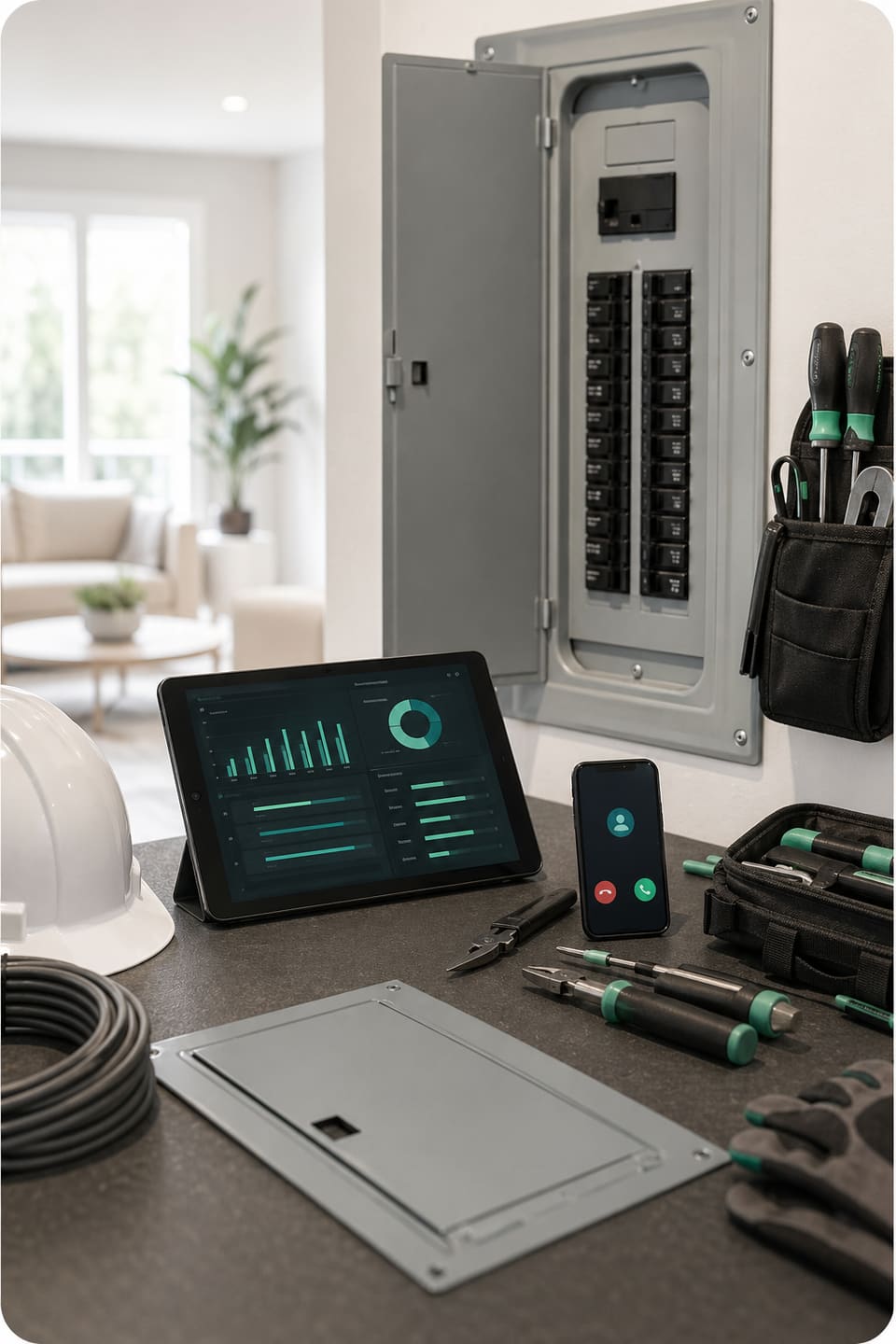
For electricians, missed calls are not just admin leakage. They can be urgent service requests, safety concerns, panel upgrades, EV charger installs, generator estimates, and property manager work that goes to whoever answers first.
Read resource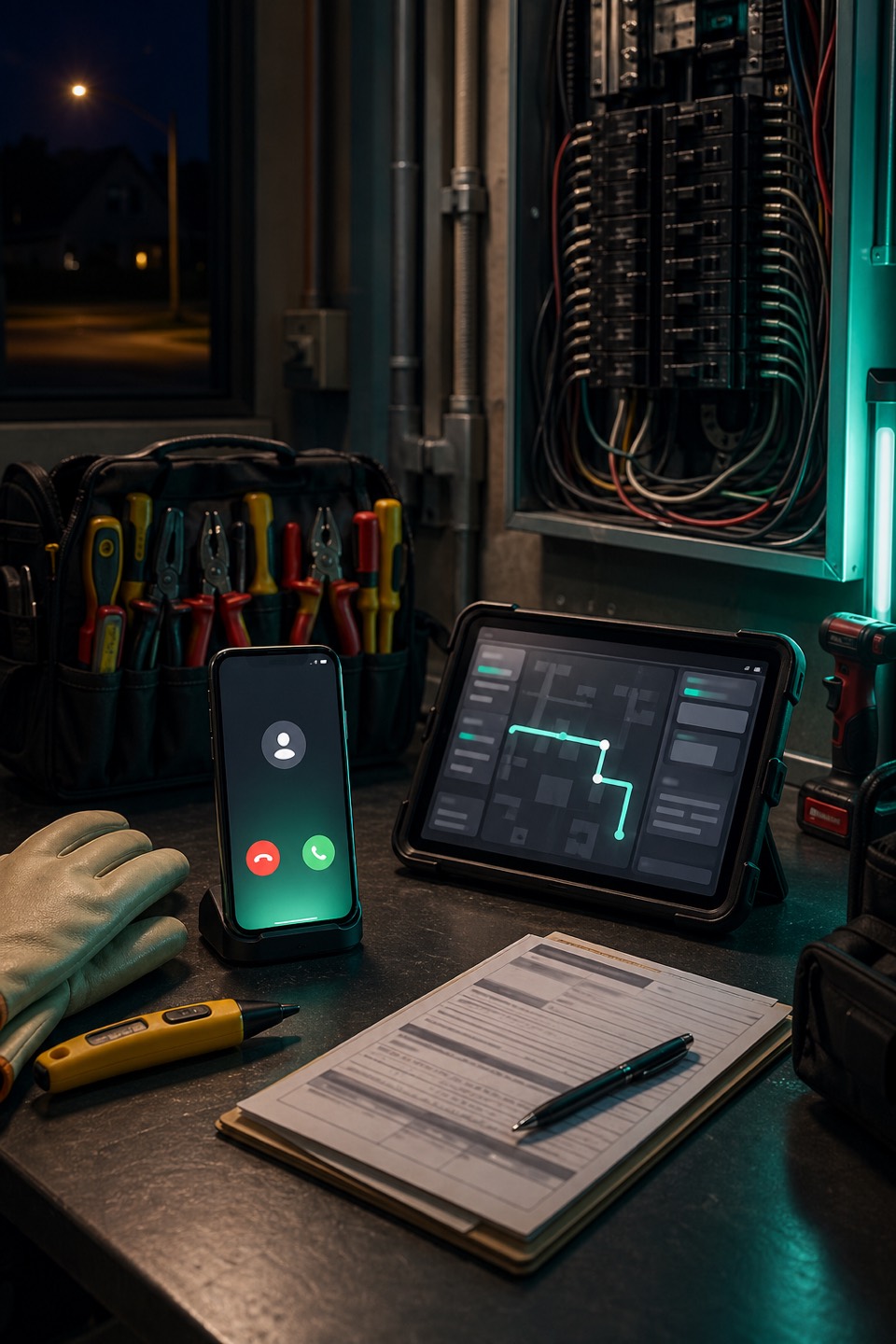
Emergency electrical callers do not need generic voicemail. They need a fast answer that captures urgency, affected areas, access, deadline pressure, and a safe next step.
Read resource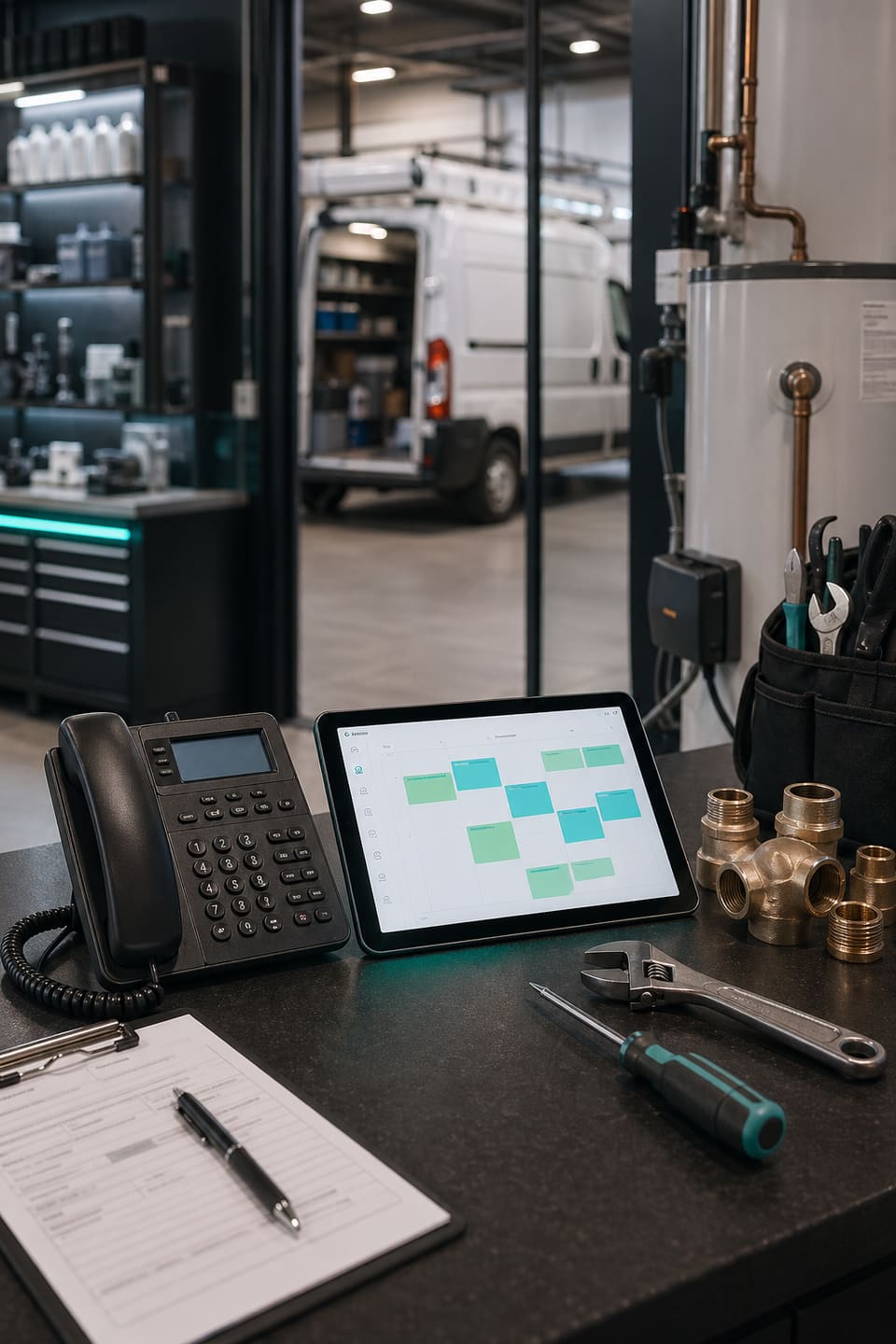
For plumbers, a missed call is often a homeowner with water on the floor, no running water, no hot water, a sewer backup, or a same-day repair need. The answering service ROI case starts with speed, clean handoffs, and job-value math.
Read resourceThese references support the phone demand, local search, and response speed claims above.
U.S. Bureau of Labor Statistics • 2025-08-28 • Accessed 2026-05-14
BLS Occupational Outlook Handbook profile for electricians, including 2024 employment, 2024-2034 projected growth, average annual openings, and notes about evening/weekend schedules.
Open sourceNational Fire Protection Association (NFPA) • Accessed 2026-04-25
NFPA research report estimating annual home fires, civilian deaths, injuries, and direct property damage involving electrical distribution and lighting equipment in 2015-2019.
Open sourceHomeAdvisor • 2025-06-26 • Accessed 2026-05-14
HomeAdvisor cost guide reporting typical homeowner spend to hire an electrician, average project cost, hourly-rate ranges, and added fees for service calls or emergencies.
Open sourceElectrical Safety Foundation International (ESFI) • Accessed 2026-04-25
ESFI consumer safety guidance recommending qualified, licensed electricians for home electrical work and summarizing electrical home-safety hazards and warning signs.
Open sourceInvoca • 2025 • Accessed 2026-05-14
Invoca benchmark report based on AI analysis of more than 60 million phone calls in consumer services.
Open sourceInvoca • 2025-08-18 • Accessed 2026-05-16
Invoca analysis showing live answer-rate benchmarks across industries and calling behavior for high-stakes purchases.
Open sourceBrightLocal • 2025 • Accessed 2026-05-16
Survey of 1,000 US consumers about general and local search behavior, maps usage, and business information expectations.
Open source