
iando.ai answers after-hours tenant lockout, rekey, access, lock-change, broken-key, and property-management locksmith calls 24/7 so urgency, authority, access notes, and vendor next steps are captured before the caller keeps escalating.
Built for locksmiths and property-management maintenance teams where the first answer needs to calm the resident, protect owner confidence, avoid unsafe promises, and create a believable dispatch-or-callback path.
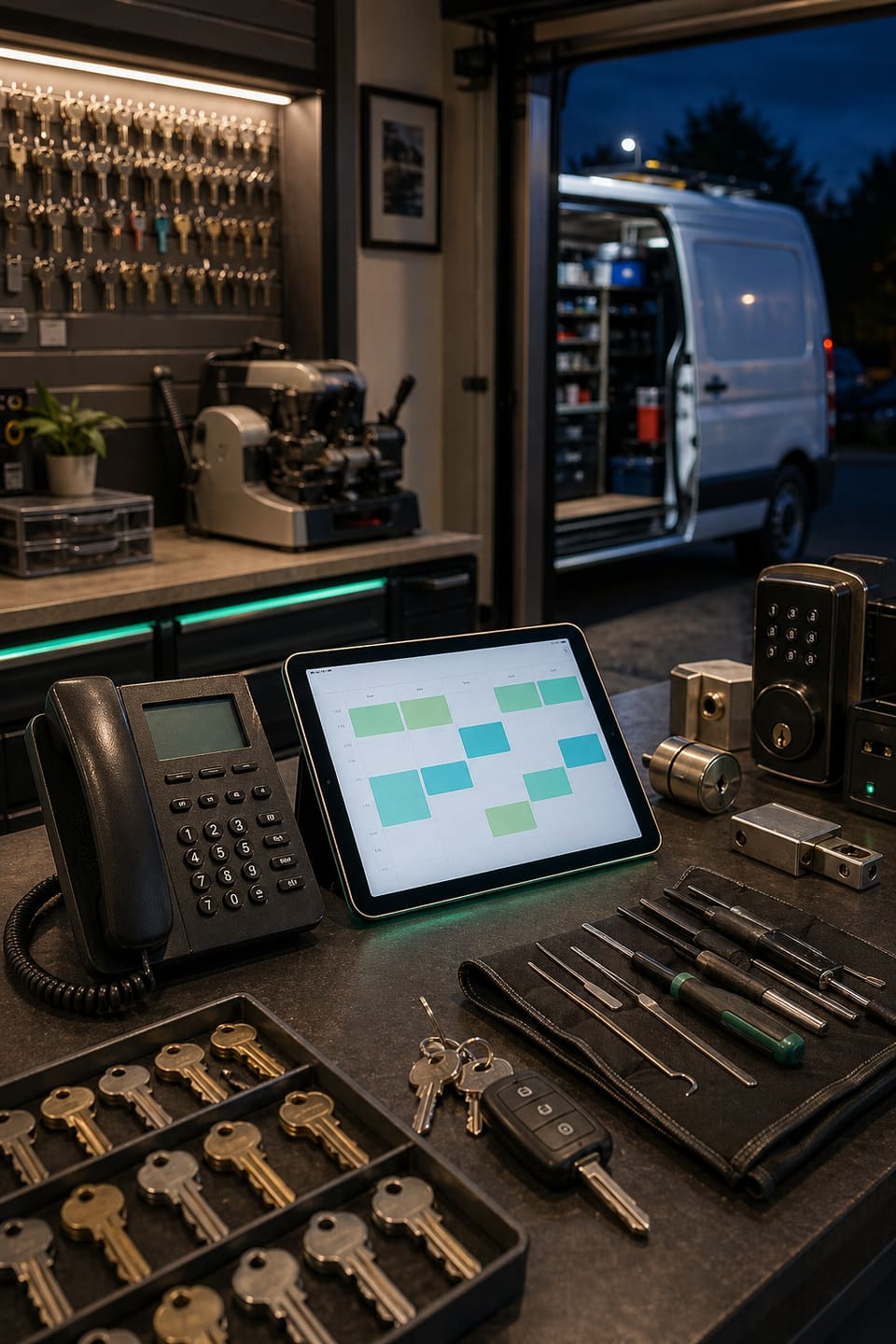
Tenant access router
Tenant access calls become staff-ready handoffs.
Resident, unit, lock type, proof reminder, manager approval, access notes, and callback urgency stay attached before anyone promises entry.
Fastest path to revenue
Start with one high-intent call lane: appointments, estimates, emergencies, consults, recalls, renewals, or after-hours demand.
Start with the buyer's reason for calling. iando captures intent, books what is ready, and hands staff the context that closes.
Revenue Lift 24/7
Monthly modeled value
Edit call volume, qualified intent, 25% lift, and average urgent locksmith job value.
Monthly lift
$4,241/mo
Recovered calls that turn into booked, escalated, or staff ready next steps.
Annualized return Live estimate
$50,895/yr
The number operators use to decide whether better call coverage is worth it.
+22 recovered tenant lockout jobs/mo
90-day proof review: compare answered calls, captured next steps, and staff handoffs.
Run your numbers Adjust the four inputs. The return updates instantly.
150 calls/mo, 58% intent, 25% lift
24/7 coverage captures the calls that happen after hours, during peaks, and while staff are busy.
$195 average urgent locksmith job value
Average value per converted booking, job, consult, appointment, or documented next step.
90-day review
Compare answered calls, captured next steps, booked outcomes, and staff handoffs against the model.
Planning model only. Replace with after-hours call logs, property-management account share, lockout-to-dispatch rate, rekey and lock-change attach rate, technician capacity, approved pricing rules, and actual average invoice value.
More approved paths
Calls Coming In
After-hours tenant lockout
Residents locked out of apartments, condos, rentals, offices, storage rooms, gates, or common areas who need...
Property-manager or owner approval
Maintenance coordinators, owner reps, leasing teams, or on-call managers trying to approve, document, or price an...
Rekey, lock change, and broken key
Move-out rekeys, tenant turnover, lost keys, broken keys, sticky locks, deadbolt issues, smart-lock failures, and...
Security-sensitive exceptions
Eviction language, contested access, high-security cylinders, commercial master keys, access control, exact...
Revenue Path
Reach the buyer while intent is still hot.
iando answers fast, captures why they raised their hand, books or routes the next step, and gives staff the context to close.
What Staff Gets
After-hours tenant lockout
Capture location, urgency, proof reminders, property contact, and dispatch readiness.
Property-manager or owner approval
Record who authorized the call and what update the owner or manager expects.
Rekey, lock change, and broken key
Separate urgent access from routine rekey or hardware work before it gets buried.
Security-sensitive exceptions
Route staff-only issues without improvising a risky promise.
Emergency Locksmith Tenant Lockout Calls missed-call recovery model
See how unanswered emergency locksmith tenant lockout calls demand becomes booked work.
Start with the demand the business already earned, then replace each assumption with phone logs and completed outcomes. The model follows one direct path: total demand, calls not answered live, and recaptured next steps.
Modeled recovered value / month
$4,388
Gross modeled value from tenant lockout jobs. The model excludes uncollected revenue and outcomes the team cannot fulfill.
23
modeled recaptured / booked / month
$52,650
annualized gross modeled value
Quote after review
monthly lane plan
Demand
150
inbound calls
Unanswered share
38
calls not answered live
Recaptured / booked
23
60% of unanswered calls
Model inputs
Planning volume for emergency locksmith tenant lockout calls. Replace with your phone logs.
Assumes the team already answers 75% of calls live.
I&O operating scenario; replace with booked, routed, or staff-ready outcomes from your logs.
Planning input for average urgent locksmith job value; replace with completed or collected outcome value.
Method, assumptions, and value source
Model: monthly inbound calls × calls not answered live (%) × unanswered calls recovered (%) × average urgent locksmith job value.
Pricing is scoped after lane review using coverage, expected volume, workflow depth, integrations, and staff handoff. The value model excludes setup, labor, cancellations, refunds, and uncollected revenue.
Revenue leaks
Where emergency locksmith tenant lockout calls loses calls
Demand slips away while the team is already serving customers, patients, or active jobs.
The resident needs access now
A tenant locked out at night, during bad weather, before work, or with children waiting is not comparing vendors calmly. They need a credible next step fast.
Property managers face two audiences
The caller may be a resident, a maintenance coordinator, an owner, a leasing agent, or an on-call manager. The answer has to capture who has authority and who needs the update.
Vendor-shopping starts quickly
When a resident or manager cannot get a clear first answer, they often call another locksmith, escalate the owner thread, or create extra cleanup work for staff the next morning.
Proof
What public data shows
Every statistic links to a public source, keeping the revenue case grounded.
$107-$242
typical professional locksmith service cost in Angi's 2026 guide
1
Routine locksmith jobs can carry enough ticket value that recovered calls quickly matter, especially when paired with commercial or repeat work.
$50-$150
added cost Angi lists for emergency or after-hours locksmith calls
1
After-hours and emergency calls are commercially meaningful and need fast, trusted response instead of voicemail.
$150-$250+
HomeGuide's emergency or after-hours hourly locksmith range
2
Urgent lockout and after-hours demand should be captured, qualified, and routed before the caller finds another provider.
Trust
Locksmith answering needs to reinforce company identity, service area, estimate steps, and technician handoff so callers feel they reached a legitimate local provider.
42.4M
renter-occupied homes paid cash rent in 2019-2023 ACS data
6
A large rental base keeps leasing, maintenance, renewal, payment, and resident-service calls flowing into property management teams.
31%
of uncertain renters would stay if maintenance responses improved
7
Maintenance responsiveness connects resident service with retention, which makes after-hours and overflow call handling commercially meaningful.
Industry fit
Emergency Locksmith Tenant Lockout Calls, handled.
Call handling should match how the business earns trust, books revenue, and hands off exceptions.
Lockout calls are urgent and local
Angi and HomeGuide both show emergency or after-hours locksmith work can carry higher fees than routine work. That demand should not disappear into voicemail.
Trust is part of the conversion
FTC and state consumer guidance warn buyers to be careful when hiring locksmiths, so the first answer should sound specific, local, organized, and clear about the approved estimate path.
Resident communication protects relationships
Property-management research and emergency-preparedness guidance emphasize responsiveness, resident communication, maintenance coordination, and emergency procedures.
Workflow
How I&O handles these calls
The best first layer is fast answer, clear qualification, then booking or escalation based on your operating rules.
Answer and identify the access problem
iando.ai separates tenant lockout, broken key, lock change, rekey, smart-lock issue, access-control issue, mailbox or storage lock, commercial tenant access, and staff-only exceptions.
Capture approval and property context
It gathers the resident or manager name, callback number, address, unit, access notes, property-manager contact, proof or authorization reminders, lock type, timing pressure, and approved photos or details.
Route a credible next step
Bookable calls move into the dispatch path. Pricing, proof, after-hours approval, master-key, high-security, eviction, warranty, and staff-only issues route with a clean summary.
Calls It Handles
Calls I&O can answer, escalate, or recover
These conversations are the highest-leverage starting point because they connect directly to revenue, schedule protection, or staff capacity.
After-hours tenant lockout
Residents locked out of apartments, condos, rentals, offices, storage rooms, gates, or common areas who need access and a trusted next step.
Outcome: Capture location, urgency, proof reminders, property contact, and dispatch readiness.
Property-manager or owner approval
Maintenance coordinators, owner reps, leasing teams, or on-call managers trying to approve, document, or price an access request.
Outcome: Record who authorized the call and what update the owner or manager expects.
Rekey, lock change, and broken key
Move-out rekeys, tenant turnover, lost keys, broken keys, sticky locks, deadbolt issues, smart-lock failures, and lock changes after access incidents.
Outcome: Separate urgent access from routine rekey or hardware work before it gets buried.
Security-sensitive exceptions
Eviction language, contested access, high-security cylinders, commercial master keys, access control, exact pricing, or proof-of-authority concerns.
Outcome: Route staff-only issues without improvising a risky promise.
Outcomes
What operators actually care about
More dispatch-ready access calls
Technicians and managers see the unit, lock type, caller role, proof reminders, approval path, access notes, and timing pressure before responding.
Less overnight escalation
Residents hear a specific tenant lockout path instead of voicemail while managers and owners get cleaner next-step context.
Better repeat-account protection
Property-management accounts see a vendor that captures details, routes exceptions, and keeps urgent resident issues from becoming owner-thread cleanup.
Recovered Value
Where the payoff shows up operationally
- Tenant lockout, broken-key, rekey, and lock-change calls answered immediately.
- Unit, property, proof, access, authorization, and callback context captured.
- After-hours, exact-price, high-security, eviction, and staff-only exceptions routed by approved rules.
- Property-manager and owner update pressure preserved for the follow-up.
Before And After
How the operation changes when the phone stops leaking revenue
A tenant lockout hits voicemail while the resident and manager keep calling around.
AfterThe call is answered, classified, and moved into a dispatch or callback path.
The technician calls back without knowing the unit, lock type, or approval path.
AfterThe callback starts with resident, property, proof, access, and timing details already summarized.
Owner threads get vague updates after a stressful overnight issue.
AfterThe team has clearer language about what was captured, what was routed, and what happens next.
Eviction, proof, high-security, or exact-price questions invite improvisation.
AfterSensitive access and pricing questions route through approved staff rules.
Operator Questions
Questions before putting AI on the phone
Tenant access can involve proof and authority
Correct. The AI should not promise access. It should capture the caller's role, explain approved proof reminders, and route exceptions to staff or the manager.
Property managers already have an on-call process
Keep it. iando.ai gives that process a faster first answer and better notes so the on-call person starts from context.
Locksmith pricing changes after hours
The call path should use approved estimate language only, then route exact pricing, trip fees, specialized hardware, or account-rate questions to staff.
First Revenue Lane
Pick the call path most likely to create a customer this week.
Book a demo, talk to Adam, or start with one lane: the demo request, quote form, missed call, renewal, no-show, or follow-up list your team already earned but cannot reach fast enough.
Buyer FAQ
Fast answers for AI phone answering for tenant lockout calls.
Use these checks to decide whether this call lane is worth modeling, what staff keeps, and where the next step should route.
Can AI answer tenant lockout calls safely?
Yes, when it stays inside approved access, proof, pricing, and dispatch language.
It should collect facts, avoid promising access, and route exceptions to staff or the property manager.
Can it help property managers after hours?
Yes.
It can answer immediately, capture resident impact and unit context, identify approval needs, and create a cleaner dispatch or callback path.
Does it decide whether someone is allowed into a unit?
No.
Proof-of-authority and access decisions should follow the locksmith or property manager's policy. The AI captures context and routes the next step.
Why make a page for tenant lockouts instead of only locksmiths?
Because tenant lockouts include resident anxiety, owner-thread pressure, property-manager approval, access notes, and repeat-account risk that a generic locksmith page does not fully address.
Supporting Guides
Deeper guides for emergency locksmith tenant lockout calls
Each guide gives operators practical depth around staffing, call handling, conversion, and operational efficiency.
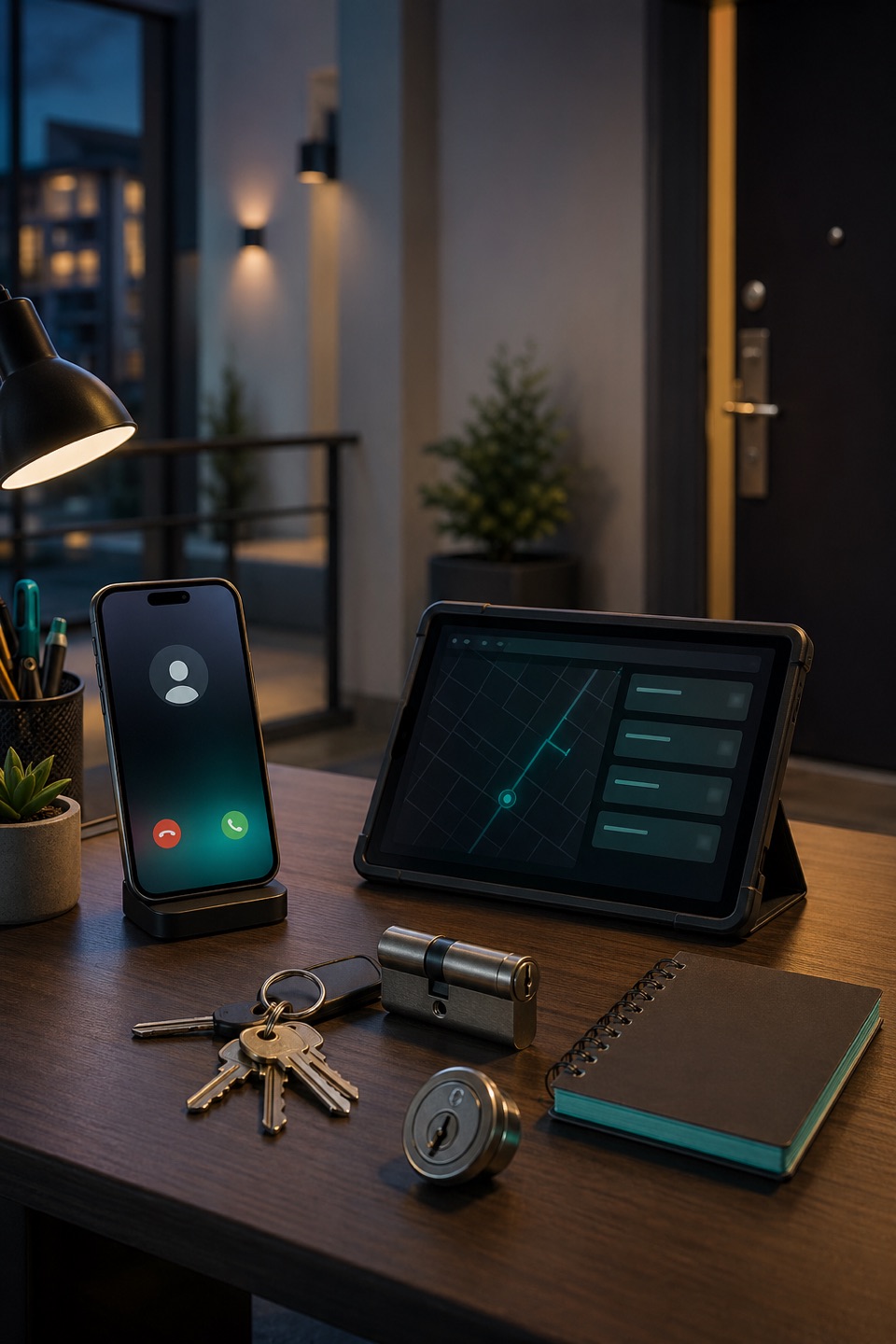
The tenant lockout call is an access issue and a trust issue
A tenant lockout call is urgent, trust-sensitive, and easy to lose to the next vendor. The first answer should calm the resident, capture authority and access context, and create a credible next step.
Read resource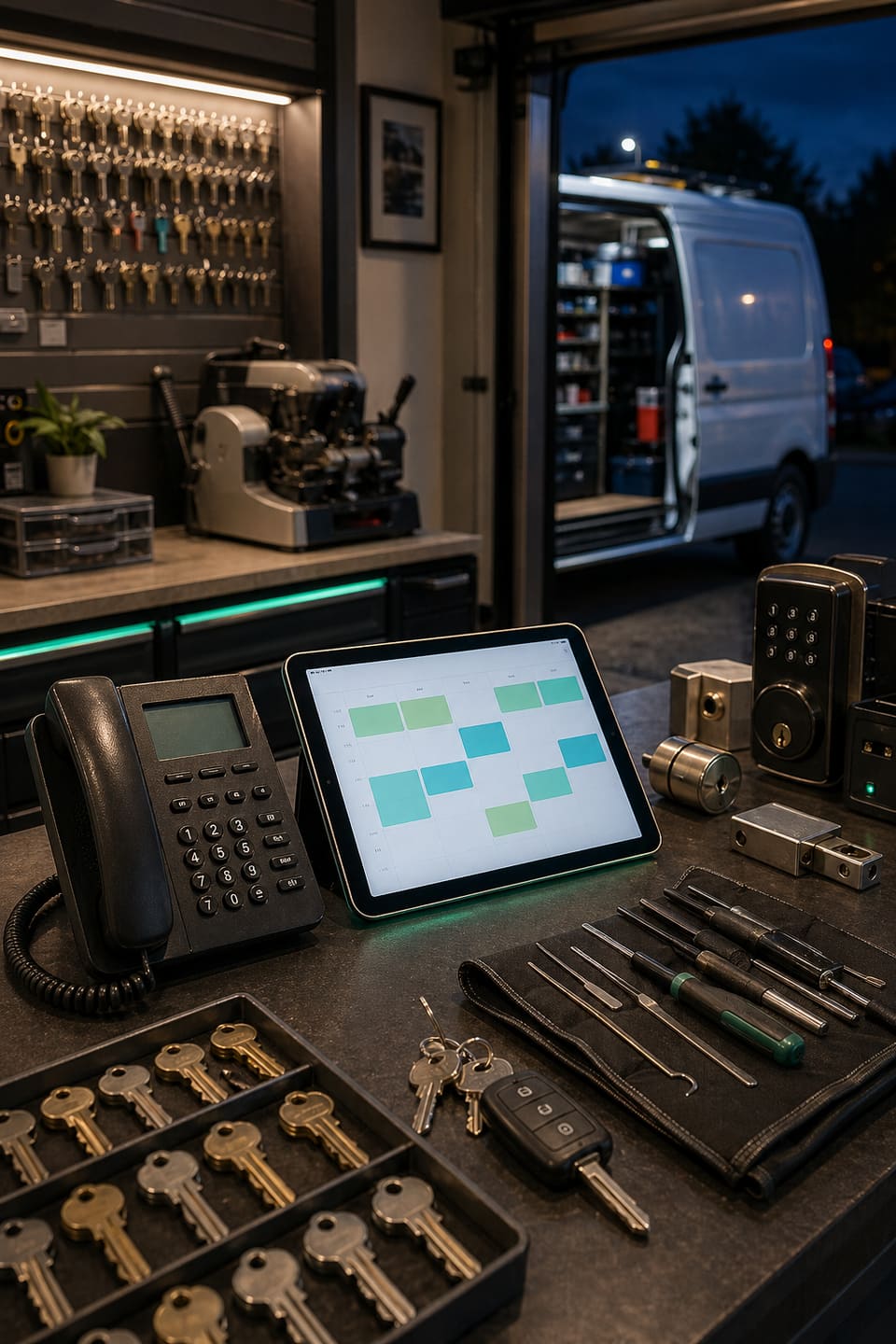
Emergency locksmith answering service ROI starts when the lockout caller gets a credible first answer
A lockout call is urgent, local, and trust-sensitive. The first answer should lower panic, capture dispatch facts, avoid unsafe access promises, and create a credible next step.
Read resource
Recover lockout calls with a first answer that sounds trusted
Locksmith calls are urgent, local, and trust-sensitive. The missed-call revenue case starts with fast answering, better job details, review-aware trust signals, and a clear technician handoff.
Read resource
Sources
Research behind this page
These references support the phone demand, local search, and response speed claims above.
Angi • 2026-03-17 • Accessed 2026-05-14
Angi cost guide reporting typical professional locksmith service costs of $107-$242, a $50-$400 national range, and $50-$150 added for emergency or after-hours calls.
Open sourceHomeGuide • 2024-09-06 • Accessed 2026-05-14
HomeGuide locksmith cost guide covering service-call fees, normal hourly rates, emergency and after-hours rates, automotive lockout ranges, car-key replacement ranges, and hiring tips.
Open sourceFederal Trade Commission • 2008-05-30 • Accessed 2026-05-14
FTC consumer alert warning that some locksmiths advertising locally may not be local and that some may lack professional training, encouraging consumers to research reputable locksmiths before an emergency.
Open sourceCalifornia Department of Consumer Affairs • Accessed 2026-05-14
California DCA consumer guidance noting common locksmith needs, scam risks, licensing expectations in California, estimates, receipts, identification, and license verification.
Open sourceALOA Security Professionals Association • Accessed 2026-05-14
ALOA directory page explaining that consumers can find qualified local locksmiths who are ALOA members, and that members are vetted and expected to follow professional and ethical standards.
Open sourceU.S. Census Bureau • 2024-12-12 • Accessed 2026-05-14
Census Bureau release for 2019-2023 ACS 5-year estimates reporting 42.4 million renter-occupied homes that paid cash rent and more than 20 million rented units spending over 30% of monthly income on housing costs.
Open sourceBuildium • 2025-10-31 • Accessed 2026-05-15
Buildium research article reporting rising rental-owner demand for compliance help and renter-retention findings tied to maintenance investment and responsiveness to maintenance requests.
Open sourceThis Old House • 2026-03-10 • Accessed 2026-05-14
This Old House locksmith cost guide reporting a common $90-$195 range, about $150 average cost, and higher costs for emergency or after-hours locksmith service.
Open sourceBuildium • 2025 • Accessed 2026-05-15
Buildium renter expectations report showing communication preferences, including 43% preferring phone calls as a contact method and 20% wanting more communication from their property manager or landlord.
Open sourceInstitute of Real Estate Management • Accessed 2026-05-14
IREM policy statement urging real estate managers to prepare for disasters and emergencies with procedures, teams, community relationships, and tenant/resident emergency communication.
Open sourceNational Apartment Association • Accessed 2026-05-15
NAA sample maintenance-emergency guidance illustrating apartment examples such as no heat or air conditioning, no hot or cold water, water leaks, sewer backup, gas smell, electrical failure, and one-toilet stoppages.
Open sourceInvoca • 2025-08-18 • Accessed 2026-05-16
Invoca analysis showing live answer-rate benchmarks across industries and calling behavior for high-stakes purchases.
Open sourceBrightLocal • 2025 • Accessed 2026-05-16
Survey of 1,000 US consumers about general and local search behavior, maps usage, and business information expectations.
Open source