
Learn
Set the operating rules.
Services, coverage, hours, booking, routing, approved answers, and escalation paths are defined first.
I&O answers immediately, verifies service context, and routes technician-ready work before callers keep searching.
See locksmith missed-call ROIAnswer live demand. Follow up approved opportunities. One human-sounding system works both ways.
I&O answers urgent callers, captures approved locksmiths context, and books or routes the next step.
I&O follows up approved urgent callers, preserves source and contact rules, and books the next conversation.
Illustrative planning model. Replace the assumptions with your own call volume and booking value.
Model: monthly inbound calls × calls not answered live (%) × unanswered calls recovered (%) × average job value. Replace every assumption with your phone logs and collected outcomes.
Meet Adam, your around-the-clock call handling employee that feels human.
I&O learns the operation once, then answers, books, follows up, and routes every approved conversation within your rules.
Services, coverage, hours, booking, routing, approved answers, and escalation paths are defined first.
Human-sounding AI answers urgent callers without sending valuable demand to voicemail.
Each handled conversation becomes technician-ready locksmith jobs or a complete staff-ready handoff.
Answered demand, booked outcomes, routed conversations, and modeled value stay visible as performance improves.
Start with missed demand or approved follow-up, then expand after booked outcomes and recovered value are proven.
Use these checks to decide whether this call lane is worth modeling, what staff keeps, and where the next step should route.
It can answer immediately, collect location, job details, proof reminders, and urgency, then send the call through the locksmith company's after-hours and dispatch rules.
It is built for inbound locksmith calls such as lockouts, rekeys, car keys, broken keys, safes, commercial doors, after-hours jobs, and dispatch-ready callbacks.
Most locksmith calls should get an approved estimate path while complex locks, drilling, hardware, safe, commercial, or after-hours exceptions go to staff.
It covers missed calls, overflow, approved Q&A, intake, and summaries so staff can focus on dispatch, specialized advice, quoting, security-sensitive decisions, and job quality.
Demand slips away while the team is already serving customers, patients, or active jobs.
A locked-out homeowner, driver, tenant, or manager is usually calling from a stressful situation. If the company misses the call, the caller keeps searching.
Mobile locksmiths are driving, verifying access, opening locks, cutting keys, rekeying cylinders, and working on hardware. The next job can arrive while the current job still needs full attention.
Locksmith buyers are cautious because scams and vague pricing are well known in the category. A clear answer with company identity, service area, estimate steps, and a specific handoff builds confidence fast.
Every statistic links to a public source, keeping the revenue case grounded.
Locksmiths compete in a local, urgent, fragmented category where fast answering can decide who gets the job.
High local choice means lockout, rekey, access, and commercial callers may keep calling until one provider answers clearly.
The Census NAICS profile reinforces that locksmith work is a defined local-services category with many small operators and storefronts.
A small skilled labor pool makes it costly to pull technicians away from billable calls just to answer repetitive questions.
Routine locksmith jobs can carry enough ticket value that recovered calls quickly matter, especially when paired with commercial or repeat work.
After-hours and emergency calls are commercially meaningful and need fast, trusted response instead of voicemail.
Urgent lockout and after-hours demand should be captured, qualified, and routed before the caller finds another provider.
Locksmith answering needs to reinforce company identity, service area, estimate steps, and technician handoff so callers feel they reached a legitimate local provider.
For locksmiths, first-answer clarity should support the trust signals a local buyer just checked before calling.
Call handling should match how the business earns trust, books revenue, and hands off exceptions.
IBISWorld reports 29,620 U.S. locksmith businesses in 2026 and no company with more than 5% market share. That means many callers have several local alternatives.
Angi notes emergency and after-hours locksmith calls add cost, and HomeGuide lists higher emergency or after-hours hourly rates. Those calls need fast handling and careful qualification.
Address, lock type, vehicle make, proof-of-authority needs, key status, door hardware, safe details, photos, access notes, and urgency help staff quote, dispatch, or send the job to the right person.
The best first layer is fast answer, clear qualification, then booking or escalation based on your operating rules.
I&O picks up immediately and separates residential lockouts, car lockouts, rekeys, broken keys, commercial door hardware, safe work, access control, and routine service questions.
It captures name, callback number, location, lock or vehicle details, photos if useful, urgency, service-area fit, preferred timing, and any approved proof-of-authority or identification reminders.
Bookable jobs move toward the calendar or dispatcher. Safe, high-security, exact-price, warranty, automotive-programming, commercial master-key, and staff-only questions go to the team with context attached.
These conversations are the highest-leverage starting point because they connect directly to revenue, schedule protection, or staff capacity.
Callers locked out of a house, apartment, office, retail store, storage room, or rental property who need availability, timing, location confirmation, and a calm next step.
Outcome: Capture the urgent job with enough detail for dispatch or technician callback.
Move-in rekeys, tenant turnover, lost keys, broken locks, deadbolts, smart locks, door closers, panic hardware, and storefront door issues.
Outcome: Qualify the work without inventing prices and collect the door, lock, count, and timing details staff need.
Car lockouts, lost keys, fobs, transponders, ignition questions, make and model details, location, and whether the caller has proof of ownership.
Outcome: Separate simple lockouts from car-key programming or staff-only work before a technician is pulled in.
Master keying, safe opening, file cabinets, restricted keys, access control, doors, closers, electric strikes, and security hardware questions.
Outcome: Send specialized work with company-approved guardrails, photos, and site context.
Fast answering keeps lockout, lost-key, rekey, and commercial repair callers from moving to the next local locksmith.
Approved Q&A and structured intake keep technicians focused while callers still get a useful first answer and next step.
Callbacks include location, lock or vehicle details, urgency, proof reminders, photos, service-area fit, and timing instead of only a phone number.
Lockout calls hit voicemail while technicians are on jobs.
AfterCallers get an immediate answer and a clear dispatch or callback path.
Staff call back without knowing lock type, vehicle details, location, or urgency.
AfterCallbacks include the details needed to quote, book, or send the job to the right person.
Safe, automotive, commercial, and simple lockout calls all mix together.
AfterSpecialized work is identified early and routed by approved rules.
After-hours callers keep searching until someone answers.
AfterUrgent demand gets covered 24/7 without staffing every call manually.
Correct. AI should not invent exact prices. It should explain the approved estimate path, collect lock and job details, and send pricing decisions to staff when complexity matters.
That belongs in the call path. The AI can remind callers about approved identification or proof-of-authority requirements and send exceptions to staff.
The answer should use your company name, service area, approved service list, arrival expectations, and next step so callers hear a legitimate local locksmith.
Start with the buyer's reason for calling. iando captures intent, books what is ready, and hands staff the context that closes.
Edit call volume, qualified intent, 25% lift, and average job value.
Planning model only. Replace with real missed-call volume, booked-job rate, after-hours mix, residential and commercial split, average invoice, technician capacity, and service-area coverage.
iando answers fast, captures why they raised their hand, books or routes the next step, and gives staff the context to close.
Each guide gives operators practical depth around staffing, call handling, conversion, and operational efficiency.
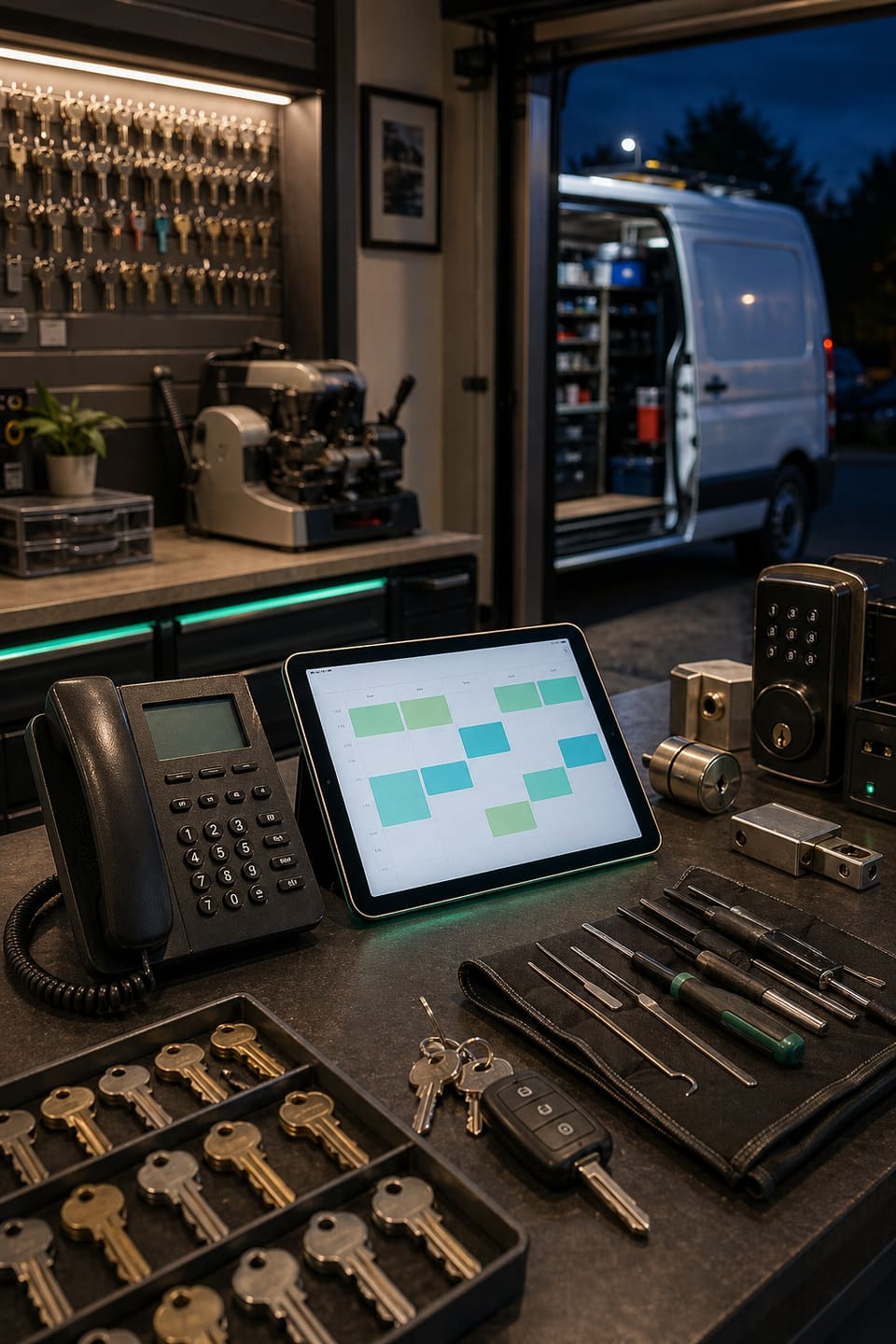
Locksmith calls are urgent, local, and trust-sensitive. The missed-call revenue case starts with fast answering, better job details, review-aware trust signals, and a clear technician handoff.
Read resource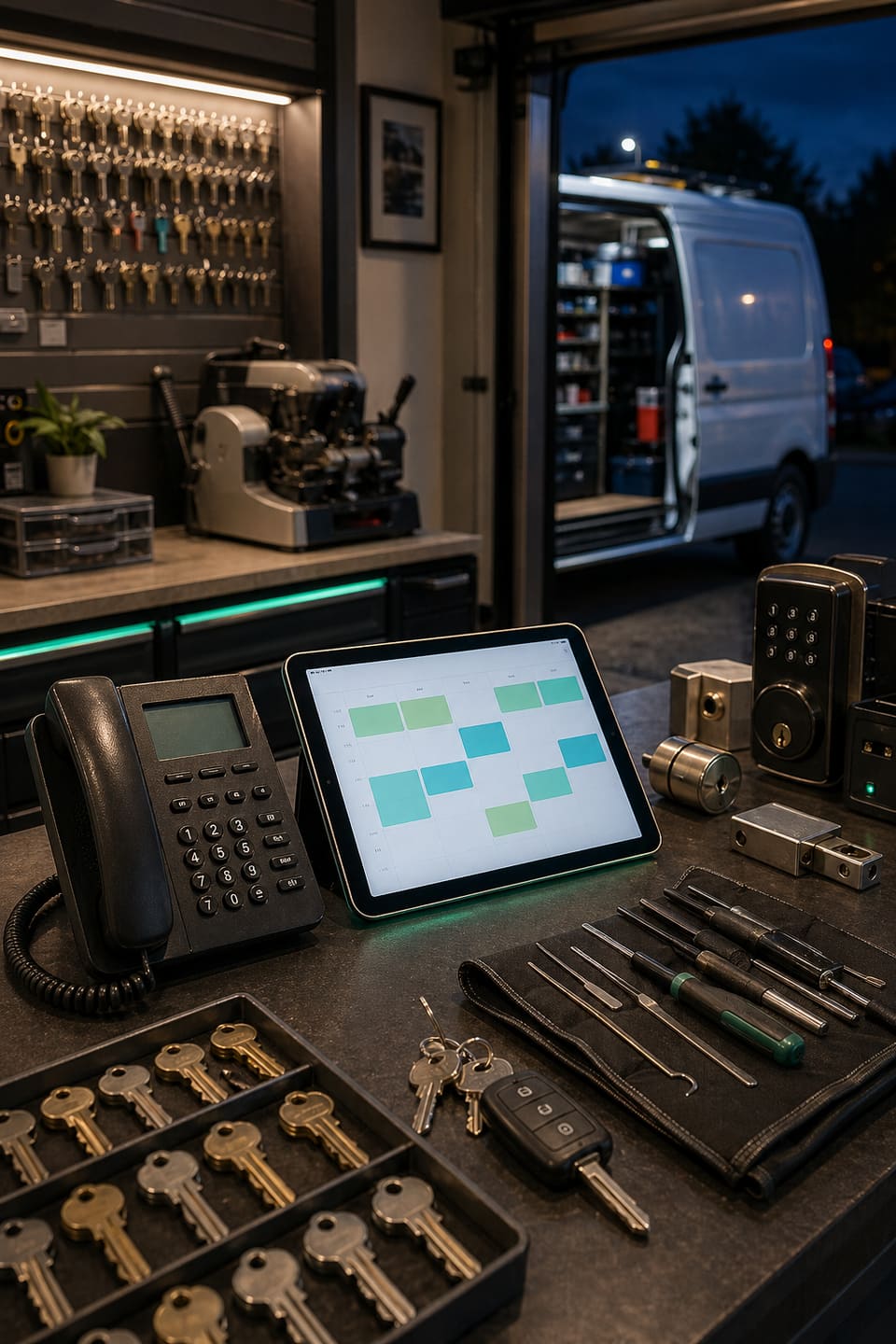
A lockout call is urgent, local, and trust-sensitive. The first answer should lower panic, capture dispatch facts, avoid unsafe access promises, and create a credible next step.
Read resource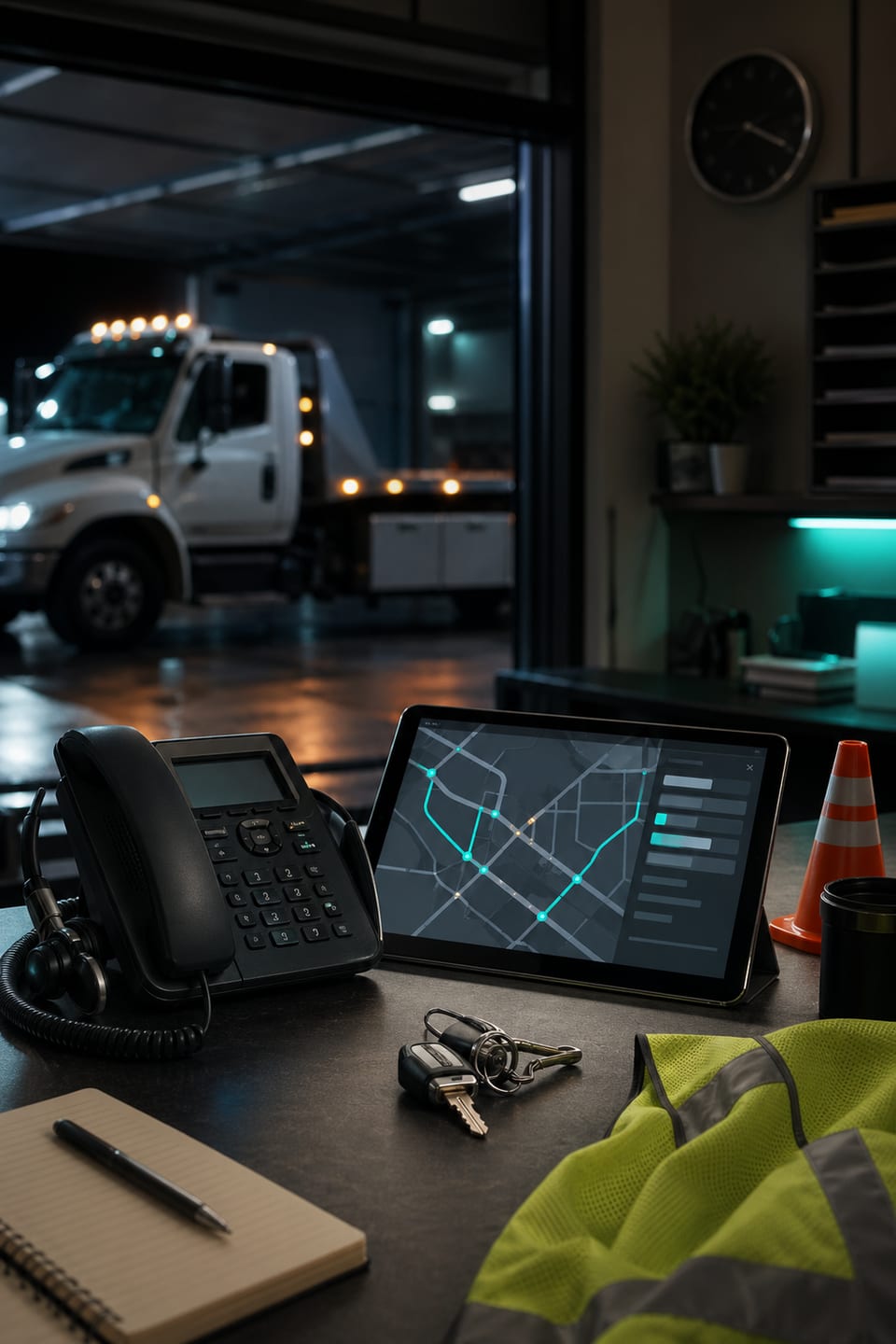
Towing calls are urgent, local, and easy to lose. Missed-call ROI starts with fast answering, accurate location capture, vehicle details, safety handoffs, and clean dispatch notes.
Read resourceThese references support the phone demand, local search, and response speed claims above.
IBISWorld • Accessed 2026-04-26
IBISWorld industry page reporting a $3.0 billion U.S. locksmith market in 2026, 29,620 businesses, high competition, fragmentation, and no company with more than 5% market share.
Open sourceU.S. Census Bureau • Accessed 2026-04-26
Census NAICS profile defining locksmith establishments and reporting 3,961 employer establishments for NAICS 561622 in 2023 County Business Patterns data.
Open sourceU.S. Bureau of Labor Statistics • 2025-08-28 • Accessed 2026-05-14
BLS Occupational Outlook Handbook table describing locksmiths and safe repairers as opening and repairing locks, making keys, changing safe combinations, and installing or repairing safes, with 18,800 employed in 2024.
Open sourceAngi • 2026-03-17 • Accessed 2026-05-14
Angi cost guide reporting typical professional locksmith service costs of $107-$242, a $50-$400 national range, and $50-$150 added for emergency or after-hours calls.
Open sourceHomeGuide • 2024-09-06 • Accessed 2026-05-14
HomeGuide locksmith cost guide covering service-call fees, normal hourly rates, emergency and after-hours rates, automotive lockout ranges, car-key replacement ranges, and hiring tips.
Open sourceFederal Trade Commission • 2008-05-30 • Accessed 2026-05-14
FTC consumer alert warning that some locksmiths advertising locally may not be local and that some may lack professional training, encouraging consumers to research reputable locksmiths before an emergency.
Open sourceCalifornia Department of Consumer Affairs • Accessed 2026-05-14
California DCA consumer guidance noting common locksmith needs, scam risks, licensing expectations in California, estimates, receipts, identification, and license verification.
Open sourceALOA Security Professionals Association • Accessed 2026-05-14
ALOA directory page explaining that consumers can find qualified local locksmiths who are ALOA members, and that members are vetted and expected to follow professional and ethical standards.
Open sourceBrightLocal • 2025-01-29 • Accessed 2026-05-14
BrightLocal survey of 1,000 US adults about how consumers find, read, and evaluate online reviews for local businesses.
Open sourceThis Old House • 2026-03-10 • Accessed 2026-05-14
This Old House locksmith cost guide reporting a common $90-$195 range, about $150 average cost, and higher costs for emergency or after-hours locksmith service.
Open sourceInvoca • 2025-08-18 • Accessed 2026-05-16
Invoca analysis showing live answer-rate benchmarks across industries and calling behavior for high-stakes purchases.
Open sourceBrightLocal • 2025 • Accessed 2026-05-16
Survey of 1,000 US consumers about general and local search behavior, maps usage, and business information expectations.
Open source