Inbound & Outbound AI For Real Estate Follow Up
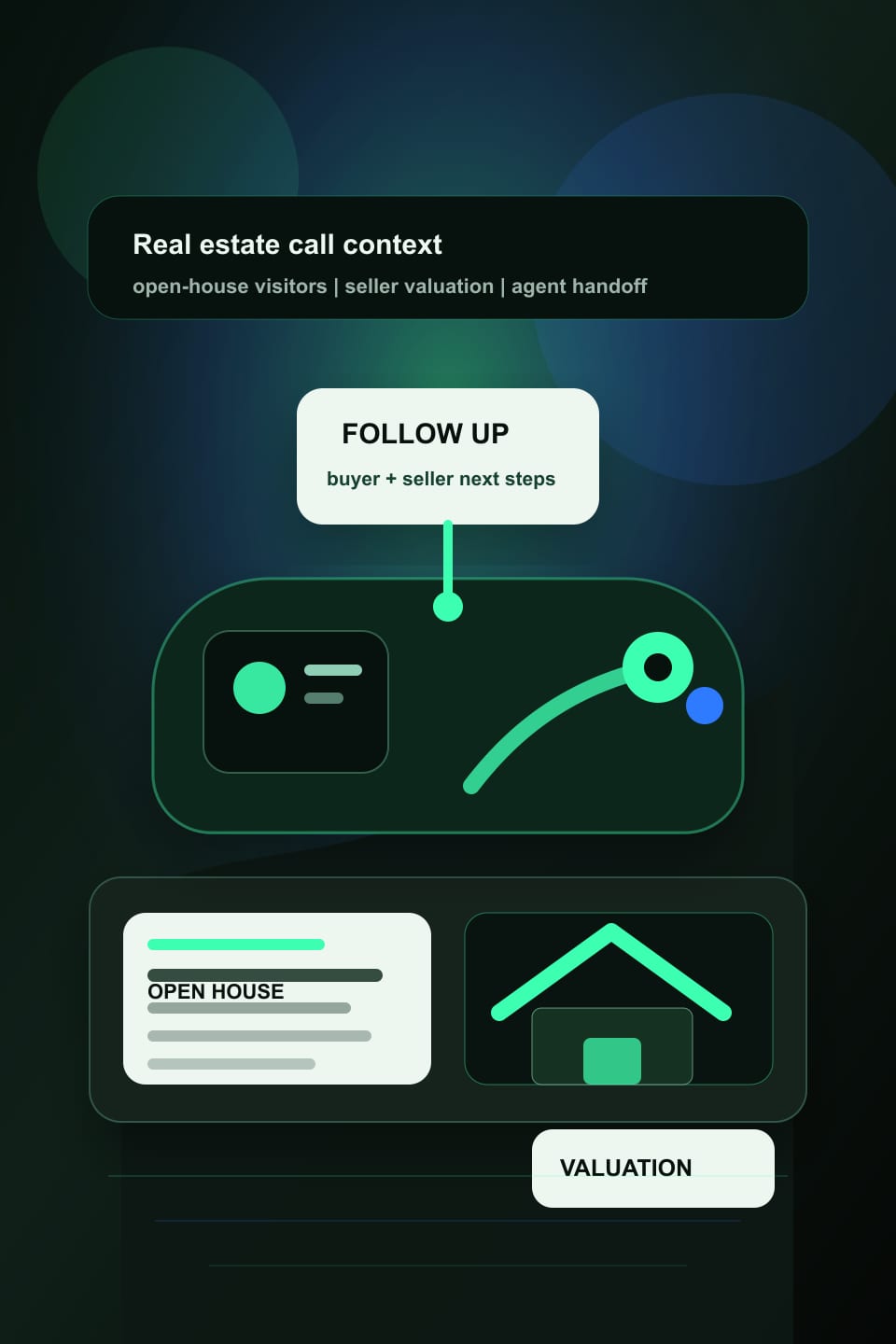
iando answers inbound real estate inquiries and runs approved outbound follow up for open house visitors, seller valuation requests, sign calls, listing ads, referral callbacks, and stale CRM leads so agents get property, timing, motivation, source, and appointment context while interest is still active.
Built for brokerages, teams, and solo agents where evenings, weekends, showings, inspections, and listing prep create follow up gaps, while pricing, agency, contract, fair-housing, mortgage, legal, consent, opt-out, and do-not-call questions stay with approved people.
Built around the jobs your phone has to do: answer, schedule, handle approved Q&A, create the next step, and recover missed call revenue.
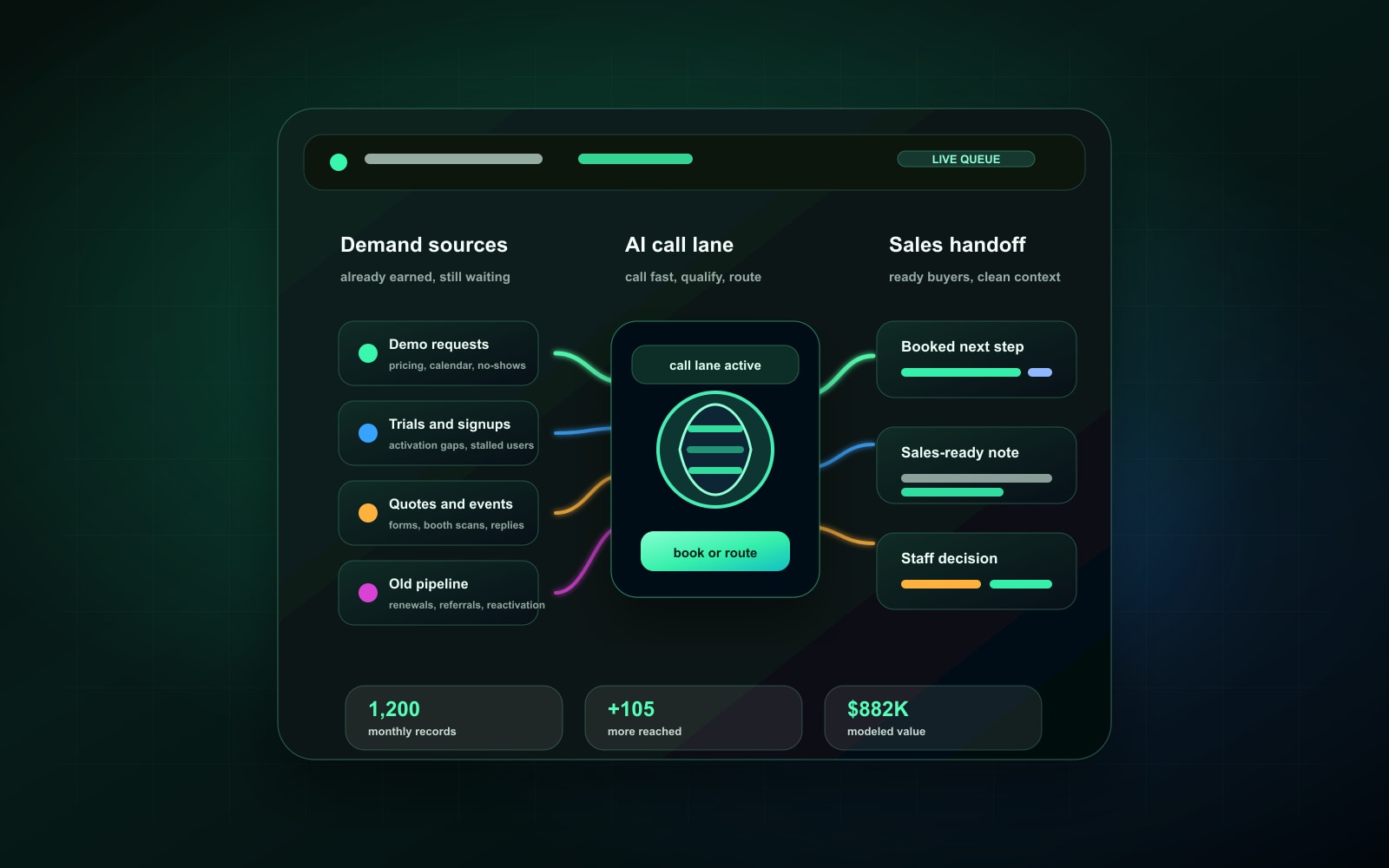
Edit call volume, qualified intent, 25% lift, and weighted pipeline value input.
Planning model only. Replace with open house sign-in volume, seller form volume, lead source, consent posture, call windows, contact rate, qualification rate, appointment-booked rate, showing rate, signed-client rate, close rate, GCI, referral splits, agent capacity, brokerage rules, and approved call language.
Show the caller a next step before they move on.
iando answers quickly, captures the details that matter, uses approved language, and gives staff a cleaner handoff.
Turn warm real estate intent into agent-ready next steps before the lead goes cold.
The strongest call plan starts from known context, responds quickly, captures what the agent needs, and keeps pricing, agency, contract, fair-housing, mortgage, legal, offer, and commission judgment with licensed staff.
The business case for real estate open house and seller valuation follow up
Start with the calls the business already earned, then estimate which ones can become appointments, jobs, consults, or useful follow ups.
For real estate teams, ROI is not raw outreach volume. It is kept conversations: open house visitors reached while the property is fresh, homeowners booked into valuation reviews, and agents handed useful context instead of a cold spreadsheet row.
- Monthly open house visitors, seller valuation requests, sign calls, listing inquiries, referrals, and stale CRM leads
- Share that reaches a buyer, seller, owner, investor, neighbor, or referral with real next-step intent
- A conservative 25% lift from immediate answering and approved follow up
- Weighted pipeline value input per buyer consult, seller valuation appointment, showing, referral callback, or staff-ready next step
- Capture open house, seller valuation, sign, listing, portal, referral, showing, and stale lead calls while intent is active.
- Collect property address, search area, source, buyer or seller status, representation, financing, timeline, motivation, and appointment preference.
- Separate buyer consult, seller valuation, showing, listing review, open house follow up, referral callback, and staff-review paths.
- Route pricing, agency, contract, fair-housing, mortgage, legal, offer, commission, and broker-policy questions to licensed staff.
What missed calls actually look like for real estate open house and seller valuation follow up
These are the moments where demand slips away because the team is already busy serving customers, patients, or active jobs.
Open-house interest cools down fast
A visitor may see several homes, talk to more than one agent, and forget which property triggered the question. Follow-up needs to happen while the home, neighborhood, objections, and next step are still clear.
Seller valuation leads need property context
A homeowner asking about value is not just a phone number. Agents need address, timeline, occupancy, motivation, condition, current agent relationship, and preferred valuation window before the listing conversation starts.
Warm lists still need careful boundaries
Follow-up can confirm interest, collect facts, book next steps, and route questions, but price opinions, agency, contracts, commissions, financing, fair-housing-sensitive topics, and legal issues need licensed staff.
What public data says about this buying behavior
Every stat references a public source below, so the revenue argument stays grounded instead of padded with invented benchmarks.
Fast response matters because agent contact often happens at the start of the buyer journey.
The first useful conversation can shape who earns trust before other agents respond.
Real estate demand still often becomes a relationship-led conversation, not only a web form.
Agent time should stay focused on consults, showings, pricing discussions, negotiation, and client guidance.
Phone coverage still matters even when lead discovery starts online or in an app.
Real Estate Open House and Seller Valuation Follow Up need phone coverage built around their actual calls
The phone experience should match how the business earns trust, books revenue, and hands off exceptions.
Agent contact often starts the buyer path
Zillow's 2025 buyer research found that contacting a real estate agent was the most common first homebuying step, and 80% of buyers contacted an agent within their first three activities.
The first useful conversation matters
Zillow's 2025 agent report said 47% of buyers hired the first agent they spoke with, and 59% of sellers did the same.
Real estate work happens away from the desk
BLS notes that brokers and sales agents often spend substantial time away from the office showing properties, seeing properties, and meeting current or prospective clients.
How iando handles these calls
The best first layer is fast answer, clear qualification, then booking or escalation based on your operating rules.
Answer or follow up while the event is fresh
iando identifies open house visitors, valuation requests, sign calls, listing ad replies, referral callbacks, showing questions, and stale CRM opportunities before the buyer or seller moves elsewhere.
Capture agent-ready context
It records source, property address or search area, open house context, buyer or seller status, timeline, financing or selling status, representation, motivation, appointment preference, and the exact question for the agent.
Book, summarize, or route to licensed staff
The next step can be a buyer consult, seller valuation appointment, showing, listing review, referral callback, or staff review while sensitive questions stay with the agent or broker.
Calls iando.ai can answer, escalate, or recover
These conversations are the highest-leverage starting point because they connect directly to revenue, schedule protection, or staff capacity.
Open house visitor follow up
Visitors, neighbors, buyer prospects, and referral contacts who walked through a property, asked a question, scanned a sign-in form, or need a next step after the event.
Outcome: Confirm interest, property context, timing, representation status, preferred tour or consult window, and the question the agent should answer.
Seller valuation and listing requests
Homeowners asking what their home might sell for, whether now is a good time, what work to do first, or when an agent can review the property.
Outcome: Collect address, timeline, occupancy, condition, motivation, current agent relationship, appointment preference, and valuation questions without giving price advice.
Sign, listing ad, and showing interest
Buyers who call from a yard sign, listing portal, ad, map result, text thread, or open house invite and want availability, tour timing, area context, or next steps.
Outcome: Capture source, property, budget range, financing status, search area, timeline, and showing preference before the agent responds.
Staff-only real estate questions
Pricing, agency, contract, commission, fair-housing-sensitive, mortgage, offer, disclosure, inspection, legal, or broker-policy questions that need licensed staff.
Outcome: Acknowledge the question, capture facts, and route it to the right person without improvising advice.
What operators actually care about
Faster warm-lead response
Open-house visitors, valuation leads, sign calls, and referrals get a next step before the original context fades.
Cleaner agent callbacks
Agents see source, property, timeline, motivation, representation, financing, appointment preference, and sensitive questions before they call.
More disciplined follow up
Event lists, valuation forms, portal replies, and stale CRM opportunities stop depending on spare agent time.
Where the payoff shows up operationally
- Capture open house, seller valuation, sign, listing, portal, referral, showing, and stale lead calls while intent is active.
- Collect property address, search area, source, buyer or seller status, representation, financing, timeline, motivation, and appointment preference.
- Separate buyer consult, seller valuation, showing, listing review, open house follow up, referral callback, and staff-review paths.
- Route pricing, agency, contract, fair-housing, mortgage, legal, offer, commission, and broker-policy questions to licensed staff.
- Turn event lists and seller forms into booked consults or agent-ready next steps.
How the operation changes when the phone stops leaking revenue
An open house sign-in sheet waits until Monday.
AfterVisitors get approved follow up, interested buyers are separated from low-fit traffic, and the agent gets useful notes.
A seller valuation form becomes a callback number with no address or timeline.
AfterThe listing conversation starts with address, occupancy, condition, motivation, and appointment preference.
A sign call asks about price, financing, or agency while the agent is showing homes.
AfterThe question is captured and routed to licensed staff without an improvised answer.
Questions before putting AI on the phone
Real estate follow up has licensing limits
Correct. iando should collect facts, book approved next steps, and send sensitive questions to licensed agents or brokers. It should not price property, interpret contracts, advise on agency, discuss fair-housing-sensitive topics, or answer mortgage or legal questions.
Open-house lists can be mixed quality
That is why qualification matters. Source, property, timeline, representation status, search area, financing stage, motivation, and appointment preference help agents prioritize useful conversations.
Agents already text leads after events
Texts and CRM reminders do not guarantee a useful conversation. The phone path can qualify, book, summarize, and flag staff-only questions so agents do not start from a blank follow up task.
Turn more calls into kept buyer and seller next steps for real estate open house and seller valuation follow up.
iando is built for businesses that depend on the phone and lose money when callers do not get a fast, useful answer. Book a demo and map the revenue path to your call volume, hours, booking logic, and staff only handoffs.
Frequently asked questions
Can I&O AI follow up with open house visitors?
Yes, when the brokerage supplies approved call language, call windows, consent rules, opt-out handling, CRM fields, and licensed-agent handoff rules.
Can it handle seller valuation requests?
It can collect address, timing, occupancy, condition, motivation, current agent relationship, and appointment preference, then route valuation and pricing questions to the licensed agent.
Can it answer pricing, contract, or mortgage questions?
No. Pricing advice, agency, contracts, commissions, fair-housing-sensitive topics, mortgage recommendations, legal questions, offer strategy, and broker-policy exceptions should route to licensed staff.
What should the follow up path capture?
Name, phone, email, source, property address or search area, buyer or seller status, representation status, timeline, financing or selling status, motivation, appointment preference, and the main question for the agent.
Deeper guides for real estate open house and seller valuation follow up
Each guide gives operators practical depth around staffing, call handling, conversion, and operational efficiency.
Warm buyers and sellers need a useful next step before another agent owns the conversation
Open house visitors and seller valuation leads are warm only for a short window. The follow up path should move quickly, capture context, and keep licensed advice with agents and brokers.
Read guideThe first useful response often decides which agent gets trusted
Real estate lead response is not just speed. It is fast, careful follow-up that captures buyer or seller intent, books the next step, and keeps licensed advice with agents and brokers.
Read guideMore phone revenue paths
Keep moving to the next useful call plan.
These pages connect the guide, adjacent call coverage, pricing, and setup paths buyers usually need next.
Research behind this page
These references support the phone demand, local search, and response speed claims above.
Zillow Research • 2025-11-06 • Accessed 2026-05-15
Zillow Research buyer report showing that contacting a real estate agent was the most common first homebuying step, that 80% contacted an agent within their first three activities, and that 94% had agent or brokerage help accessing or touring for-sale properties at least once.
Open sourceZillow • 2025-12-30 • Accessed 2026-05-15
Zillow newsroom release summarizing its 2025 Consumer Housing Trends Report for Agents, including online agent discovery trends and findings that 47% of buyers and 59% of sellers hired the first agent they spoke with.
Open sourceNational Association of REALTORS • 2025 • Accessed 2026-05-15
NAR profile coverage reporting that 88% of buyers purchased through an agent or broker and 91% of sellers used a real estate agent.
Open sourceU.S. Bureau of Labor Statistics • 2025-08-28 • Accessed 2026-05-15
BLS Occupational Outlook Handbook profile describing licensed real estate brokers and sales agents, their duties, 2024 employment, and projected annual openings.
Open sourceNational Association of REALTORS • 2024-07-08 • Accessed 2026-05-15
NAR quick statistics page summarizing buyer and seller behavior, including buyer use of agents, where buyers found homes, seller agent use, and REALTOR communication preferences.
Open sourceInvoca • 2025-08-18 • Accessed 2026-05-15
Invoca analysis showing live answer-rate benchmarks across industries and calling behavior for high-stakes purchases.
Open sourceBrightLocal • 2025 • Accessed 2026-05-15
Survey of 1,000 US consumers about general and local search behavior, maps usage, and business information expectations.
Open source