I&O AI For Recruiting
iando.ai answers and follows up on candidate calls, screening callbacks, interview confirmations, assignment check-ins, document reminders, redeployment lists, and client-submittal updates so recruiters get availability, skills, pay range, shift, location, start-date, and exception context while the candidate is still engaged.
Built for staffing agencies, recruiting teams, RPO groups, and high-volume hiring teams where speed matters, but hiring judgment, compliance, protected-class issues, pay promises, background checks, work authorization, and client fit still need trained staff.
Built around the jobs your phone has to do: answer, schedule, handle approved Q&A, create the next step, and recover missed-call revenue.
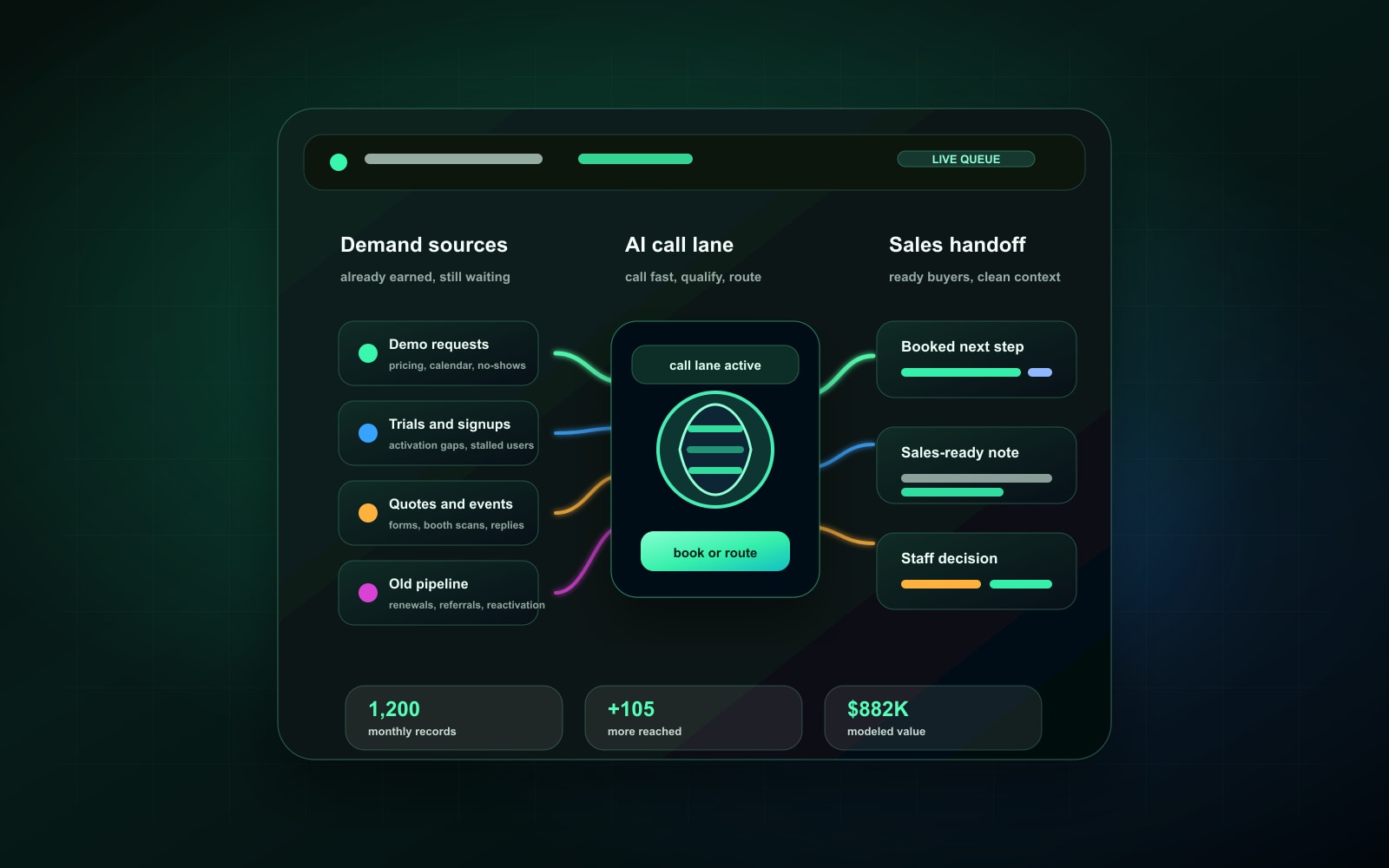
Edit call volume, qualified intent, 25% lift, and weighted placement value input.
Planning model only. Replace with candidate source volume, connect rate, qualification rate, booked-screen rate, interview show rate, submittal rate, start rate, redeployment value, recruiter capacity, client margins, and approved call rules.
Show the caller a next step before they move on.
iando answers quickly, captures the details that matter, uses approved language, and gives staff a cleaner handoff.
The business case for staffing and recruiting candidate follow-up
Start with the calls the business already earned, then estimate which ones can become appointments, jobs, consults, or useful follow-ups.
For staffing and recruiting teams, ROI is not raw dial volume. It is kept candidate conversations: people reached before another employer responds, interview slots confirmed sooner, assignment starts protected, and recruiters handed useful notes instead of stale names.
- Monthly missed candidate calls, screening callbacks, interview confirmations, and redeployment follow-ups
- Share that reaches a qualified candidate, active applicant, prior worker, or hiring-manager-ready contact
- A conservative 25% lift from immediate answering and approved follow-up
- Weighted value per booked screen, kept interview, assignment start, redeployed worker, or client-ready submittal
- Capture candidate calls, screening callbacks, interview confirmations, document reminders, assignment check-ins, redeployment lists, and no-show risk while intent is active.
- Collect role interest, availability, shift, pay range, commute, skills, license, certification, start date, source, and preferred callback window.
- Separate booked screen, interview confirmation, reschedule, document reminder, assignment check-in, redeployment, and staff-review paths.
- Send hiring decisions, protected-class issues, accommodation requests, background checks, work authorization, pay promises, and client exceptions to staff.
What missed calls actually look like for staffing and recruiting candidate follow-up
These are the moments where demand slips away because the team is already busy serving customers, patients, or active jobs.
Candidates move fast when several employers respond
A warehouse worker, nurse aide, sales rep, technician, driver, or office candidate may be answering several recruiters at once. Slow response gives another employer the first useful conversation.
Recruiters lose time rebuilding context
A missed call rarely includes work history, shift preference, pay range, commute, license, certification, availability, start date, assignment interest, or whether the candidate is still considering the role.
Sensitive hiring questions need a staff handoff
A candidate follow-up path can collect facts and book the next step, but hiring decisions, protected-class issues, background checks, work authorization, accommodation requests, pay promises, and client exceptions need trained staff.
What public data says about this buying behavior
Every stat references a public source below, so the revenue argument stays grounded instead of padded with invented benchmarks.
ASA reported large weekly staffing volume even in a cautious market, which makes candidate follow-up discipline commercially important.
High movement means missed candidate calls, assignment questions, and redeployment gaps can compound quickly.
SHRM's 2026 Talent Trends release shows recruiting pressure remains widespread, making fast response to engaged candidates valuable.
Candidate follow-up should reduce communication gaps and make the next step clear before interest fades.
Recruiter and HR capacity is valuable, so I&O AI should prepare candidate conversations rather than absorb staff judgment.
Staffing And Recruiting Candidate Follow-Up need phone coverage built around their actual calls
The phone experience should match how the business earns trust, books revenue, and hands off exceptions.
Staffing volume is still large even in a cautious market
ASA reported that U.S. staffing companies employed about two million temporary and contract workers per week in Q4 2025 and hired 9.5 million for the full year.
Recruiting pressure has not gone away
SHRM's 2026 talent trends release said 68% of HR professionals reported difficulty recruiting full-time employees, while ManpowerGroup's 2026 survey found broad talent scarcity across industries.
Candidate experience affects acceptance
CareerPlug's 2025 candidate-experience research said 66% of candidates reported that a positive experience influenced their decision to accept an offer.
How iando.ai handles these calls
The best first layer is fast answer, clear qualification, then booking or escalation based on your operating rules.
Answer or follow up while candidate intent is fresh
iando.ai identifies new applicant, returning worker, interview, assignment, document, redeployment, start-date, and hiring-manager update calls before the candidate goes quiet.
Capture recruiter-ready details
It records role interest, skills, shift, location, commute, pay range, availability, start date, license or certification context, document status, interview time, and the question that needs staff.
Book, confirm, summarize, or send to staff
The next step can be a screen, interview confirmation, assignment check-in, document reminder, redeployment callback, or client-submittal update while hiring judgment stays with the recruiting team.
Calls iando.ai can answer, escalate, or recover
These conversations are the highest-leverage starting point because they connect directly to revenue, schedule protection, or staff capacity.
New applicant screening callbacks
Candidates who applied from a job board, referral, campaign, career site, text, or talent community and need a first conversation before they drift to another employer.
Outcome: Capture role interest, location, shift, pay range, availability, skills, license, and next-step fit before a recruiter responds.
Interview confirmation and no-show risk
Candidates who need time, location, remote link, prep details, commute context, reschedule options, or a reminder before an interview or client meeting.
Outcome: Confirm intent, flag risk, collect blockers, and give recruiters a cleaner list of who is likely to show.
Assignment start and document reminders
Placed candidates or temporary workers who need onboarding, credential, background, I-9, payroll, uniform, location, start-time, or manager-arrival details.
Outcome: Gather status and blockers without making legal, payroll, eligibility, or client-policy promises.
Redeployment and silver-medal follow-up
Prior workers, runners-up, seasonal candidates, contract-end lists, and warmed talent pools who may be ready for another assignment or interview.
Outcome: Confirm availability, updated skills, location, pay range, schedule, and interest before recruiter outreach starts from zero.
What operators actually care about
Faster qualified screen booking
Applicants and prior workers get a useful next step before the conversation gets buried under job-board noise or another recruiter wins attention.
Cleaner recruiter callbacks
Recruiters see availability, pay range, shift, commute, skills, certification, document status, and staff-only questions before they call.
Better interview and start protection
Interview confirmations, reschedules, assignment check-ins, document gaps, and start-day blockers stop depending on spare recruiter time.
Where the payoff shows up operationally
- Capture candidate calls, screening callbacks, interview confirmations, document reminders, assignment check-ins, redeployment lists, and no-show risk while intent is active.
- Collect role interest, availability, shift, pay range, commute, skills, license, certification, start date, source, and preferred callback window.
- Separate booked screen, interview confirmation, reschedule, document reminder, assignment check-in, redeployment, and staff-review paths.
- Send hiring decisions, protected-class issues, accommodation requests, background checks, work authorization, pay promises, and client exceptions to staff.
- Turn missed candidate calls and stale talent lists into recruiter-ready next steps without adding dialing labor.
How the operation changes when the phone stops leaking revenue
A qualified applicant calls back after hours and reaches voicemail.
AfterThe applicant gets a useful next step, screening context is captured, and the recruiter sees a clean callback path.
A candidate misses an interview because time, location, or prep details were unclear.
AfterThe confirmation path catches blockers, reschedules when allowed, and flags show-risk before the interview slot is wasted.
A placed worker has a document or start-time question the night before an assignment.
AfterThe call captures the blocker and sends staff the exact issue without making eligibility, payroll, or client-policy promises.
Old talent lists go stale because recruiters only have time for current reqs.
AfterRedeployment calls confirm availability, pay range, location, and interest before the recruiter spends time.
Questions before putting AI on the phone
Recruiters have to make the hiring call
Correct. iando.ai should collect facts, confirm interest, book approved next steps, and send judgment-sensitive questions to recruiters or HR.
Recruiting follow-up has consent and compliance rules
Use the team's approved contact windows, consent rules, do-not-contact process, disclosure language, candidate notice, and client-specific rules before expanding follow-up volume.
Candidate quality can be noisy
That is why qualification matters. Role interest, skills, shift, commute, pay range, availability, source, and start-date context help recruiters prioritize serious conversations.
Turn more calls into kept recruiting next steps for staffing and recruiting candidate follow-up.
iando.ai is built for businesses that depend on the phone and lose money when callers do not get a fast, useful answer. Book a demo and map the revenue path to your call volume, hours, booking logic, and staff-only handoffs.
Frequently asked questions
Can I&O AI follow up with candidates?
Yes, when the staffing or recruiting team supplies approved contact windows, consent rules, qualification questions, candidate notice, and staff handoff rules.
Can it decide who gets hired or submitted?
No. Hiring decisions, client submittal judgment, protected-class issues, accommodations, background checks, work authorization, pay promises, and legal-sensitive questions should stay with trained staff.
What should it capture before a recruiter calls back?
Name, phone, email, source, role interest, location, commute, shift, pay range, availability, start date, skills, license or certification context, document status, interview timing, and the candidate's main question.
Does this help with interview no-shows?
It can confirm attendance, collect blockers, capture reschedule requests, remind candidates of approved details, and flag risk so recruiters spend time on the people most likely to show.
Deeper guides for staffing and recruiting candidate follow-up
Each guide gives operators practical depth around staffing, call handling, conversion, and operational efficiency.
Recruiting response is where candidate interest becomes a booked next step
Candidate follow-up is not just more calling. It is faster response with useful context, clear staff boundaries, and a next step before qualified people go quiet.
Read guideCaregiver callouts need fast answers, careful boundaries, and scheduler-ready notes
Caregiver callouts are not just staffing noise. They can affect billable hours, client trust, family communication, scheduler time, EVV context, and urgent staff review.
Read guideStart-of-care calls need fast answers, careful intake, and staff-safe handoffs
Home care start-of-care calls combine family urgency, referral deadlines, payer context, caregiver capacity, and sensitive care boundaries. The useful ROI model starts with immediate answering and cleaner intake.
Read guideMore phone-revenue paths
Keep moving to the next useful call plan.
These pages connect the guide, adjacent call coverage, pricing, and setup paths buyers usually need next.
Research behind this page
These references support the phone-demand, local-search, and response-speed claims above.
American Staffing Association • 2026-03-30 • Accessed 2026-05-05
ASA Q4 2025 update reporting two million temporary and contract workers per week in Q4 2025, 9.5 million full-year staffing employment, $113.5 billion in staffing sales, and a 376% industry turnover rate.
Open sourceSHRM • 2026-04-27 • Accessed 2026-05-05
SHRM release on its 2026 Talent Trends Report, based on more than 2,000 HR professionals, reporting that 68% had difficulty recruiting full-time employees and 53% of that group said recruiting had become more difficult.
Open sourceCareerPlug • 2025-02-03 • Accessed 2026-05-05
CareerPlug candidate-experience research reporting that 66% of candidates said a positive experience influenced offer acceptance, 26% declined offers due to poor experiences in 2024, and fast communication matters.
Open sourceU.S. Bureau of Labor Statistics • Accessed 2026-05-05
BLS Occupational Outlook Handbook profile describing HR specialist duties such as recruiting, screening, interviewing, hiring or referring qualified applicants, employment records, median pay, and projected openings.
Open sourceAmerican Staffing Association • Accessed 2026-05-05
ASA staffing statistics page reporting about 11 million staffing employees in 2024, nearly 2.2 million temporary and contract employees during an average week in 2024, and about 27,000 staffing and recruiting companies in the United States.
Open sourceSHRM • 2025 • Accessed 2026-05-05
SHRM 2025 recruiting benchmarking brief noting that time to fill remains around a month and a half and that over half of organizations have recruiters managing about 20 requisitions each.
Open sourceIndeed • 2025-08-12 • Accessed 2026-05-05
Indeed article summarizing a Harris Poll survey of North American employers and candidates, including 42% of employers saying hiring takes longer than a year earlier and 57% of job seekers saying time to hire is growing.
Open sourceLinkedIn Talent Blog • 2025-02-13 • Accessed 2026-05-05
LinkedIn summary of its 2025 Future of Recruiting report, based on platform data and more than 1,000 talent professionals, reporting a 20% average workload reduction among generative AI users and emphasizing recruiter relationship development.
Open sourceManpowerGroup • 2026 • Accessed 2026-05-05
ManpowerGroup U.S. talent shortage survey based on a global study of 39,063 employers in 41 countries, showing broad skill scarcity across company sizes and industries.
Open sourceU.S. Equal Employment Opportunity Commission • 2007-09-23 • Accessed 2026-05-05
EEOC fact sheet explaining federal anti-discrimination considerations for employment tests and selection procedures, including the need to understand effectiveness, limitations, appropriateness, administration, and scoring.
Open sourceInvoca • 2025-08-18 • Accessed 2026-05-13
Invoca analysis showing live answer-rate benchmarks across industries and calling behavior for high-stakes purchases.
Open sourceBrightLocal • 2025 • Accessed 2026-05-13
Survey of 1,000 US consumers about general and local search behavior, maps usage, and business information expectations.
Open source