
Property management partial power answering service for tenant electrical calls
130
calls per month modeled
+18
more next steps per month
$100,464
annual modeled value
iando.ai is a property management partial power answering service for tenant power, breaker trip, lights-out, panel, owner-update, access, vendor, and after-hours calls so resident impact and approved next steps are captured fast.
Built for property managers where the first answer needs warning language, access context, no unsafe troubleshooting, and a useful maintenance handoff.
Start with the buyer's reason for calling. iando captures intent, books what is ready, and hands staff the context that closes.
Edit call volume, qualified intent, 25% lift, and average protected vendor or owner-touch value.
Planning model only. Replace with portfolio call logs, after-hours share, emergency-maintenance policy, vendor minimums, owner churn risk, resident retention economics, utility rules, and actual response rules.
iando answers fast, captures why they raised their hand, books or routes the next step, and gives staff the context to close.
Start with the demand the business already earned, then replace each assumption with phone logs and completed outcomes. The model follows one direct path: total demand, calls not answered live, and recaptured next steps.
Gross modeled value from cleaner electrical next steps. The model excludes uncollected revenue and outcomes the team cannot fulfill.
Model: monthly inbound calls × calls not answered live (%) × unanswered calls recovered (%) × average protected vendor or owner-touch value.
Pricing is scoped after lane review using coverage, expected volume, workflow depth, integrations, and staff handoff. The value model excludes setup, labor, cancellations, refunds, and uncollected revenue.
Demand slips away while the team is already serving customers, patients, or active jobs.
A resident with lights out in half the unit, a repeated breaker trip, flickering lights, a dead refrigerator circuit, or a hallway outage may call, text, submit a ticket, and alert the owner before staff have one clean summary.
Residents need confirmation that the issue was captured. Managers need affected rooms, breaker behavior, photo status, access, prior ticket history, pets, gates, and whether the caller is asking for a staff-only answer.
An electrical vendor may need access, the owner may want status, and the resident may ask whether the utility is involved while the maintenance lead is still sorting approved next steps.
Every statistic links to a public source, keeping the revenue case grounded.
Tenant power intake should capture affected areas, warning language, access, and staff-only questions before the property team decides the approved next step.
Tenant electrical calls should be captured carefully and sent through approved staff rules instead of improvised troubleshooting.
Electrical warning-language calls need a calm first answer and a staff-reviewed path, not generic voicemail or unapproved advice.
Tenant power calls are maintenance-response moments where clear first answers and follow-up context can protect resident trust.
When skilled electrical labor is constrained, dispatch-ready intake protects vendor time and makes callbacks more useful.
Call handling should match how the business earns trust, books revenue, and hands off exceptions.
NAA sample maintenance-emergency guidance lists electrical or gas failure among emergency examples. Tenant power calls need a path that captures facts and sends staff-only decisions to the right person.
ESFI identifies flickering or dimming lights, burning smells, discolored switches, warm outlets, and mild shocks as signs that can point to serious electrical problems.
Buildium research ties maintenance responsiveness to renter retention, while AppFolio guidance emphasizes visibility, 24/7 responsiveness, and faster maintenance follow-through.
The best first layer is fast answer, clear qualification, then booking or escalation based on your operating rules.
iando.ai identifies partial power, lights out, repeated breaker trip, flickering, dimming, warm plate, panel concern, appliance circuit, hallway outage, owner update, or vendor-access need.
It records property, unit, caller role, callback number, timing, affected rooms or equipment, breaker behavior, photo status, access window, gates, pets, parking, and prior ticket context.
Dispatch-worthy calls, vendor callbacks, resident updates, owner notes, utility questions, and staff-only exceptions stay separated so the human team starts from a complete summary.
These conversations are the highest-leverage starting point because they connect directly to revenue, schedule protection, or staff capacity.
Residents describing lights or outlets out in part of the unit, appliance circuits down, hallway power concern, repeated breaker trips, dimming, flickering, or concern that the request was not received.
Outcome: Capture affected areas, timing, breaker behavior, photo status, access, prior history, and callback expectation before frustration grows.
Residents mentioning warm plates, discoloration, buzzing, smell, mild shock, repeated trips, or a panel concern while asking what happens next.
Outcome: Document warning language without diagnosis, safety promises, or repair advice.
Owners asking whether the resident was contacted, whether photos exist, what vendor path started, whether the utility is involved, and when they will hear the next step.
Outcome: Create a cleaner owner note with known facts, missing details, proof status, resident impact, and staff-review needs.
Electrical vendors needing unit access, panel location, parking, gate code, pet notes, resident availability, photos, or contact details.
Outcome: Give the vendor path better field context before a callback or visit is scheduled.
Staff and vendors receive affected rooms, equipment impact, breaker behavior, warning language, access, proof, prior ticket, owner pressure, and callback details before responding.
The first answer documents what was reported, what proof exists, what path started, and what still needs staff review.
Safety, utility responsibility, code, permit, legal, cost, equipment diagnosis, and exact-time questions stay with staff instead of being guessed during the first answer.
A resident leaves a voicemail saying half the apartment has no power.
AfterThe call is answered with affected rooms, breaker behavior, access, photo status, prior ticket, and expected next step captured.
The owner thread starts before staff know what happened.
AfterThe owner update starts with known facts, missing details, proof status, and staff-review needs.
A vendor calls back without unit access or panel context.
AfterAccess windows, gate notes, pets, panel location, photos, and resident availability are already in the summary.
The first answer accidentally gives electrical advice.
AfterApproved language keeps safety, utility, code, cost, warranty, and exact timing with staff.
Correct. iando.ai should capture context, use approved expectation language, and leave diagnosis, repair advice, safety promises, utility questions, and dispatch decisions to staff.
That is why the call path should not decide whether someone is safe. It should document warning language and send the call through approved escalation rules.
Tickets help after the resident completes them. Phone coverage matters when the resident wants confirmation, an owner asks for status, or a vendor needs access before morning.
Book a demo, talk to Adam, or start with one lane: the demo request, quote form, missed call, renewal, no-show, or follow-up list your team already earned but cannot reach fast enough.
Use these checks to decide whether this call lane is worth modeling, what staff keeps, and where the next step should route.
It should capture affected rooms, breaker behavior, warning language, access, photos, prior tickets, and the requested next step, then follow the manager's approved path.
Safety, utility responsibility, code, permit, legal, warranty, equipment, and exact-time questions should go to staff.
Each guide gives operators practical depth around staffing, call handling, conversion, and operational efficiency.
Tenant partial power calls are not generic maintenance traffic. They are resident-trust moments where the first answer needs affected area, warning language, access, owner context, and a believable next step without unsafe advice.
Read resource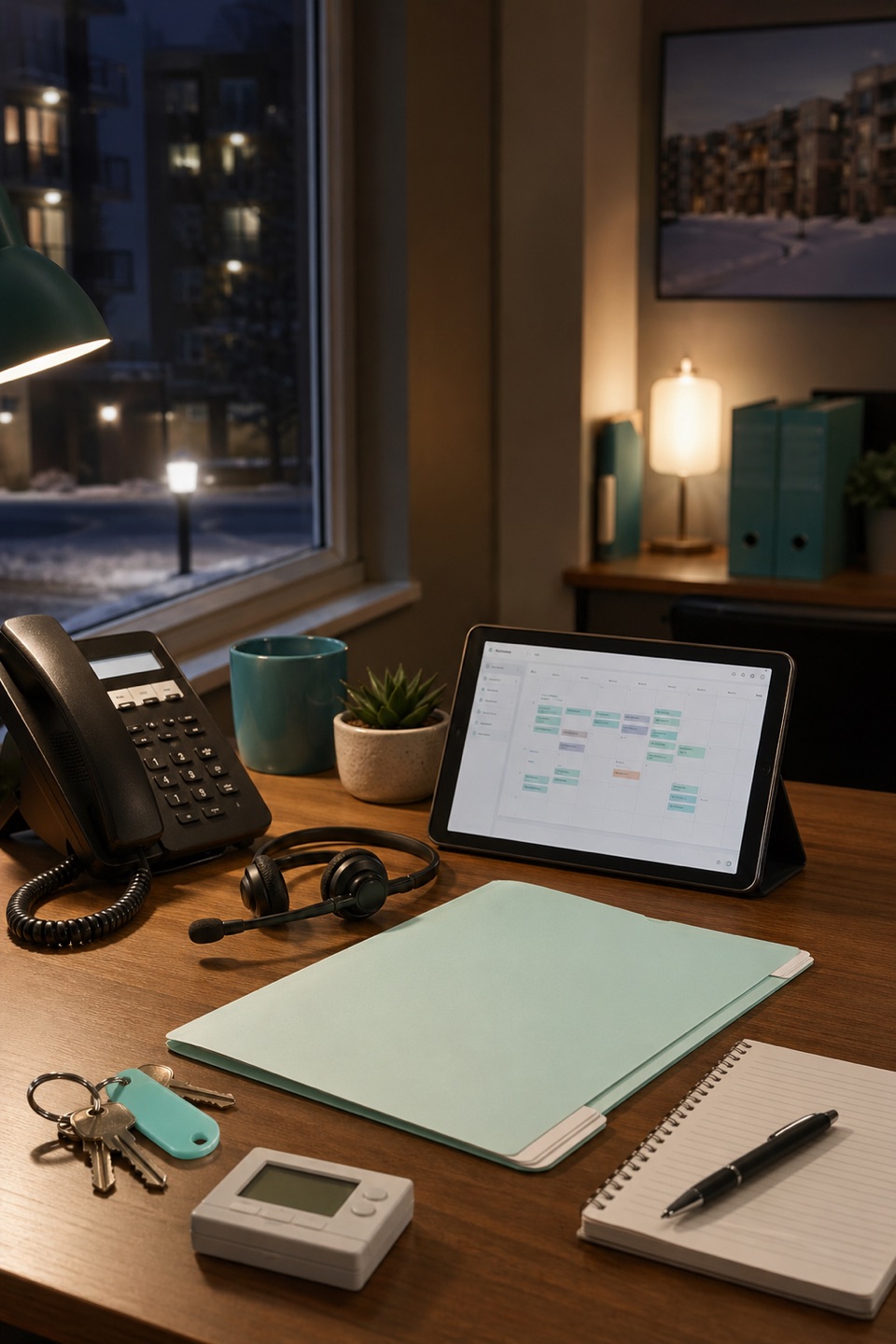
Tenant no heat calls are not generic maintenance traffic. They are resident trust moments where the first answer needs impact, access, owner context, and a believable next step without unsafe promises.
Read resource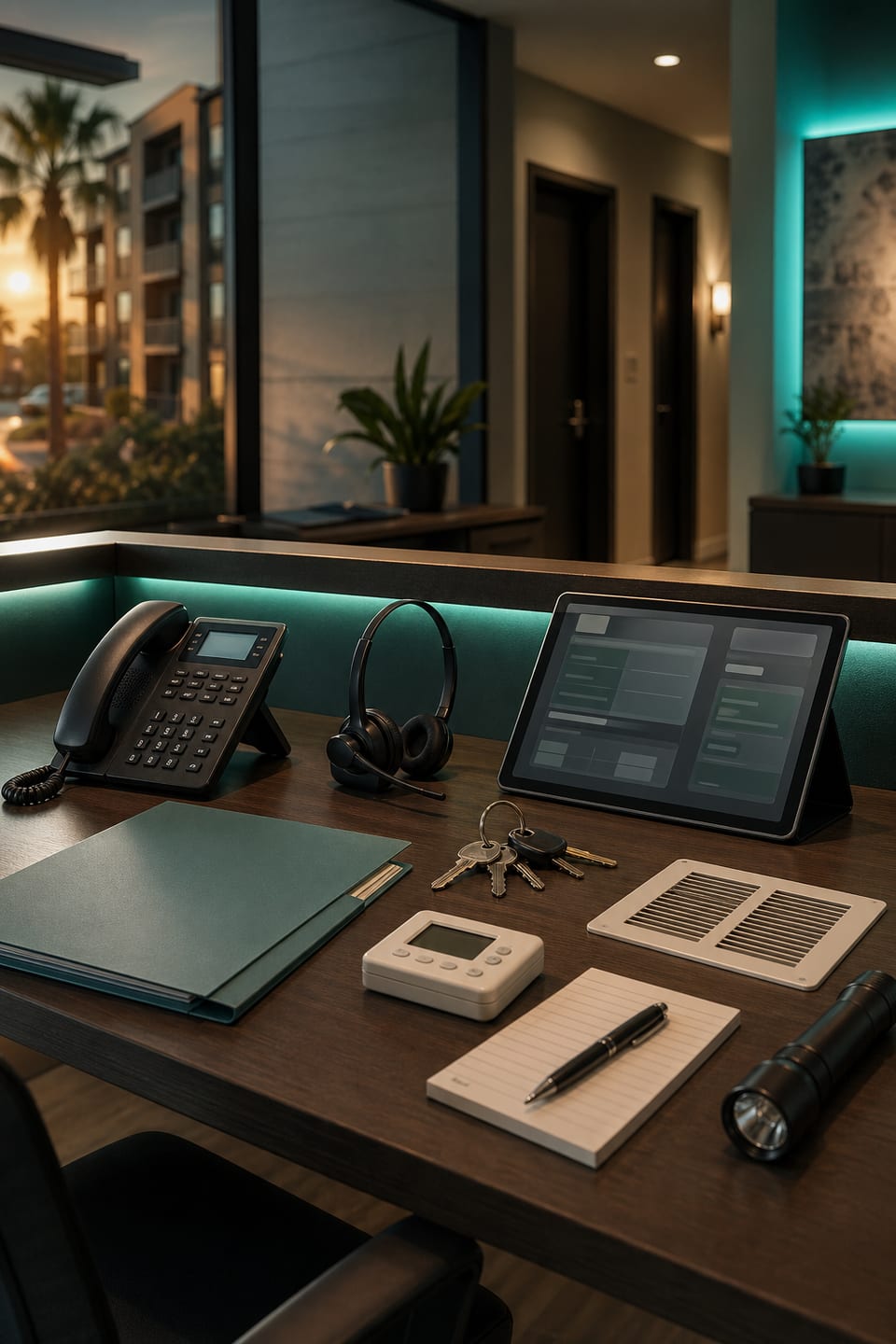
Tenant no AC calls are not generic maintenance traffic. They are resident trust moments where the first answer needs impact, proof, access, and a believable next step without unsafe promises.
Read resourceThese references support the phone demand, local search, and response speed claims above.
National Apartment Association • Accessed 2026-05-15
NAA sample maintenance-emergency guidance illustrating apartment examples such as no heat or air conditioning, no hot or cold water, water leaks, sewer backup, gas smell, electrical failure, and one-toilet stoppages.
Open sourceElectrical Safety Foundation International (ESFI) • Accessed 2026-05-05
ESFI guidance describing flickering or dimming lights, burning smells, discolored switches, warm outlets, and mild shocks as signs that can indicate serious wiring or device problems and should be inspected by a qualified electrician.
Open sourceU.S. Fire Administration • Accessed 2026-05-05
USFA fire estimate summary reporting 2023 national estimates for residential building electrical malfunction fires, deaths, injuries, dollar loss, and 2014-2023 trend data.
Open sourceBuildium • 2025-10-31 • Accessed 2026-05-15
Buildium research article reporting rising rental-owner demand for compliance help and renter-retention findings tied to maintenance investment and responsiveness to maintenance requests.
Open sourceU.S. Bureau of Labor Statistics • 2025-08-28 • Accessed 2026-05-14
BLS Occupational Outlook Handbook profile for electricians, including 2024 employment, 2024-2034 projected growth, average annual openings, and notes about evening/weekend schedules.
Open sourceBuildium • 2025 • Accessed 2026-05-15
Buildium renter expectations report showing communication preferences, including 43% preferring phone calls as a contact method and 20% wanting more communication from their property manager or landlord.
Open sourceAppFolio • Accessed 2026-05-15
AppFolio maintenance operations guide describing real-time tracking, assignment, and completion of maintenance requests to improve communication between residents, vendors, and owners.
Open sourceAppFolio • Accessed 2026-05-14
AppFolio maintenance software page describing detailed descriptions, live status views, intake, follow-up, vendor coordination, feedback, and line-of-sight across maintenance operations.
Open sourceHomeAdvisor • 2025-06-26 • Accessed 2026-05-14
HomeAdvisor cost guide reporting typical homeowner spend to hire an electrician, average project cost, hourly-rate ranges, and added fees for service calls or emergencies.
Open sourceInvoca • 2025-08-18 • Accessed 2026-05-16
Invoca analysis showing live answer-rate benchmarks across industries and calling behavior for high-stakes purchases.
Open sourceBrightLocal • 2025 • Accessed 2026-05-16
Survey of 1,000 US consumers about general and local search behavior, maps usage, and business information expectations.
Open source