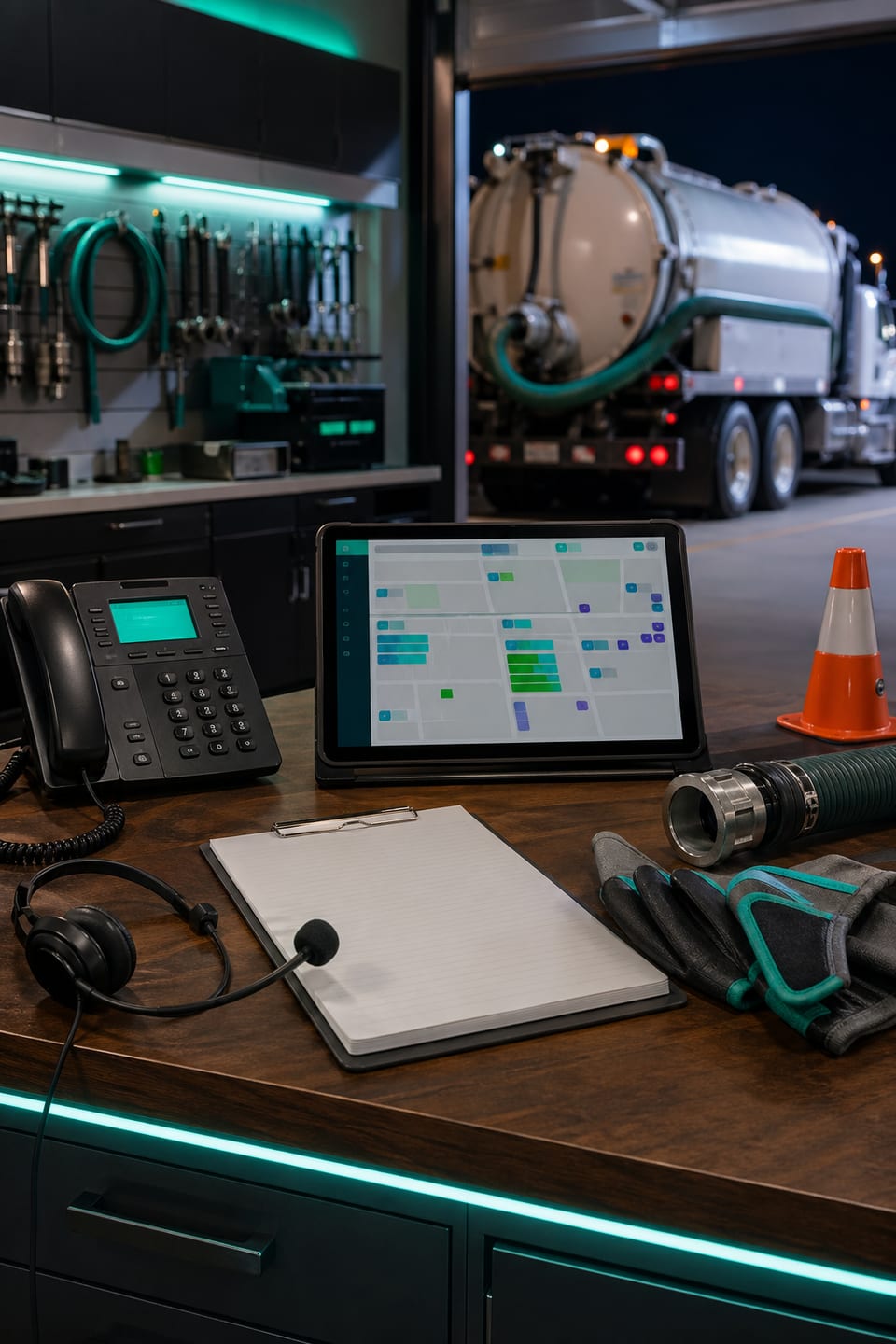
AI For Septic Service Companies
iando.ai answers inbound calls for septic pumping, inspections, backups, alarms, drainfield concerns, real estate deadlines, and maintenance questions so high-intent jobs do not disappear into voicemail.
Built for septic teams where the office, owner, driver, and technician can all be tied up with pump-outs, inspections, permits, routes, and emergency dispatch when the next call comes in.
Built around the jobs your phone has to do: answer, schedule, route, handle approved Q&A, and recover missed-call revenue.
Edit call volume, buyer intent, 25% lift, and average pump-out value.
Planning model only. Replace with the company's missed-call report, seasonality, service area, tank-size mix, emergency premium, inspection mix, repair close rate, truck capacity, and callback speed.
The business case for septic service companies
Start with the calls the business already earned, then estimate which ones can become appointments, jobs, consults, or useful follow-ups.
For septic companies, ROI is not generic call volume. It is recovered pump-outs, urgent backup jobs, maintenance visits, septic inspections, riser/filter add-ons, and repeat service reminders.
- Monthly septic pumping, inspection, alarm, backup, and quote calls
- Buyer-intent share for bookable or dispatchable service
- Average first service value before repairs and add-ons
- A conservative 25% lift from immediate answering and better intake
- Capture pumping, inspection, alarm, backup, odor, wet-yard, real estate, and after-hours septic calls.
- Collect address, tank size, access, riser, lid, symptom, last-service, deadline, and urgency details before callback.
- Answer approved maintenance, pumping interval, access, inspection, and scheduling questions without improvising repair promises.
- Route sewage backup, flood, health, permit, drainfield, alarm, and safety-sensitive questions to staff with context.
What missed calls actually look like for septic service companies
These are the moments where demand slips away because the team is already busy serving customers, patients, or active jobs.
Urgent septic callers do not wait
A homeowner with sewage backup, slow drains, a septic alarm, odor, or wet ground is usually trying to stop damage and embarrassment fast. If the first company does not answer, the next call goes to a competitor.
Useful dispatch starts with property details
Septic callbacks need address, tank size if known, lid access, risers, last pump date, household size, symptoms, alarm status, water use, real estate deadline, and whether the job needs a pump truck, inspection, or service technician.
Drivers and owners cannot answer every call
Small septic companies often run lean. The person who can answer the phone may also be routing trucks, pumping tanks, writing estimates, handling permits, or managing urgent customers.
What public data says about this buying behavior
Every stat references a public source below, so the revenue argument stays grounded instead of padded with invented benchmarks.
A large installed base means local septic companies compete for recurring maintenance, inspection, repair, and emergency response demand.
Routine maintenance creates repeat revenue paths when companies capture customer timing and reminder context during the first call.
Average pump-out value gives septic companies a practical baseline for missed-call recovery before emergency premiums, inspections, repairs, risers, and filters.
Repair-sensitive calls need careful routing because the scope can change quickly from a routine service visit to a higher-value repair conversation.
BLS also notes emergency on-call work, evening schedules, and weekend schedules are common in the trade.
Septic Service Companies need phone coverage built around their actual calls
The phone experience should match how the business earns trust, books revenue, and routes exceptions.
The first answer often wins the job
Septic buyers are usually searching because they need a pump-out, inspection, maintenance visit, or urgent help now. A clear first response keeps that demand in your service path.
Maintenance work becomes repeat revenue
A recovered pump-out can become a recurring reminder, filter cleaning, riser install, inspection, repair quote, or future emergency relationship.
Sensitive calls need guardrails
Backups, sewage contact, drainfield failure, flood conditions, permits, and health-department questions should be captured and routed, not handled with improvised promises.
How iando.ai handles these calls
The best first layer is fast answer, clear qualification, then booking or escalation based on your operating rules.
Answer and identify the septic need
iando.ai picks up right away and sorts the caller into pump-out, inspection, alarm, backup, odor, slow drains, wet-yard concern, real estate transaction, repair quote, or maintenance reminder.
Capture details for dispatch
It collects address, access, tank size, lid location, risers, symptoms, last service date, deadline, preferred timing, household context, and urgency before a human callback or dispatch decision.
Book, route, or escalate
Routine service can move toward booking. Backup, alarm, wet-yard, flood, permit, inspection, or safety-sensitive calls route to the right person with useful context.
Calls iando.ai can answer, route, or recover
These conversations are the highest-leverage starting point because they connect directly to revenue, schedule protection, or staff capacity.
Septic tank pumping calls
Tank size, address, lid access, risers, last pump date, number of residents, preferred time, and whether the customer needs maintenance or urgent service.
Outcome: Move the caller toward a booked pump-out with fewer back-and-forth questions.
Backup, odor, alarm, and wet-yard calls
Sewage backup, slow drains, gurgling plumbing, odors, alarm lights, standing water, damp drainfield, or unusually lush grass over the system.
Outcome: Route urgent symptoms quickly while capturing details a dispatcher or technician can use.
Real estate and inspection calls
Seller, buyer, agent, lender, or closing timeline, property address, inspection type, records, access, and report deadline.
Outcome: Protect deadline-sensitive inspection work from voicemail and vague callbacks.
Maintenance, filter, riser, and repair questions
Pumping interval, effluent filter cleaning, risers, baffles, lids, pump alarms, drainfield concerns, and approved next-step guidance.
Outcome: Answer routine questions inside company guardrails and route repair or permit-sensitive topics.
What operators actually care about
Recover urgent service calls after hours
Night and weekend callers can still get a fast response, a captured symptom set, and a clear next step instead of voicemail.
Give dispatch better notes
Office staff, owners, and drivers see tank, access, symptom, address, deadline, and urgency context before deciding who should respond.
Protect truck capacity
Better intake helps prioritize emergency calls, route-fit service, real estate inspections, and routine pump-outs without wasting scarce field time.
Where the payoff shows up operationally
- Capture pumping, inspection, alarm, backup, odor, wet-yard, real estate, and after-hours septic calls.
- Collect address, tank size, access, riser, lid, symptom, last-service, deadline, and urgency details before callback.
- Answer approved maintenance, pumping interval, access, inspection, and scheduling questions without improvising repair promises.
- Route sewage backup, flood, health, permit, drainfield, alarm, and safety-sensitive questions to staff with context.
- Turn urgent and maintenance callers into booked service paths instead of voicemail.
How the operation changes when the phone stops leaking revenue
Pumping and inspection calls hit voicemail while the office or owner is on another job.
AfterEvery caller gets an immediate answer and a clear service path.
Callbacks start without tank size, access, symptoms, deadline, or address context.
AfterDispatch receives useful job details before calling back or sending a truck.
Backup, alarm, and wet-yard calls mix with routine quote traffic.
AfterUrgent symptoms are identified early and routed with context.
Real estate inspection deadlines get lost in voicemail.
AfterTransaction calls capture timeline, property details, and report needs up front.
Questions before putting AI on the phone
Septic calls can be messy
That is why the call path should stay practical: capture symptoms, avoid diagnosis, use approved language, and escalate backup, flood, drainfield, permit, and health-sensitive calls.
Pricing depends on tank size and access
Correct. The AI can collect tank size, access, risers, lid location, and service area before quoting rules are applied or a human confirms the final price.
We already have a dispatcher
This supports the dispatcher during lunch, after hours, field coverage, call spikes, and emergency windows when the team cannot answer every call cleanly.
Turn more calls into booked revenue for septic service companies.
iando.ai is built for businesses that depend on the phone and lose money when callers do not get a fast, useful answer. Book a demo and map the call plan to your call volume, hours, and booking logic.
Frequently asked questions
Can AI book septic pumping appointments?
Yes, when the company's service area, calendar, and pricing rules allow it. At minimum, it can capture tank, access, address, timing, and urgency details so staff can confirm quickly.
Can it handle emergency septic calls?
It can identify backup, odor, alarm, slow-drain, wet-yard, flood, and sewage-contact language early, collect context, and route according to company-approved escalation rules.
What should route to a human?
Sewage backups, flooding, health-department questions, permits, real estate exceptions, drainfield failure, pump alarms, electrical issues, complex repairs, complaints, and any safety-sensitive call.
Can it quote septic service prices?
It can use approved starting ranges if provided, but final price should depend on tank size, access, lids, risers, distance, emergency timing, digging, and repair scope.
Why build a dedicated septic page instead of generic home-service copy?
Because septic callers talk about tanks, access, pump-outs, backups, alarms, drainfields, inspections, permits, and urgent symptoms. Generic scheduling copy misses the buying process.
Deeper articles for septic service companies
Each guide supports the ICP landing page with practical, search-focused depth around staffing, routing, conversion, and operational efficiency.
Septic call ROI
Septic calls are often urgent, local, and ready to book. A missed call can be a pump-out, inspection, emergency backup, or real estate deadline that goes to whoever answers first.
Read articleMold remediation call ROI
Mold remediation calls are urgent, detail-heavy, and easy to lose. A missed call can be an inspection, a high-value remediation job, an insurance claim, or a sensitive occupant concern that needs careful routing.
Read articleThe sewer-backup call is won in the first minute
Sewer-backup callers do not need generic intake. They need a fast answer that captures contamination, access, tenant impact, owner-thread pressure, and a believable next step.
Read articleMore phone-revenue pages
Research behind this page
These references support the phone-demand, local-search, and response-speed claims above.
U.S. Environmental Protection Agency • 2020-09 • Accessed 2026-04-27
EPA partnership agreement stating that approximately 20 percent of U.S. households, or one in five homes, are served by septic or other decentralized wastewater systems.
Open sourceU.S. Environmental Protection Agency • Accessed 2026-04-27
EPA guidance explaining septic failure causes, maintenance intervals, warning signs such as backups, slow drains, wet drainfields, odors, and steps to reduce system load.
Open sourceAngi • 2025-11-27 • Accessed 2026-04-27
Angi 2026 cost guide reporting an average septic tank pumping cost of $426, a typical range of $291 to $562, and regular pumping every three to five years.
Open sourceAngi • 2025-11-24 • Accessed 2026-04-27
Angi 2026 repair guide reporting septic tank repair costs commonly ranging from $627 to $3,040, with costs varying by material, repair type, labor, and system complexity.
Open sourceU.S. Bureau of Labor Statistics • 2025-08-28 • Accessed 2026-04-26
BLS Occupational Outlook Handbook profile for plumbers, pipefitters, and steamfitters covering 2024 employment, projected 2024-2034 growth, annual openings, emergency on-call work, and evening/weekend schedules.
Open sourceU.S. Environmental Protection Agency • Accessed 2026-04-27
EPA SepticSmart program page with homeowner education materials on proper septic system care, maintenance, inspections, and pump-out service.
Open sourceInvoca • 2025-08-18 • Accessed 2026-03-31
Invoca analysis showing live answer-rate benchmarks across industries and calling behavior for high-stakes purchases.
Open sourceBrightLocal • 2025 • Accessed 2026-03-31
Survey of 1,000 US consumers about general and local search behavior, maps usage, and business information expectations.
Open source