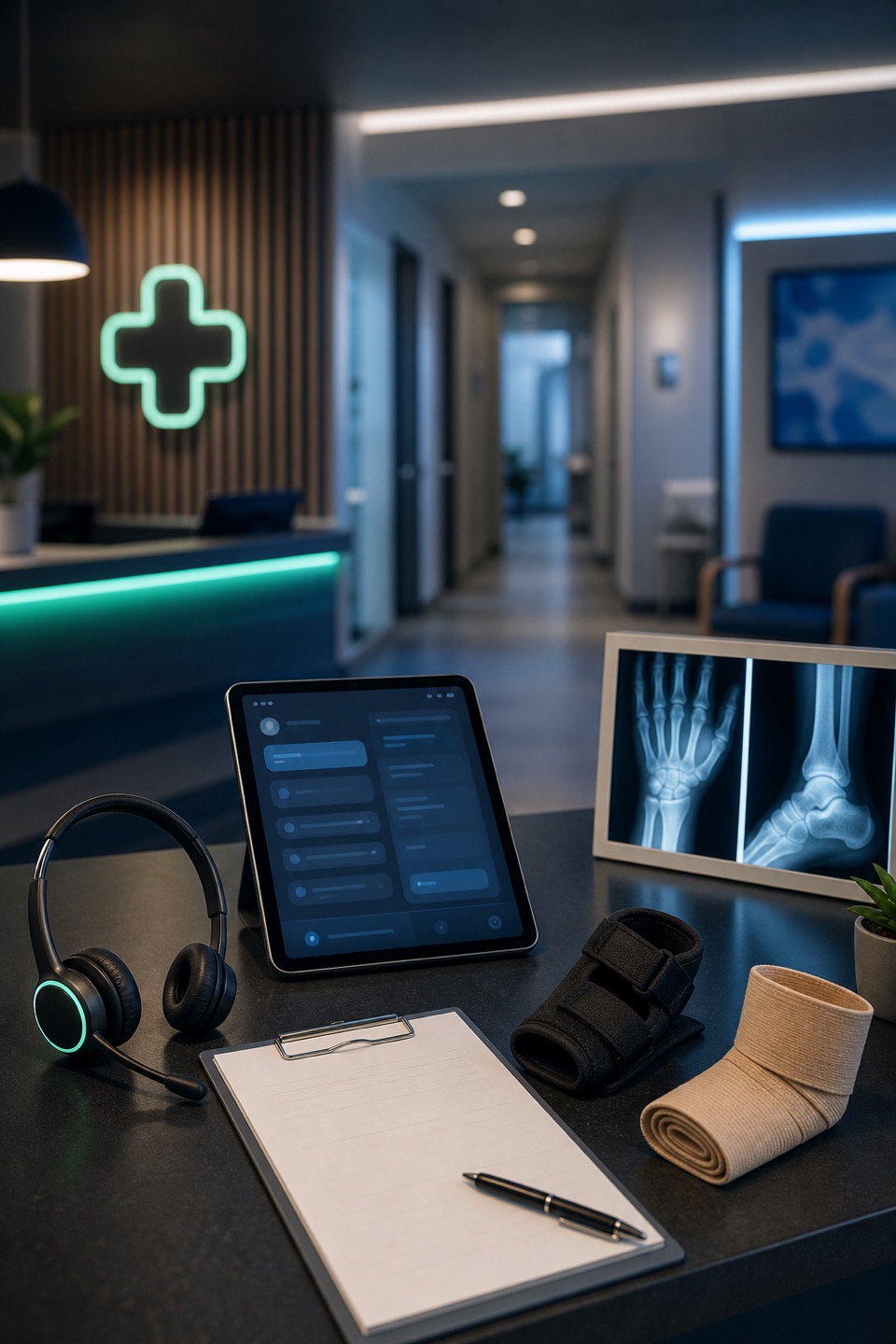
AI For Urgent Care Injury Calls
iando.ai answers urgent care calls about falls, sprains, possible fractures, X-rays, cuts, stitches, sports injuries, head bumps, wait times, insurance, and online check-in while clinical decisions stay with approved staff.
Built for urgent care teams where injury questions arrive after work, after school, on weekends, and during lobby peaks while front-desk staff are already checking in patients.
Built around the jobs your phone has to do: answer, schedule, handle approved Q&A, create the next step, and recover missed-call revenue.
Edit call volume, qualified intent, 25% lift, and average net revenue per visit.
Planning model only. Replace with clinic call logs, injury-call mix, abandoned-call rate, X-ray availability, online check-in behavior, payer mix, staff-review rules, and actual net revenue per visit.
Show the caller a next step before they move on.
iando answers quickly, captures the details that matter, uses approved language, and gives staff a cleaner handoff.
The business case for urgent care injury and x-ray calls
Start with the calls the business already earned, then estimate which ones can become appointments, jobs, consults, or useful follow-ups.
For urgent care, injury calls are high-repeat access demand. The patient wants to know whether the clinic can help with a sprain, possible fracture, cut, X-ray, fall, work injury, or sports injury today, then move to the approved visit or callback path.
- Monthly calls about falls, sprains, possible fractures, cuts, stitches, X-rays, head bumps, wait times, forms, and insurance
- Visit-ready or staff-callback share after filtering records, billing, result-only, and staff-only clinical questions
- Average net revenue per urgent-care visit or clinic-specific injury visit value
- A conservative 25% lift from immediate answering and cleaner staff handoffs
- Fall, sprain, possible-fracture, cut, stitches, X-ray, work-injury, after-hours, and weekend calls answered immediately
- Caller concern, body area, injury timing, location preference, payer, online check-in, and callback context captured
- Same-day visit, online check-in, staff-review, billing, records, and emergency-direction paths separated
- Diagnosis, imaging need, wound care, head-injury advice, movement advice, exact benefits, exact cost, and care-level questions escalated
What missed calls actually look like for urgent care injury and x-ray calls
These are the moments where demand slips away because the team is already busy serving customers, patients, or active jobs.
Injury callers want a same-day answer
A caller may ask whether the clinic handles sprains, possible fractures, cuts, stitches, X-rays, work injuries, sports injuries, or falls, and whether they should check in online before leaving.
X-ray questions turn clinical quickly
The call path should not decide whether imaging is needed, read an image, diagnose a fracture, or advise movement. It should capture the question and send staff-only decisions through clinic rules.
Cuts, falls, and head bumps need escalation discipline
Injury calls can include bleeding, puncture wounds, head injury, older-adult fall concern, pregnancy, work documentation, or severe pain. The first answer needs approved language and a clean handoff.
What public data says about this buying behavior
Every stat references a public source below, so the revenue argument stays grounded instead of padded with invented benchmarks.
Fall, sprain, possible-fracture, cut, stitches, X-ray, wait-time, and insurance calls can represent same-day visit demand when answered before patients choose another clinic.
Urgent care injury coverage should capture caller context and access needs without diagnosing, deciding imaging, interpreting X-rays, advising wound care, or choosing care level.
A large urgent care footprint means patients often have multiple same-day options when one clinic misses the call.
Recovered calls should be modeled around visit value, payer mix, visit type, testing, imaging, occupational medicine, and repeat-patient value.
Visit volume rises with seasonal illness but remains broad across non-respiratory conditions, so call paths should not only handle flu questions.
Urgent care access coverage should prioritize payer, scheduling, intake, and document context while staff retain clinical, benefit, eligibility, cost, records, and exception decisions.
Urgent Care Injury And X-Ray Calls need phone coverage built around their actual calls
The phone experience should match how the business earns trust, books revenue, and hands off exceptions.
Injuries are broad urgent-care demand
HIDA lists bodily injuries and joint or soft-tissue diseases among top urgent-care diagnoses. The phone path needs to handle more than respiratory-season traffic.
Patients compare nearby options fast
A patient can call urgent care, orthopedic urgent care, primary care, retail clinic, telehealth, imaging centers, or the emergency department while waiting for a callback. The first credible answer can protect the visit.
Staff need better context than a missed number
A callback is faster when staff already know the body area, injury timing, X-ray question, wound concern, head-injury language if volunteered, payer context, and preferred location.
How iando.ai handles these calls
The best first layer is fast answer, clear qualification, then booking or escalation based on your operating rules.
Identify the injury call type
iando.ai captures whether the caller is asking about a fall, sprain, possible fracture, cut, stitches, puncture, sports injury, work injury, head bump, X-ray, wait time, insurance, or online check-in.
Use approved access answers only
It answers clinic-approved questions about hours, locations, online check-in, forms, what to bring, and accepted plan basics while sending diagnosis, imaging, wound care, movement, head-injury, and exact-cost questions to staff.
Send a staff-ready summary
The handoff includes caller concern, body area, timing, location preference, requested next step, payer context, work or school deadline, and any staff-only exception the caller raised.
Calls iando.ai can answer, escalate, or recover
These conversations are the highest-leverage starting point because they connect directly to revenue, schedule protection, or staff capacity.
Sprain, strain, and possible-fracture calls
Patients asking about ankle, wrist, knee, shoulder, back, or hand injuries; swelling; pain; falls; sports collisions; and whether X-ray is available.
Outcome: Capture same-day intent and access details without deciding injury severity, imaging need, diagnosis, or movement limits.
Cut, puncture, and stitches calls
Questions about deep cuts, bleeding, punctures, workplace cuts, kitchen injuries, foreign-body concern, tetanus questions, and whether the clinic handles closures.
Outcome: Preserve wound language and send bleeding, puncture, closure, infection, tetanus, and care-level decisions to staff.
Fall and head-bump calls
Adults, caregivers, or parents calling after a fall, head bump, ladder slip, sports impact, or older-adult injury concern.
Outcome: Capture the caller's words and send head-injury, older-adult, severe-pain, anticoagulant, and emergency-care questions through approved rules.
Wait-time, insurance, and online check-in calls
Injury callers asking how long it may take, whether X-ray is on site, whether insurance is accepted, what forms are needed, and whether they should check in online.
Outcome: Answer approved access questions and pass exact benefits, exact cost, clinical fit, and imaging availability exceptions to staff.
What operators actually care about
More injury calls answered
Patients get a credible first answer before they call another urgent care, orthopedic clinic, or retail option.
Cleaner injury handoffs
Staff see the injury type, body area, timing, X-ray question, wound concern, location, payer, and callback context before responding.
Safer boundaries for clinical questions
The AI does not diagnose, decide imaging, advise wound care, interpret images, clear return to activity, or choose a care level. Those decisions move to approved staff paths.
Where the payoff shows up operationally
- Fall, sprain, possible-fracture, cut, stitches, X-ray, work-injury, after-hours, and weekend calls answered immediately
- Caller concern, body area, injury timing, location preference, payer, online check-in, and callback context captured
- Same-day visit, online check-in, staff-review, billing, records, and emergency-direction paths separated
- Diagnosis, imaging need, wound care, head-injury advice, movement advice, exact benefits, exact cost, and care-level questions escalated
How the operation changes when the phone stops leaking revenue
A patient asks whether the clinic handles sprains, fractures, or X-rays and reaches voicemail.
AfterThe call is answered, the injury context is captured, and the patient gets the clinic's approved next step.
Staff call back without knowing body area, timing, X-ray question, wound concern, payer, or location preference.
AfterThe summary makes the callback faster and keeps clinical decisions clear.
Cut, fall, and head-bump questions interrupt check-in repeatedly.
AfterApproved access questions are handled while clinical exceptions go to staff.
Injury demand mixes with respiratory, billing, and record calls in one queue.
AfterInjury, imaging, wound, wait-time, payer, and escalation paths stay organized.
Questions before putting AI on the phone
Injury calls require clinical judgment
Correct. iando.ai should not diagnose, decide whether X-ray is needed, or recommend care. It supports staff by answering quickly, collecting context, and using the clinic's approved handoff rules.
Some callers may need emergency care
The clinic controls that language. The AI can deliver approved emergency-direction wording for out-of-scope or high-concern situations while documenting the call.
X-ray availability changes by location
Location-specific answers should stay inside approved clinic language. If availability, timing, or imaging fit is uncertain, the call moves to staff review.
Injury callers also ask about imaging logistics
When the question shifts from an urgent care visit to an imaging order, prior authorization, records, or prep instructions, the call path should send the caller toward the medical imaging scheduling path instead of improvising.
Turn more calls into recovered same-day visits for urgent care injury and x-ray calls.
iando.ai is built for businesses that depend on the phone and lose money when callers do not get a fast, useful answer. Book a demo and map the revenue path to your call volume, hours, booking logic, and staff-only handoffs.
Frequently asked questions
Can AI answer urgent care injury and X-ray calls?
Yes, when it uses approved access language, captures caller context, and sends diagnosis, imaging, wound-care, head-injury, movement, return-to-activity, exact-cost, and care-level questions to staff.
Can it tell a caller whether they need an X-ray?
No. It can capture the X-ray question, body area, timing, location preference, and callback window, then send imaging decisions and image interpretation to approved staff.
Can it handle cuts or stitches questions?
It can collect the wound question, timing, bleeding language if volunteered, location, payer, and requested next step. Closure, infection, tetanus, wound care, and care-level decisions stay with staff.
What does the ROI model measure?
It models captured same-day visits and cleaner staff handoffs from immediate answering. It does not claim medical outcomes, imaging decisions, or guaranteed revenue.
Deeper guides for urgent care injury and x-ray calls
Each guide gives operators practical depth around staffing, call handling, conversion, and operational efficiency.
Injury calls are same-day visit decisions, not voicemail tasks
Injury calls are high-repeat, same-day access demand. The value is immediate answering, cleaner intake, safer staff handoffs, and fewer callers lost while they compare nearby care options.
Read guideOrdered imaging only creates revenue when the call path protects the appointment
Diagnostic imaging scheduling calls are full of appointment-ready demand and staff-only decisions. The missed call may be an order, authorization blocker, prep question, reminder, cancellation, or referral callback.
Read guideFlu, strep, COVID, and RSV calls are same-day visit decisions
Testing calls are high-repeat, same-day access demand. The value is immediate answering, cleaner intake, safer staff handoffs, and fewer seasonal calls lost to voicemail.
Read guideMore phone-revenue paths
Keep moving to the next useful call plan.
These pages connect the guide, adjacent call coverage, pricing, and setup paths buyers usually need next.
Research behind this page
These references support the phone-demand, local-search, and response-speed claims above.
Health Industry Distributors Association • 2025-06 • Accessed 2026-05-13
HIDA urgent care market overview citing market size, projected growth, 15,000+ centers, more than 200 million annual visits, average visits per clinic per day, and average net revenue per visit.
Open sourceExperity • 2026-05-06 • Accessed 2026-05-13
Experity visit-volume dashboard, last updated May 6, 2026, showing 27 average daily visits per urgent care clinic, seasonal respiratory surges, geographic variability, and broad non-respiratory demand.
Open sourceRadiologyInfo.org / American College of Radiology and RSNA • Accessed 2026-05-13
Patient information explaining that bone X-rays are used to evaluate fractures, injury, infection, arthritis, abnormal bone growths, and bony changes, and that radiologists analyze imaging results.
Open sourceAmerican Academy of Orthopaedic Surgeons • Accessed 2026-05-13
AAOS patient guidance describing sprains, strains, contusions, tendinitis, and bursitis as common soft-tissue injuries that can occur from falls, twists, blows, or overuse.
Open sourceMedlinePlus Medical Encyclopedia / U.S. National Library of Medicine • Accessed 2026-05-13
MedlinePlus medical encyclopedia page explaining that cuts and puncture wounds can carry infection risk and identifying wound situations that should receive medical attention or emergency response.
Open sourceCenters for Disease Control and Prevention • Accessed 2026-05-13
CDC concussion guidance listing symptoms and danger signs after a bump, blow, or jolt to the head or body and advising immediate emergency care for danger signs.
Open sourceUrgent Care Association • 2025 • Accessed 2026-05-13
UCA one-page industry snapshot reporting 15,032 open urgent care centers in January 2025, 670 openings in 2024, ownership mix, center classification, and seven-day operating patterns.
Open sourceMedical Group Management Association • 2026-03-11 • Accessed 2026-05-13
MGMA Stat article reporting a March 2026 poll where practice leaders named eligibility/prior authorization, scheduling, intake, refills, and other patient questions as time-consuming phone tasks.
Open sourceMedlinePlus / U.S. National Library of Medicine • Accessed 2026-05-13
MedlinePlus topic page explaining that people should seek attention when a wound is deep, cannot be closed, will not stop bleeding, cannot be cleaned, or does not heal.
Open sourceCenters for Disease Control and Prevention • 2026-01-27 • Accessed 2026-05-13
CDC older-adult falls facts reporting millions of emergency department visits due to falls, fall-related hospitalizations, hip-fracture context, and falls as the most common cause of traumatic brain injuries.
Open sourceMedical Group Management Association (MGMA) • 2025-12-09 • Accessed 2026-05-12
MGMA Stat poll of 236 applicable medical-practice responses showing no-shows, online scheduling, phone access, and wait times as leading patient-access priorities heading into 2026, with phone-access guidance on AI-enabled answering, call handling, callback, and queueing tools.
Open sourceU.S. Bureau of Labor Statistics • 2025-08-28 • Accessed 2026-05-13
BLS Occupational Outlook Handbook profile for medical assistants covering scheduling, phone-answering and administrative duties, employment, projected growth, and annual openings.
Open sourceKFF Health News • 2024-08-01 • Accessed 2026-05-13
KFF Health News brief on combined urgent care and emergency facilities, patient confusion about care level and billing, and the role of triage in directing patients to the right service.
Open sourceInvoca • 2025-08-18 • Accessed 2026-05-13
Invoca analysis showing live answer-rate benchmarks across industries and calling behavior for high-stakes purchases.
Open sourceBrightLocal • 2025 • Accessed 2026-05-13
Survey of 1,000 US consumers about general and local search behavior, maps usage, and business information expectations.
Open source