
Learn
Set the operating rules.
Services, coverage, hours, booking, routing, approved answers, and escalation paths are defined first.
I&O answers while technicians work, captures appliance details, and books credible diagnostic visits.
See appliance repair ROICover demand around the clock, clear repetitive phone work, and give staff complete records instead of another queue.
I&O answers homeowners, captures approved appliance repair companies context, and books or routes the next step.
I&O follows up approved homeowners, preserves source and contact rules, and books the next conversation.
Illustrative planning model. Replace the assumptions with your own call volume and booking value.
Model: monthly inbound calls × calls not answered live (%) × unanswered calls recovered (%) × average repair value. Replace every assumption with your phone logs and collected outcomes.
Meet Adam, your around-the-clock call handling employee that feels human.
I&O learns the operation once, then answers, books, follows up, and routes every approved conversation within your rules.
Services, coverage, hours, booking, routing, approved answers, and escalation paths are defined first.
Human-sounding AI answers homeowners without sending valuable demand to voicemail.
Each handled conversation becomes protected repair bookings or a complete staff-ready handoff.
Answered demand, booked outcomes, routed conversations, and modeled value stay visible as performance improves.
Start with overflow, repetitive intake, or follow-up, then expand after the operating impact is clear.
Use these checks to decide whether this call lane is worth modeling, what staff keeps, and where the next step should route.
It can answer immediately, capture cooling status, symptoms, brand, model, age, error codes, food-safety context, and send sealed-system or urgent questions through your rules.
Most repair calls should get your diagnostic-fee or estimate-process language while parts, warranty, sealed-system, gas, and unusual-brand questions go to staff.
It covers missed calls, overflow, approved Q&A, intake, and summaries so staff can focus on diagnosis, quoting, parts, scheduling decisions, and repair quality.
Demand slips away while the team is already serving customers, patients, or active jobs.
A warm refrigerator, leaking washer, broken dryer before a trip, oven failure before a holiday, or dishwasher leak usually sends the homeowner to search until someone gives a clear next step.
Appliance type, brand, model, age, symptom, error code, warranty status, access, photos, and prior repair attempts determine whether the job is bookable, needs parts research, or should go to staff.
Owners and technicians lose time when every price, service-area, part, warranty, and same-day availability question interrupts the repair in front of them.
A caller may need brand coverage, model context, warranty status, part availability, or an old-appliance review before staff can decide whether to book, research, or decline the job.
Every statistic links to a public source, keeping the revenue case grounded.
Appliance repair is a large local-services category where the phone call often decides whether the homeowner books a diagnostic visit or keeps searching.
IBISWorld reports no large market-share leader, so homeowners usually have several local repair options when a company misses a call.
A technician-heavy service model makes repetitive phone work expensive because every interruption competes with billable diagnostic and repair time.
BLS defines home appliance repairers around refrigerators, washers, dryers, ovens, and similar household appliances, reinforcing the need for careful call qualification.
Even routine diagnostic calls can carry meaningful value, especially when a same-day caller has refrigerator, washer, dryer, oven, or dishwasher urgency.
Refrigerator failures are high-intent calls because the homeowner may be dealing with food safety, spoilage, and urgent scheduling pressure.
Refrigerator repair callers may ask urgent food-safety questions, so the call path should use approved language and route unsafe or uncertain situations carefully.
High-cost repairs make model, age, symptom, warranty, and repair-versus-replace details important before a technician or owner quotes next steps.
When a call becomes a replace-or-haul-away conversation, refrigerant, oil, metal, and foam handling need approved answers instead of casual advice.
Call handling should match how the business earns trust, books revenue, and hands off exceptions.
IBISWorld reports $7.0 billion in U.S. appliance repair revenue in 2025 and 37,769 businesses, with no large market-share leader. Missed calls can quickly become competitor appointments.
BLS reports 37,300 home appliance repairers employed in 2024. Pulling skilled technicians into repetitive phone work creates a real capacity cost.
FDA says refrigerators should be kept at 40°F or below. When a refrigerator is warm, the caller needs careful, approved guidance and a fast repair path.
HomeGuide lists appliance repair labor ranges before service fees, and Angi reports a $275 average refrigerator repair cost. Even lower-ticket repair calls can produce strong ROI when the phone rings often.
The best first layer is fast answer, clear qualification, then booking or escalation based on your operating rules.
I&O picks up immediately and separates refrigerator, freezer, washer, dryer, dishwasher, oven, range, cooktop, microwave, garbage disposal, and general service questions.
It captures name, phone, address, appliance type, brand, model, age, symptoms, error codes, leak or cooling status, warranty details, photos, access notes, and preferred appointment windows.
Bookable repair calls move toward the schedule. Exact pricing, sealed-system refrigerator work, warranty, part availability, unsafe electrical or gas concerns, and staff-only questions go to staff with context attached.
These conversations are the highest-leverage starting point because they connect directly to revenue, schedule protection, or staff capacity.
Warm fridge, leaking fridge, freezer not freezing, ice maker problems, compressor questions, strange noises, and food-safety urgency.
Outcome: Capture the urgent job, collect symptom and model details, and send food-safety or sealed-system questions to staff.
Washer not draining, leaking, shaking, dryer not heating, long dry times, burning smell, venting questions, and laundry backups.
Outcome: Move common laundry calls toward booking while sending safety, vent, electrical, and part-specific questions to staff.
Leaks, drain issues, no heat, burner problems, oven temperature issues, error codes, gas concerns, and holiday or event timing.
Outcome: Capture the appointment intent and separate routine diagnostic calls from safety-sensitive or warranty-specific issues.
Service-call fee, diagnostic process, brand coverage, part availability, manufacturer warranty, home warranty, landlord approval, and travel-area fit.
Outcome: Answer approved basics and send exact quotes, warranty decisions, and unusual brands to staff without guessing.
Fast answering keeps refrigerator, freezer, laundry, cooking, dishwasher, and same-day callers from booking the next local appliance repair company.
Callbacks include appliance type, brand, model, symptom, error code, urgency, warranty details, photos, and access instead of only a phone number.
Approved Q&A and structured intake let staff stay focused while callers still get a professional answer and clear next step.
Same-day diagnostics, warm-fridge calls, active leaks, warranty questions, unusual brands, old-appliance concerns, and safety language get distinct next steps.
Refrigerator and washer calls hit voicemail while technicians are on jobs.
AfterCallers get an immediate answer and a clear booking or callback path.
Staff call back without appliance type, model, symptom, or warranty details.
AfterCallbacks include the details needed to qualify, quote the next step, or book.
Simple diagnostic calls and safety-sensitive issues mix together.
AfterUrgency and exceptions are identified early and sent through approved rules.
After-hours callers keep searching until someone answers.
AfterRepair demand gets covered 24/7 without manually staffing every call.
Correct. AI should not invent exact prices. It should explain the approved diagnostic or estimate path, collect model and symptom details, and send pricing decisions to staff.
Gas smells, burning odors, electrical concerns, food-safety uncertainty, and leak hazards should follow approved safety language and go to staff or emergency guidance when required.
This covers overflow, lunch, after-hours demand, technician busy windows, and the repetitive questions that block staff from higher-value work.
Start with the buyer's reason for calling. iando captures intent, books what is ready, and hands staff the context that closes.
Edit call volume, qualified intent, 25% lift, and average repair value.
Planning model only. Replace with call logs, appliance mix, bookable diagnostic share, service-call fee, average repair ticket, warranty mix, same-day capacity, technician availability, part availability, and service-area fit.
iando answers fast, captures why they raised their hand, books or routes the next step, and gives staff the context to close.
The first answer should make the caller feel the repair path is already moving while staff keep pricing, warranty, food-safety, gas, electrical, sealed-system, part, and replacement decisions inside approved rules.
Each guide gives operators practical depth around staffing, call handling, conversion, and operational efficiency.
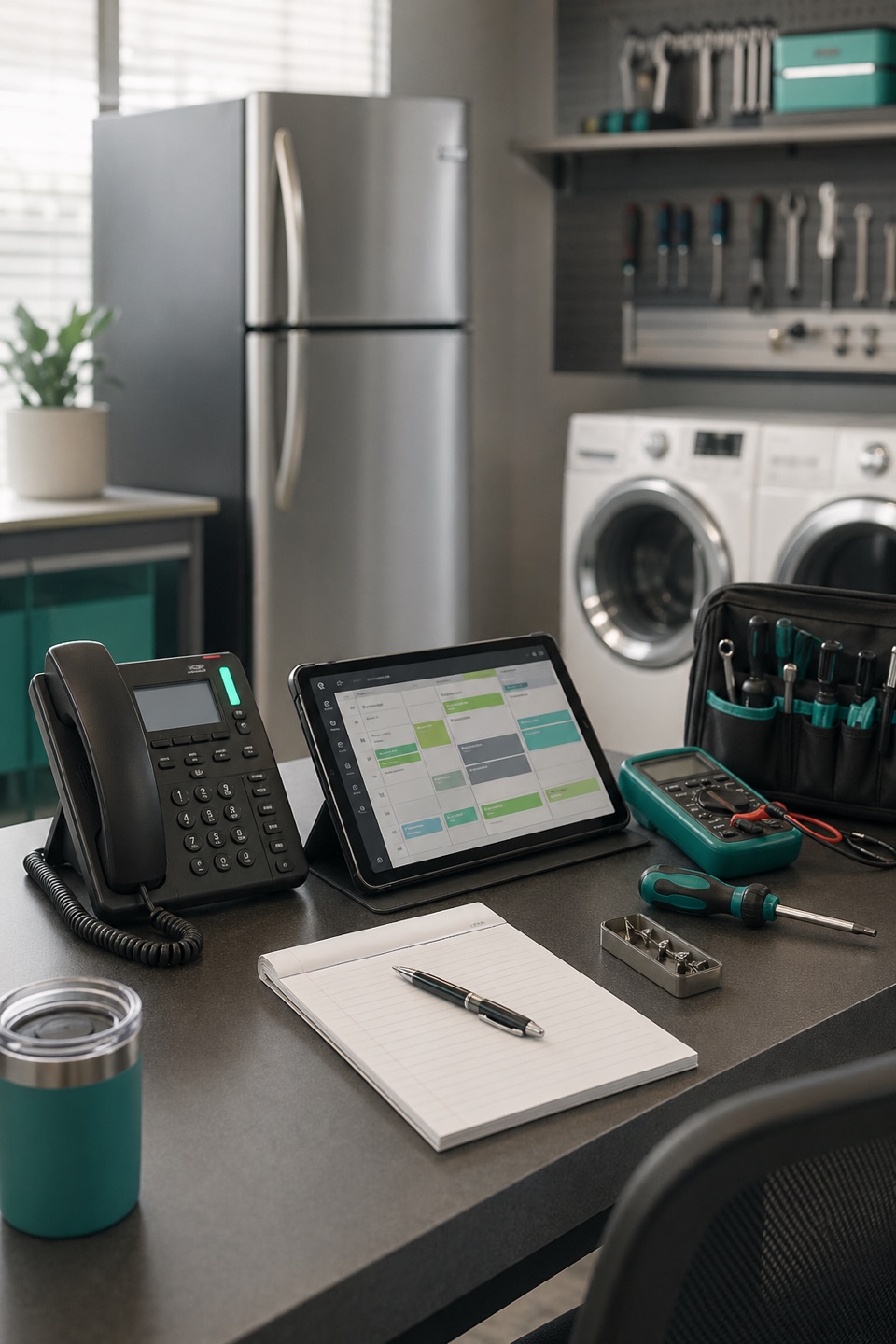
Appliance repair callers are often ready to book because a refrigerator is warm, a washer is leaking, a dryer is down, or an oven failed before an event. Missed-call ROI starts with a fast answer, repair-specific intake, and a clear staff handoff.
Read resource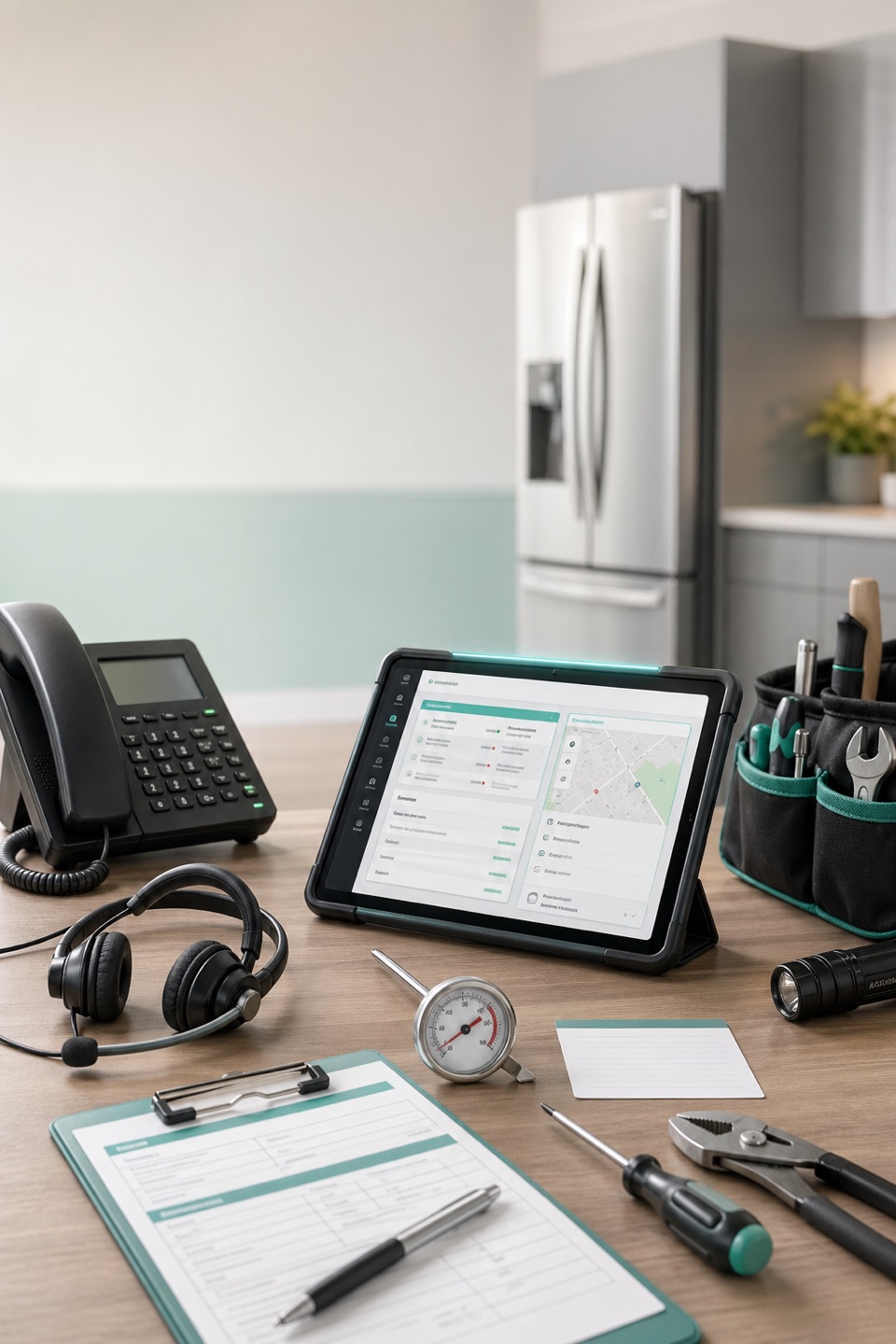
A refrigerator not cooling call is urgent, local, and detail-heavy. The first answer should capture cooling status, model context, timing, access, and a credible next step without making unsafe promises.
Read resource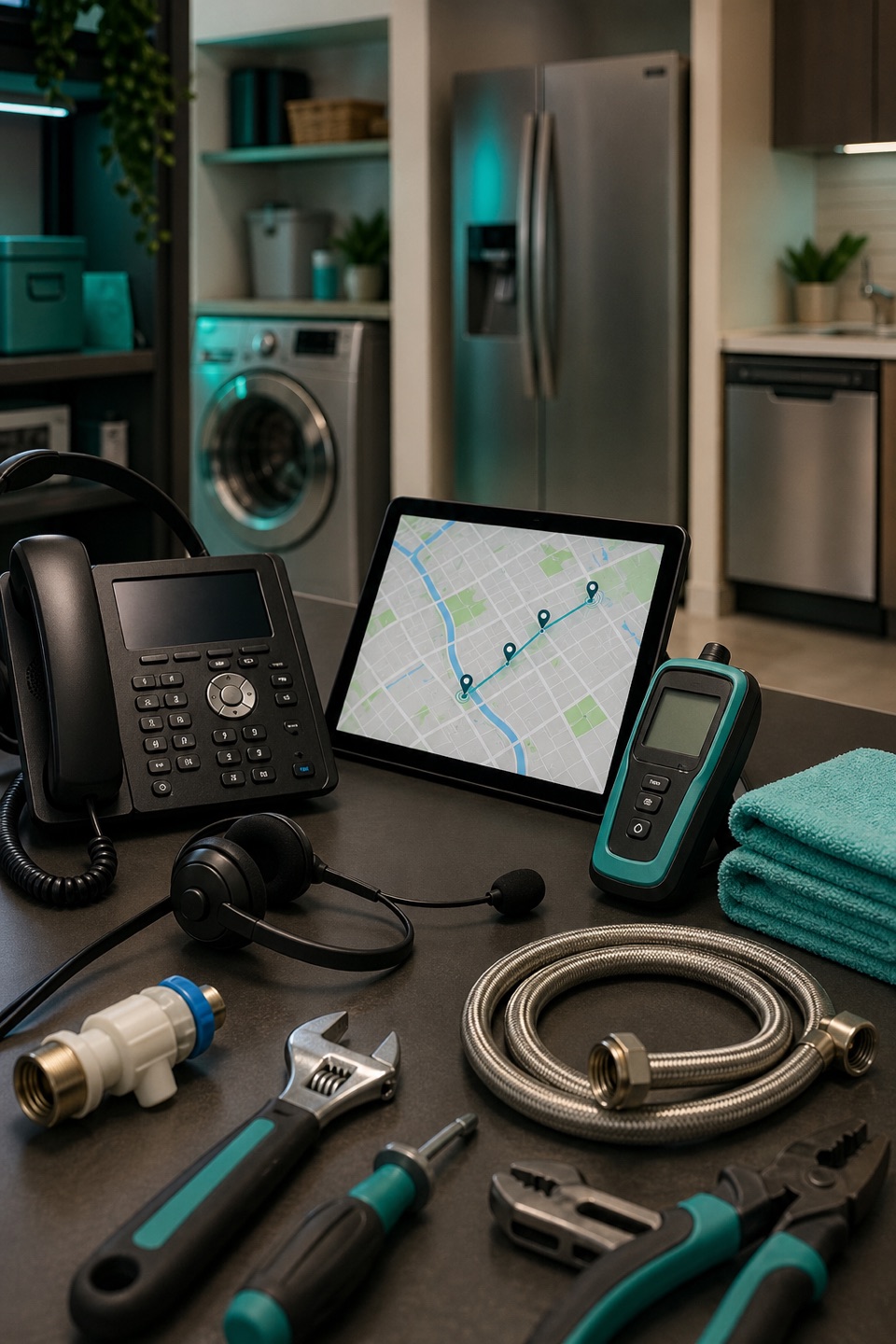
Appliance leak callers need a fast answer that captures source clues, active water, shutoff status, photos, floor level, access, and a credible next step before they keep searching.
Read resourceThese references support the phone demand, local search, and response speed claims above.
IBISWorld • 2025-05 • Accessed 2026-05-12
IBISWorld appliance repair industry page reporting $7.0 billion in 2025 U.S. revenue, 37,769 businesses, 56,146 employees, and no large market-share leader.
Open sourceU.S. Bureau of Labor Statistics • 2025-08-28 • Accessed 2026-05-12
BLS OOH page describing home appliance repairers as workers who repair, adjust, or install electric or gas household appliances, with 2024 employment, wage, and projection data.
Open sourceHomeGuide • Accessed 2026-05-12
HomeGuide 2026 appliance repair guide covering service-call fees, hourly repair rates, appliance-specific cost ranges, and repair-versus-replace considerations.
Open sourceAngi • 2026-04 • Accessed 2026-05-12
Angi 2026 refrigerator repair cost guide reporting an average refrigerator repair cost of $275, common range of $150-$400, and higher compressor repair ranges.
Open sourceU.S. Food and Drug Administration • Accessed 2026-05-12
FDA food-safety guidance saying refrigerators should be kept at 40°F or below and freezers at 0°F, with practical cold-storage steps for safe refrigerated food.
Open sourceUSDA Food Safety and Inspection Service • Accessed 2026-05-12
USDA FSIS guidance for outages and severe weather, including appliance thermometer use and discarding perishable food held above 40°F for two hours or more.
Open sourceENERGY STAR • Accessed 2026-05-12
ENERGY STAR refrigerator and freezer recycling guidance explaining refrigerant and oil recovery requirements, recyclable materials, and why older fridges and freezers need proper handling.
Open sourceU.S. Census Bureau • Accessed 2026-05-12
Census NAICS reference defining appliance repair and maintenance under 811412, covering establishments that repair and maintain household appliances.
Open sourceThis Old House • 2026-03 • Accessed 2026-05-12
This Old House appliance repair guide summarizing typical appliance repair costs, appliance lifespans, and repair-versus-replace decision factors.
Open sourceFederal Trade Commission • Accessed 2026-05-12
FTC consumer advice discussing repair restrictions for products including home appliances and the agency's attention to repair access issues.
Open sourceInvoca • 2025-08-18 • Accessed 2026-05-16
Invoca analysis showing live answer-rate benchmarks across industries and calling behavior for high-stakes purchases.
Open sourceBrightLocal • 2025 • Accessed 2026-05-16
Survey of 1,000 US consumers about general and local search behavior, maps usage, and business information expectations.
Open source