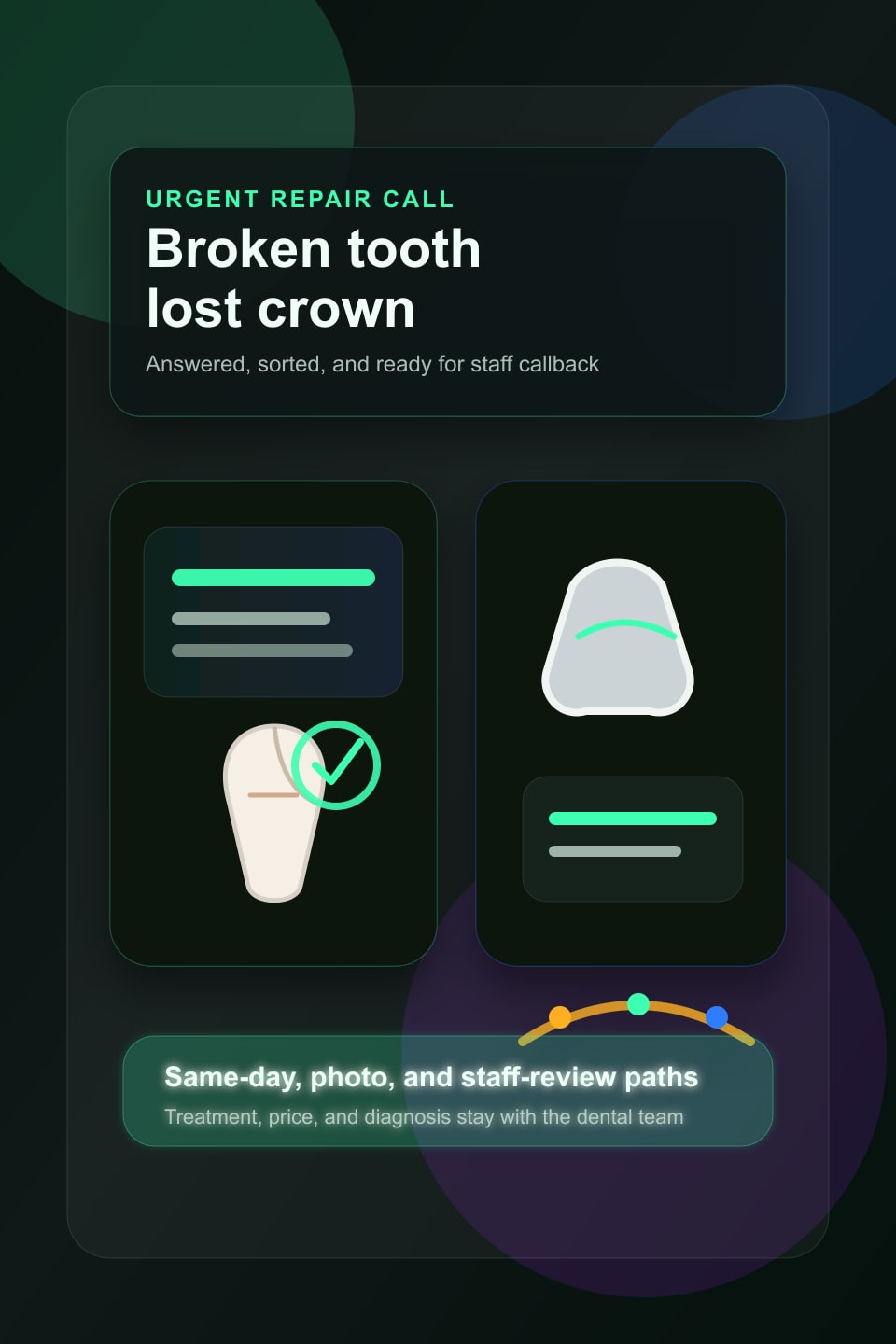
iando.ai answers chipped-tooth, cracked-tooth, broken-filling, lost-crown, bridge, veneer, cosmetic-event, photo, pain, swelling, and same-day repair calls so staff get a usable next step while the caller is still choosing.

Built for dental teams where callers need a calm first answer, a credible same-day or callback path, and clear boundaries before treatment, medication, benefits, exact-price, restoration-fit, and emergency-level decisions stay with staff.

Built around the jobs your phone has to do: answer, schedule, handle approved Q&A, create the next step, and recover missed-call revenue.

  • 320 monthly chipped-tooth, cracked-tooth, lost-crown, filling, bridge, and same-day repair calls modeled
  • +42 recovered dental repair next steps per month
  • $237,120 annual modeled value from faster urgent repair capture
  • 24/7 first answer for broken teeth, lost crowns, broken fillings, photos, pain, swelling, and event deadlines
  • Patient status, tooth or restoration issue, timing, photos, pain words, event deadline, and callback window captured
  • Same-day, next-day, waitlist, existing-patient, new-patient, and staff-review paths separated
  • Diagnosis, treatment, medication, benefits, exact cost, restoration reuse, and emergency-level judgment stay with staff
Revenue Lift 24/7
Monthly modeled value

Edit call volume, qualified intent, 25% lift, and average urgent repair value.

Monthly lift
$19,760/mo
Recovered calls that turn into booked, escalated, or staff ready next steps.
Annualized return Live estimate
$237,120/yr
The number operators use to decide whether better call coverage is worth it.
+42 recovered dental repair next steps/mo
90-day proof review: compare answered calls, captured next steps, and staff handoffs.
Run your numbers Adjust the four inputs. The return updates instantly.
320 calls/mo, 52% intent, 25% lift 24/7 coverage captures the calls that happen after hours, during peaks, and while staff are busy.
$475 average urgent repair value Average value per converted booking, job, consult, appointment, or documented next step.
90-day review Compare answered calls, captured next steps, booked outcomes, and staff handoffs against the model.

Planning model only. Replace with practice call logs, same-day capacity, broken-tooth and lost-restoration mix, photo-review rules, emergency exam value, repair-start value, payer mix, crown or filling consult rate, callback speed, and actual collected value.

Calls Coming In
Chipped and broken tooth calls Callers describing a broken edge, front-tooth chip, sharp spot, large tooth fragment, sports injury, bite injury,...
Lost crown and loose crown calls Patients asking whether a crown can be re-cemented, whether to bring it in, whether it can wait, or whether there...
Broken filling and rough-edge calls Callers with a filling that came out, rough edge, food catching, sensitivity, or a hole they can feel with the tongue.
Bridge, veneer, and cosmetic-event calls Callers with a visible restoration problem, temporary issue, upcoming event, travel deadline, school photo, work...
Revenue Path

Show the caller a next step before they move on.

iando answers quickly, captures the details that matter, uses approved language, and gives staff a cleaner handoff.

What Staff Gets
Chipped and broken tooth calls Capture what happened, timing, pain words, photo readiness, event deadline, and schedule flexibility for staff review.
Lost crown and loose crown calls Document crown status, location, discomfort, availability, and staff-only questions without advising reuse, glue,...
Broken filling and rough-edge calls Capture timing, discomfort, prior provider context, photos if requested, and whether the caller is seeking...
Bridge, veneer, and cosmetic-event calls Preserve urgency and deadline context while staff decide treatment, materials, temporary options, and appointment fit.
Urgent Dental Repair Call Plan

Separate repair demand, photos, and staff-only judgment before the caller keeps searching

The highest-value path is a fast split between same-day repair intent, lost-restoration context, cosmetic-event timing, pain or swelling language, and decisions that need the dental team.

1
Broken tooth and chipped tooth lane Issue type, front or back tooth if shared, pain words, sharp edge, when it happened, photo readiness, event deadline, and availability window.
2
Lost crown and broken filling lane Crown, bridge, veneer, filling, temporary, whether the piece is available, sensitivity, prior treatment context, and staff-only repair question.
3
Same-day and waitlist lane New or existing patient, preferred timing, same-day flexibility, next-day availability, travel or event pressure, and callback window.
4
Pain, swelling, and trauma lane Caller words around swelling, bleeding, facial injury, severe pain, post-treatment concern, medical-history context if volunteered, and approved escalation flag.
Industry ROI

The business case for dental broken tooth and lost crown calls

Start with the calls the business already earned, then estimate which ones can become appointments, jobs, consults, or useful follow-ups.

Urgent dental repair recovery
The business case starts when broken-tooth and lost-restoration callers get a credible next step before calling another office.

For broken tooth and lost crown calls, ROI is recovered same-day repair opportunities, cleaner photo and callback handoffs, faster schedule matching, and fewer urgent callers who disappear because the first answer sounded generic.

Call volume x qualified intent x average value x recovery lift
  • Monthly chipped-tooth, cracked-tooth, broken-filling, lost-crown, bridge, veneer, photo, pain, and same-day repair calls
  • Share with same-day, next-day, staff-review, waitlist, cosmetic-event, or callback intent
  • Average urgent exam, repair visit, palliative visit, crown consult, or first-care value
  • A conservative 25% lift from immediate answering and cleaner staff handoffs
What to recover first
Prioritize the calls with direct revenue or schedule impact.
  • Answer chipped-tooth, cracked-tooth, lost-crown, broken-filling, bridge, veneer, photo, pain, swelling, and same-day repair calls immediately.
  • Capture caller role, patient status, issue type, timing, piece or crown status, photo readiness, event deadline, availability, and callback needs.
  • Separate same-day, next-day, waitlist, new-patient, existing-patient, photo, and dentist-callback paths.
  • Escalate diagnosis, treatment, medication, restoration reuse, emergency-level judgment, exact price, benefits, and appointment suitability to staff.
Where Revenue Leaks

What missed calls actually look like for dental broken tooth and lost crown calls

These are the moments where demand slips away because the team is already busy serving customers, patients, or active jobs.

Repair callers are choosing fast

A chipped tooth before work, a crown off at dinner, a broken filling after lunch, or a front-tooth cosmetic problem before an event can send callers back to search if the first answer is vague.

Photos and timing get lost in voicemail

Staff need to know what happened, when it happened, whether the caller is new or existing, whether pain or swelling was mentioned, and whether the practice wants photos before deciding the next step.

Same-day fit is not the same as treatment fit

The first answer can capture availability and urgency, but staff still decide whether the visit type, restoration issue, imaging, history, and provider schedule fit the caller.

Lost restorations create policy-sensitive questions

Callers may ask whether to reuse a crown, glue something back, wait until Monday, eat normally, skip an appointment, or estimate a price. Those answers need staff-approved boundaries.

Event deadlines raise urgency

A chipped front tooth, loose veneer, broken bridge, or missing crown before travel, work, photos, a wedding, or school event is a high-intent call even when the caller is not in severe pain.

Proof And Context

What public data says about this buying behavior

Every stat references a public source below, so the revenue argument stays grounded instead of padded with invented benchmarks.

320/mo
broken-tooth, lost-crown, filling, bridge, photo, and same-day repair calls modeled 123

Model urgent repair demand separately from routine hygiene, benefit, and broad emergency dental calls because the caller's decision window is short.

52%
staff-ready repair intent modeled 456

Use call logs to replace this planning input across same-day repair, next-day repair, photo, waitlist, staff-review, event-deadline, and callback paths.

Lost restorations
belong in the urgent dental call plan 12

Broken fillings, lost crowns, and lost bridges need dentist-directed handling; the first answer should collect facts without advising restoration reuse or treatment.

Provider review
determines repair path 45

Chipped and cracked teeth can need different repairs, so call handling should capture issue type, photos, pain words, and timing while staff keep treatment decisions.

$475
average urgent repair value input 7

Use local collections data to replace this conservative first-care input across urgent exams, palliative visits, filling repair, crown consults, imaging, and starter treatment.

38%
unanswered inbound calls in a 26-practice dental dataset 3

Peerlogic's dental call study shows why urgent after-hours and same-day demand should be measured as a conversion path, not only as phone coverage.

Why This Industry Is Different

Dental Broken Tooth and Lost Crown Calls need phone coverage built around their actual calls

The phone experience should match how the business earns trust, books revenue, and hands off exceptions.

Lost restorations can be dental emergencies

Cleveland Clinic lists lost or broken dental restorations among dental emergency examples and says callers should contact a dentist for instructions, especially when a filling, crown, or bridge is involved.

Broken teeth still need professional assessment

Cleveland Clinic notes that only a dental provider can assess a chipped tooth, and that large chips, exposed tissue, cracks, or infection risk can change treatment needs.

Cracked teeth can need deeper repair

Cleveland Clinic describes cracked-tooth evaluation with symptoms, exam, imaging, and possible treatments such as bonding, crown, root canal, extraction, or referral.

Dental emergency guidance names broken teeth

ADA patient guidance includes broken or knocked-out teeth, painful swelling, tooth or jaw pain, and post-surgery treatment among items that may need dental attention.

The first call should protect judgment

AGD dental emergency guidance explains that crowns can come off and teeth can break or crack, while the proper repair should come from a dentist. The call path should capture facts, not improvise treatment.

How It Works

How iando.ai handles these calls

The best first layer is fast answer, clear qualification, then booking or escalation based on your operating rules.

1

Split broken tooth, lost restoration, and pain calls

iando.ai identifies chipped tooth, cracked tooth, broken filling, lost crown, loose crown, bridge, veneer, trauma, pain, swelling, photo request, event deadline, and post-treatment callback language.

2

Capture the repair details staff need

It records caller role, patient status, issue type, when it happened, whether a piece or crown is available, pain or swelling words, photo readiness, event deadline, availability windows, and callback needs.

3

Move the caller into the approved next step

Same-day, next-day, waitlist, new-patient, existing-patient, photo, and dentist-callback paths use approved language while treatment, medication, pricing, restoration reuse, and clinical judgment stay with staff.

Calls It Handles

Calls iando.ai can answer, escalate, or recover

These conversations are the highest-leverage starting point because they connect directly to revenue, schedule protection, or staff capacity.

Chipped and broken tooth calls

Callers describing a broken edge, front-tooth chip, sharp spot, large tooth fragment, sports injury, bite injury, or cosmetic concern.

Outcome: Capture what happened, timing, pain words, photo readiness, event deadline, and schedule flexibility for staff review.

Lost crown and loose crown calls

Patients asking whether a crown can be re-cemented, whether to bring it in, whether it can wait, or whether there is a same-day option.

Outcome: Document crown status, location, discomfort, availability, and staff-only questions without advising reuse, glue, treatment, or timing.

Broken filling and rough-edge calls

Callers with a filling that came out, rough edge, food catching, sensitivity, or a hole they can feel with the tongue.

Outcome: Capture timing, discomfort, prior provider context, photos if requested, and whether the caller is seeking same-day repair.

Bridge, veneer, and cosmetic-event calls

Callers with a visible restoration problem, temporary issue, upcoming event, travel deadline, school photo, work presentation, or wedding pressure.

Outcome: Preserve urgency and deadline context while staff decide treatment, materials, temporary options, and appointment fit.

Pain, swelling, and trauma overlap

Repair calls that also include swelling, bleeding, facial injury, severe pain, fever concern, pregnancy, medication, or medical-history language.

Outcome: Move through the practice-approved urgent handoff path and keep emergency-level judgment with staff.

Outcomes

What operators actually care about

More repair callers get a real next step

Broken-tooth, lost-crown, and broken-filling callers hear a dental-specific answer before they call another practice.

Photos and deadlines reach staff faster

Staff get the context that changes urgency: timing, visible tooth, event deadline, piece status, pain words, and whether photos are ready.

Repair judgment stays protected

The first answer organizes demand while treatment, re-cementing, medication, cost, benefits, imaging, and emergency-level decisions remain with the dental team.

Same-week openings become easier to match

Schedule fit starts with patient status, repair issue, availability windows, and waitlist flexibility instead of a blank callback.

Recovered Value

Where the payoff shows up operationally

  • Answer chipped-tooth, cracked-tooth, lost-crown, broken-filling, bridge, veneer, photo, pain, swelling, and same-day repair calls immediately.
  • Capture caller role, patient status, issue type, timing, piece or crown status, photo readiness, event deadline, availability, and callback needs.
  • Separate same-day, next-day, waitlist, new-patient, existing-patient, photo, and dentist-callback paths.
  • Escalate diagnosis, treatment, medication, restoration reuse, emergency-level judgment, exact price, benefits, and appointment suitability to staff.
  • Model recovered repair next steps against monthly call volume, 52% staff-ready intent, 25% lift, urgent repair value, and real collected outcomes.
Before And After

How the operation changes when the phone stops leaking revenue

Before

A crown comes off after dinner and the caller leaves a vague voicemail.

After

The call captures crown status, discomfort, timing, availability, and staff-only questions before the office opens.

Before

A front-tooth chip before an event gets treated like a routine appointment request.

After

Event timing, photo readiness, pain words, and same-day flexibility reach staff together.

Before

A broken filling call starts with guessing whether it is urgent.

After

The summary separates sensitivity, rough edge, prior treatment, timing, and appointment window.

Before

Pain, swelling, trauma, and cosmetic repair calls sit in the same queue.

After

Staff-only urgent language is flagged while repair and schedule details stay organized.

Operator Questions

Questions before putting AI on the phone

A broken tooth still needs a dentist

Correct. iando.ai should not decide treatment. It should answer, collect the caller's words, capture repair context, and send staff a cleaner next step.

Lost crown advice can be risky

That is why the call path should not tell a caller to glue, reuse, or wait. It should capture crown status and send restoration-fit decisions to staff.

Some chips are cosmetic

The caller may still have high intent because of pain, sharp edges, visible front teeth, work, travel, photos, or an event. Capture the urgency and let staff decide fit.

We cannot promise same-day treatment

The page should not promise treatment. It should promise a better first answer, a staff-ready summary, and approved next-step language.

Recover Missed Revenue

Turn more calls into recovered dental repair next steps for dental broken tooth and lost crown calls.

iando.ai is built for businesses that depend on the phone and lose money when callers do not get a fast, useful answer. Book a demo and map the revenue path to your call volume, hours, booking logic, and staff-only handoffs.

FAQ

Frequently asked questions

Can I&O AI answer broken tooth and lost crown calls?

Yes, when the practice defines approved intake, photo, callback, scheduling, and staff-review language. It should not diagnose, recommend treatment, or decide whether a restoration can be reused.

Can it tell a caller to glue a crown back on?

No. Restoration reuse, glue, cement, treatment timing, and appointment suitability should go to staff. The call path should capture what happened and what the caller is asking.

What should staff see before calling back?

Patient status, issue type, when it happened, piece or crown status, pain or swelling words, photo readiness, event deadline, availability windows, callback number, and staff-only questions.

How is this different from emergency dental calls?

Emergency dental pages cover broad pain, swelling, trauma, and after-hours demand. This path focuses on repair-specific calls: broken teeth, lost crowns, broken fillings, bridges, veneers, photos, and same-day repair matching.

What should still go to the dental team?

Diagnosis, treatment, medication, x-rays, restoration reuse, exact price, benefits, emergency-level judgment, same-day suitability, and any policy exception.

Supporting Guides

Deeper guides for dental broken tooth and lost crown calls

Each guide gives operators practical depth around staffing, call handling, conversion, and operational efficiency.

Broken teeth and lost restorations are repair calls with a short decision window

Broken-tooth and lost-crown callers are deciding fast. The right first answer captures what happened, pain or photo context, same-day timing, and staff-only questions before the caller keeps searching.

Read guide

Capture urgent dental demand when the office is closed or the desk is buried

After-hours dental callers need a calm first answer and a credible next step. The right dental answering service captures urgent intent, avoids clinical advice, and gives staff a cleaner path before the caller keeps searching.

Read guide
Sources

Research behind this page

These references support the phone-demand, local-search, and response-speed claims above.

1. Dental Emergencies

Cleveland Clinic • 2022-09-15 • Accessed 2026-05-13

Cleveland Clinic patient guidance defining dental emergencies, listing broken teeth and lost or broken restorations, and advising callers to contact a dentist for further instruction.

Open source
2. Fact Sheet: Dental Emergencies

Academy of General Dentistry • Accessed 2026-05-13

AGD dental emergency fact sheet noting that teeth can break or crack, crowns can come off, and repair should be handled by a dentist rather than improvised at home.

Open source
3. We Analyzed 4,280 Dental Patient Calls Across 26 Practices. Here's What the Data Reveals About Your Missed Revenue.

Peerlogic • 2026-03-30 • Accessed 2026-05-13

Case study covering 4,280 calls across a 26-practice dental group in February 2026 with answer-rate, conversion, and recovered-revenue benchmarks.

Open source
4. Chipped Tooth: Causes, Symptoms & Repair

Cleveland Clinic • Accessed 2026-05-13

Cleveland Clinic guidance explaining that chipped teeth require provider assessment and may involve polishing, bonding, fillings, crowns, root canals, or other repair based on severity.

Open source
5. Cracked Tooth (Fractured Tooth)

Cleveland Clinic • Accessed 2026-05-13

Cleveland Clinic guidance describing cracked-tooth causes, dental evaluation, imaging, and possible treatment paths such as bonding, crowns, root canal, extraction, or specialist referral.

Open source
6. 5 Strategies to Fix Your Call Answer Rate and Stop Losing Revenue

Invoca • 2025-08-18 • Accessed 2026-05-13

Invoca analysis showing live answer-rate benchmarks across industries and calling behavior for high-stakes purchases.

Open source
7. Dental Exam and Procedure Costs

CareCredit • Accessed 2026-05-13

CareCredit dental procedure cost guide covering common exam, filling, extraction, crown, root canal, and other dental procedure cost ranges that can inform conservative first-visit value modeling.

Open source
8. Dental Emergencies

MouthHealthy / American Dental Association • Accessed 2026-05-13

ADA patient guidance explaining what to do for dental emergencies, including toothaches, cracked teeth, knocked-out teeth, swelling, and the importance of contacting a dentist or emergency room promptly.

Open source
9. Emergency Patient Treatment

American Dental Association • Accessed 2026-05-13

ADA practice-management guidance stating that dentists must be available for patients of record when emergencies occur and that staff should be trained in basic triage and after-hours emergency handling.

Open source
10. Phone Call Scripts for Dental Practices

American Dental Association • Accessed 2026-05-12

ADA practice-management script resource covering prospective-patient phone calls, including urgent needs, emergency treatment language, scheduling context, and caller handoff structure.

Open source
11. Phone Calls from Prospective Patients

American Dental Association • 2026 • Accessed 2026-05-13

ADA patient-intake guidance for dental practices covering answer speed, phone scripts, emergency handling, and first-appointment call flows.

Open source
12. Dental Assistants

U.S. Bureau of Labor Statistics • 2025-08-28 • Accessed 2026-05-13

BLS Occupational Outlook Handbook profile explaining that dental assistants provide patient care, take x-rays, keep records, and schedule appointments, with duties varying by state and dental office.

Open source
13. Consumer Search Behavior: Where Are Your Customers?

BrightLocal • 2025 • Accessed 2026-05-13

Survey of 1,000 US consumers about general and local search behavior, maps usage, and business information expectations.

Open source