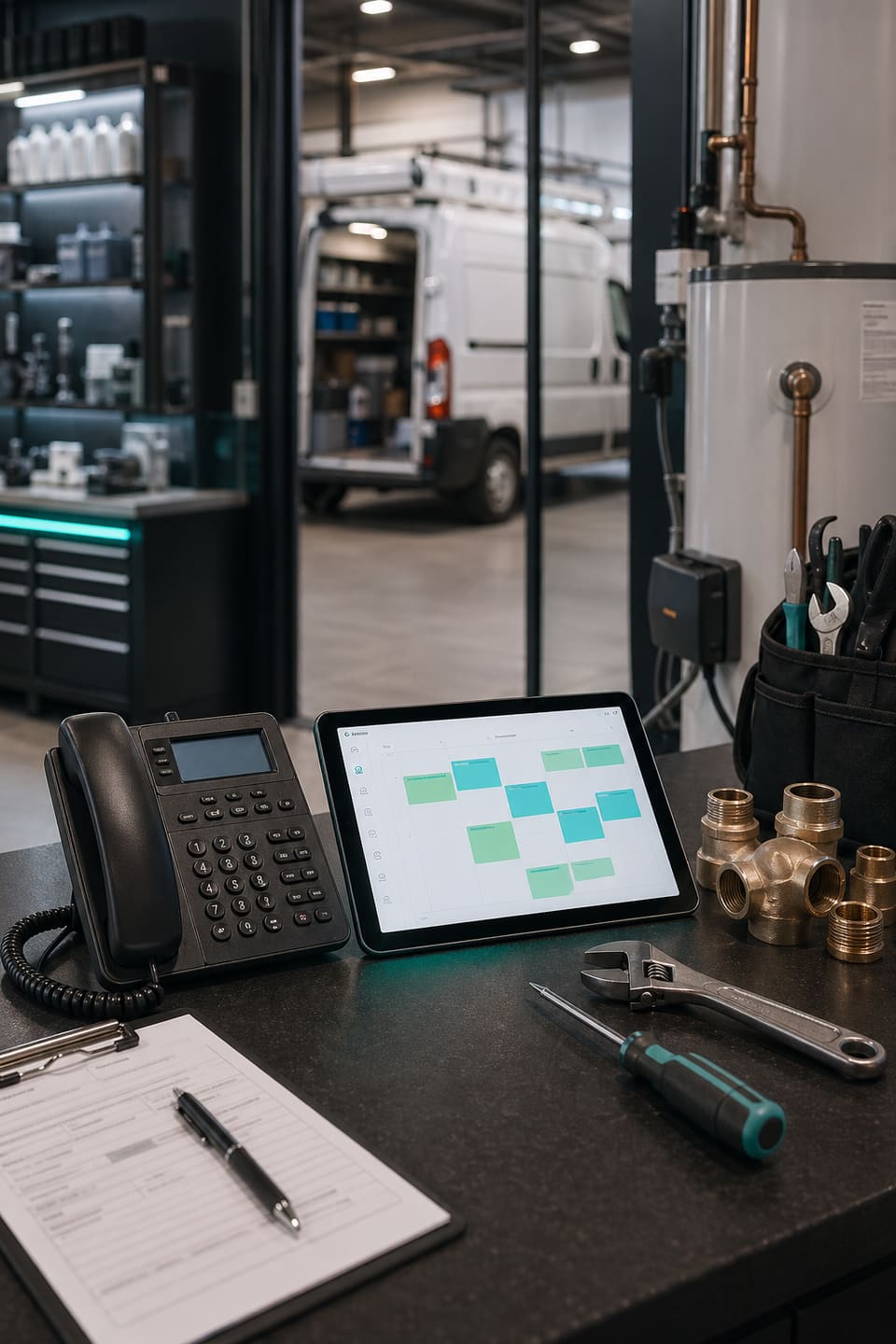
AI For Burst Pipe Calls
iando.ai answers burst pipe, active leak, frozen line, shutoff, ceiling drip, and water damage calls 24/7 so urgent plumbing demand gets contained, documented, and sent into a credible dispatch path before the caller calls the next plumber.
Built for plumbing teams where the first answer needs to lower panic, capture water source and access details, avoid unsafe promises, and create a believable next step fast.
Built around the jobs your phone has to do: answer, schedule, handle approved Q&A, create the next step, and recover missed-call revenue.
Edit call volume, buyer intent, 25% lift, and average urgent job value.
Planning model only. Replace with call logs, after hours mix, freeze event spikes, shutoff success rate, service area fit, dispatch capacity, leak detection close rate, restoration partner value, and actual average invoice value.
The business case for emergency plumbing burst pipe call teams
Start with the calls the business already earned, then estimate which ones can become appointments, jobs, consults, or useful follow-ups.
For burst pipe calls, ROI is recovered emergency repairs, after hours dispatches, leak checks, water damage referrals, and repeat plumbing relationships protected by a prepared first answer.
- Monthly burst pipe, active leak, frozen line, and ceiling drip calls
- Dispatchable emergency intent share of those calls
- Average urgent burst or frozen pipe job value
- A conservative 25% lift from immediate answering and cleaner intake
- Burst pipe, active leak, frozen line, and ceiling drip calls answered immediately
- Shutoff status, water source, affected rooms, photos, and access captured
- After hours, restoration sensitive, and property manager paths separated
- Mold, insurance, electrical, cleanup, and structural questions kept inside approved human rules
What missed calls actually look like for emergency plumbing burst pipe call teams
These are the moments where demand slips away because the team is already busy serving customers, patients, or active jobs.
The caller is trying to stop damage now
A burst supply line, ceiling drip, frozen pipe thaw, or water running under a cabinet creates urgency before the caller cares about anything else.
Slow answers restart the vendor search
Emergency callers often keep dialing until someone sounds prepared. A generic voicemail gives the next local plumber a chance to win the job.
Bad intake wastes scarce on call time
Dispatch needs address, access, water source clues, shutoff status, affected rooms, ceiling or wall damage, photos if requested, and whether the property is occupied before choosing the next step.
What public data says about this buying behavior
Every stat references a public source below, so the revenue argument stays grounded instead of padded with invented benchmarks.
Emergency plumbing calls can carry meaningful ticket value before water damage, restoration, or larger repairs are considered.
Burst pipe jobs can justify immediate call handling before restoration, insurance, and larger repair questions are counted.
Water loss urgency explains why callers keep shopping unless the first answer sounds prepared and captures the right context.
Emergency Plumbing Burst Pipe Call Teams need phone coverage built around their actual calls
The phone experience should match how the business earns trust, books revenue, and hands off exceptions.
Burst pipe calls are a certainty race
The caller wants to know whether the situation is being handled. A specific first answer can lower panic and keep the job from leaving your service area.
Water loss context changes the response
A kitchen supply line leak, frozen exterior wall pipe, ceiling drip, basement water, and property manager tenant call do not need the same callback notes.
Guardrails protect the company
The call path should not diagnose structural risk, mold, insurance coverage, electrical safety, or cleanup scope. It should capture facts and send sensitive decisions to staff.
How iando.ai handles these calls
The best first layer is fast answer, clear qualification, then booking or escalation based on your operating rules.
Answer and classify the water emergency
iando.ai identifies burst pipe, active leak, frozen line, ceiling drip, shutoff help, water heater leak, appliance line, exterior spigot, or property manager escalation right away.
Capture what dispatch needs
It gathers address, caller role, water source clues, shutoff status, affected rooms, visible water, ceiling or wall impact, access notes, photos if requested, and timing pressure.
Create the dispatch or callback path
Emergency, staff review, leak detection, after hours, restoration sensitive, and property manager calls move through the company's approved rules with a useful summary attached.
Calls iando.ai can answer, escalate, or recover
These conversations are the highest-leverage starting point because they connect directly to revenue, schedule protection, or staff capacity.
Burst pipe and active leak calls
Homeowners, tenants, or managers reporting running water, a split pipe, wet drywall, ceiling drips, or water spreading across a room.
Outcome: Capture urgency, source clues, shutoff status, affected areas, and access.
Frozen pipe and thaw concern calls
Callers with no water, low flow, exterior wall pipe concerns, recent freeze exposure, or a line that started leaking after thawing.
Outcome: Document symptoms and timing while avoiding unsafe thawing or damage promises.
Property manager and tenant calls
Occupied unit issues involving resident updates, owner threads, photos, keys, vendor shopping pressure, or open by morning deadlines.
Outcome: Create a prepared response path that reduces repeat explanations and protects the relationship.
Water damage and restoration sensitive calls
Calls involving soaked materials, visible water, mold concern, insurance questions, electricity worries, or referral coordination.
Outcome: Capture context and send sensitive cleanup, coverage, and safety decisions to qualified staff.
What operators actually care about
More urgent pipe jobs captured
Burst pipe, frozen line, ceiling drip, and active leak callers get an immediate plumbing specific response instead of blank voicemail.
Cleaner dispatch decisions
Staff receives source, shutoff, access, room, photo, and water damage context before deciding whether to roll now, call back, or coordinate the next step.
Better property manager trust
Resident impact, owner thread pressure, access notes, and update language are captured before the next human response.
Where the payoff shows up operationally
- Burst pipe, active leak, frozen line, and ceiling drip calls answered immediately
- Shutoff status, water source, affected rooms, photos, and access captured
- After hours, restoration sensitive, and property manager paths separated
- Mold, insurance, electrical, cleanup, and structural questions kept inside approved human rules
How the operation changes when the phone stops leaking revenue
A burst pipe call hits voicemail while water keeps spreading and the caller keeps dialing.
AfterThe call is answered, classified, and moved toward dispatch or a prepared callback.
Dispatch calls back without shutoff, room, access, or photo context.
AfterThe summary includes the facts needed to make the next response credible.
Frozen line, leak detection, water damage, and tenant calls mix together.
AfterUrgent, staff review, property manager, and restoration sensitive paths are separated early.
After hours coverage sounds generic.
AfterThe caller hears a burst pipe specific path built around urgency and next step clarity.
Questions before putting AI on the phone
Burst pipe calls can involve safety concerns
Correct. The AI should not give electrical, structural, mold, insurance, or cleanup advice. It should collect facts and send the call through company approved escalation language.
Our dispatcher decides whether to roll a truck
Keep that rule. iando.ai handles the first answer and context capture so the dispatcher starts from a cleaner summary.
Freeze events can overwhelm us
That is when structured intake matters most. Callers can be classified by location, water status, access, severity, timing, and fit while staff protect available truck capacity.
Turn more calls into booked revenue for emergency plumbing burst pipe call teams.
iando.ai is built for businesses that depend on the phone and lose money when callers do not get a fast, useful answer. Book a demo and map the revenue path to your call volume, hours, and booking logic.
Frequently asked questions
Can AI answer burst pipe calls safely?
Yes, when it stays inside approved intake language. It should not diagnose the pipe failure, promise cleanup results, or make safety or coverage decisions.
Can it help with frozen pipe calls?
Yes. It captures what the caller reports, whether water is flowing, whether a leak has appeared, which area is affected, and what timing pressure exists before staff review.
Does it decide whether to send a plumber?
It follows the company's rules. Some calls can be escalated immediately. Others create a clean callback summary for the owner, dispatcher, or technician.
Why build a burst pipe call plan separate from a plumbing page?
Because burst pipe callers search and decide differently. They care about speed, water spread, shutoff, access, damage, photos, and whether the company sounds prepared.
Deeper guides for emergency plumbing burst pipe call teams
Each guide gives operators practical depth around staffing, call handling, conversion, and operational efficiency.
Burst pipe calls are won by the first prepared answer
Burst pipe callers need a fast answer that captures water source, shutoff status, affected rooms, access, photos, and a credible next step before they keep searching.
Read ROI guideSump pump failure calls are won by the first prepared answer
Sump pump failure callers need a fast answer that captures water level, pump behavior, power, backup, discharge, access, photos, and a credible next step before they keep searching.
Read ROI guideMore phone-revenue paths
Research behind this page
These references support the phone-demand, local-search, and response-speed claims above.
Forbes Home • Accessed 2026-04-29
Forbes Home pricing guide covering emergency plumber cost ranges, after-hours trip fees, and higher-cost urgent plumbing scenarios.
Open sourceAngi • 2026-03-18 • Accessed 2026-04-29
Angi 2026 cost guide reporting a normal burst pipe repair range of $200 to $3,000, an average repair cost of $500, per linear foot repair cost drivers, labor factors, emergency fees, and related water damage restoration considerations.
Open sourceThe Hanover Insurance Group • 2025 • Accessed 2026-04-29
Hanover water damage resource describing water damage as a common homeowner loss source and listing figures including a $10,849 average water damage and freezing claim and $3,500 burst pipe repair cost.
Open sourceInsurance Institute for Business & Home Safety • 2024-11-14 • Accessed 2026-04-29
IBHS winter weather guidance explaining that frozen pipes and leaky roofs are common winter loss drivers and advising homeowners to insulate vulnerable pipes, know the water shutoff, and keep homes warm enough to reduce freeze risk.
Open sourceU.S. Environmental Protection Agency • Accessed 2026-04-28
EPA consumer guidance explaining that mold can grow on wet materials when moisture remains, and advising that wet materials and areas should be dried within 24 to 48 hours where possible.
Open sourceCenters for Disease Control and Prevention • 2024-09-26 • Accessed 2026-04-29
CDC mold guidance explaining that mold grows where moisture remains, that leaks should be fixed, and that homes should be dried fully and quickly within 24 to 48 hours after flooding where possible.
Open sourceU.S. Bureau of Labor Statistics • 2025-08-28 • Accessed 2026-04-29
BLS Occupational Outlook Handbook profile for plumbers, pipefitters, and steamfitters covering 2024 employment, projected 2024-2034 growth, annual openings, emergency on-call work, and evening/weekend schedules.
Open sourceInvoca • 2025-08-18 • Accessed 2026-04-29
Invoca analysis showing live answer-rate benchmarks across industries and calling behavior for high-stakes purchases.
Open sourceBrightLocal • 2025 • Accessed 2026-04-29
Survey of 1,000 US consumers about general and local search behavior, maps usage, and business information expectations.
Open source