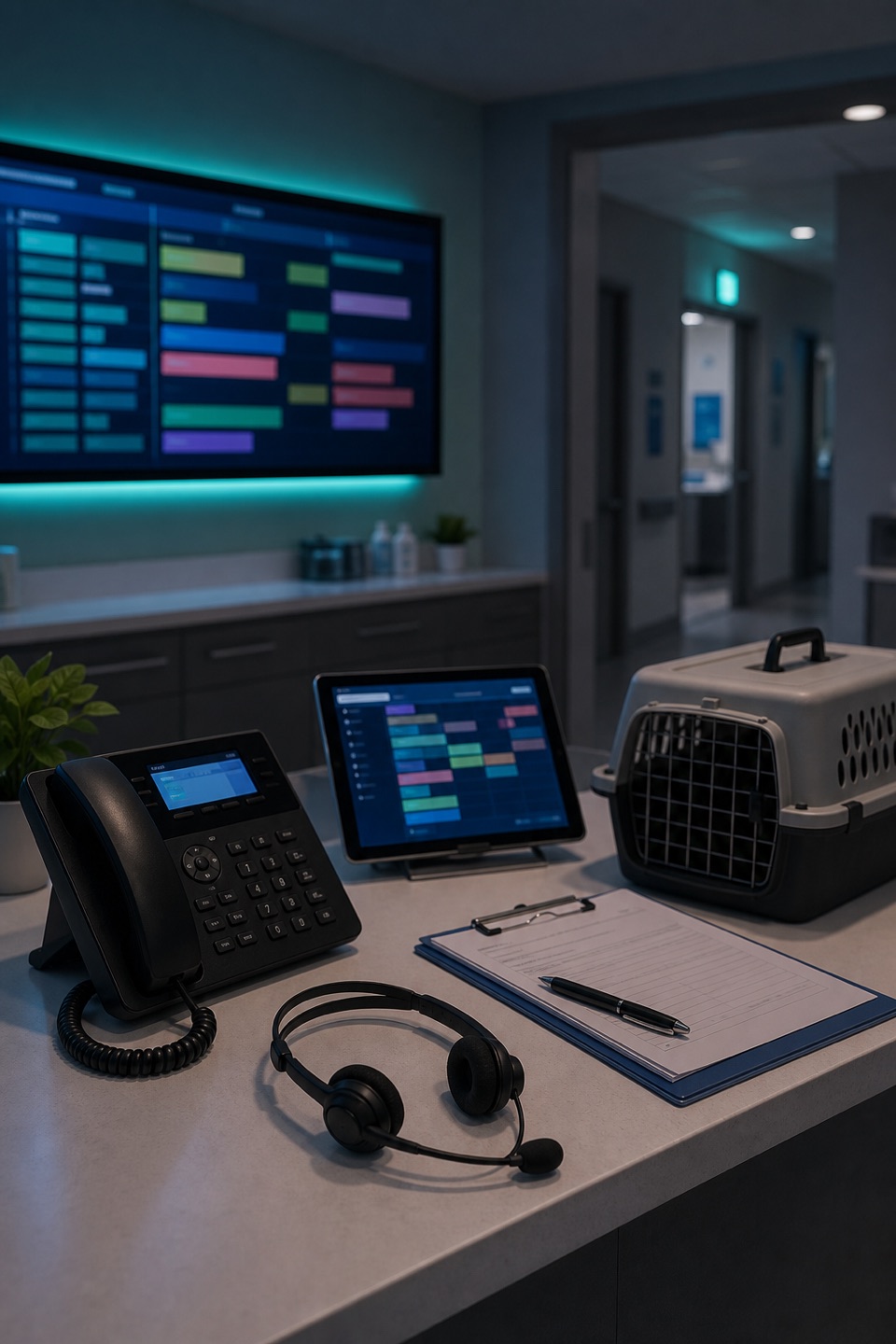
iando.ai answers emergency veterinary capacity, ETA, arrival, transfer, poison, and callback calls 24/7, then captures owner concern, location, pet details, records context, and the staff-approved next step before the owner keeps dialing.

Built for veterinary ERs and urgent-care teams where hospital status changes quickly, owners need honest expectations, critical language needs fast staff review, and no AI employee should diagnose or make medical decisions.

Built around the jobs your phone has to do: answer, schedule, handle approved Q&A, create the next step, and recover missed-call revenue.

  • 24/7 first answer for capacity, arrival, ETA, transfer, poison, and callback calls
  • Owner concern, species, location, ETA, records status, and callback need captured
  • Breathing, toxin, seizure, trauma, collapse, pain, and medication wording flagged
  • Capacity, poison, payment, transfer, and escalation paths kept with staff rules
Revenue Lift 24/7
Monthly modeled value

Edit call volume, qualified intent, 25% lift, and average emergency visit value.

Monthly lift
$19,665/mo
Recovered calls that turn into booked, escalated, or staff ready next steps.
Annualized return Live estimate
$235,980/yr
The number operators use to decide whether better call coverage is worth it.
+41 recovered arrivals or staff-ready ER paths/mo
90-day proof review: compare answered calls, captured next steps, and staff handoffs.
Run your numbers Adjust the four inputs. The return updates instantly.
360 calls/mo, 46% intent, 25% lift 24/7 coverage captures the calls that happen after hours, during peaks, and while staff are busy.
$475 average emergency visit value Average value per converted booking, job, consult, appointment, or documented next step.
90-day review Compare answered calls, captured next steps, booked outcomes, and staff handoffs against the model.

Planning model only. Replace with call logs, current triage categories, after-hours mix, staff capacity, transfer patterns, callback speed, emergency exam fees, diagnostics mix, payment-policy constraints, and actual collected visit value.

Calls Coming In
Can you take my pet right now? Owners asking about capacity, wait expectations, walk-in rules, transfer availability, hospital status, or whether...
We are on the way Arrival calls from owners, referring clinics, or caregivers who need parking, records, entry, callback, or...
Breathing, seizure, collapse, trauma, and toxin calls High-stress calls where the owner describes distress language that should never be reassured away by a phone...
Callback, payment, transfer, and records questions Owners and referring clinics asking about callback timing, records, payment expectations, deposit questions,...
Revenue Path

Show the caller a next step before they move on.

iando answers quickly, captures the details that matter, uses approved language, and gives staff a cleaner handoff.

What Staff Gets
Can you take my pet right now? Use staff-approved capacity language, capture location and ETA, and escalate critical or policy-sensitive cases.
We are on the way Send staff a pre-arrival summary with owner details, ETA, pet details, concern, toxin or trauma context, and...
Breathing, seizure, collapse, trauma, and toxin calls Capture the owner's exact words and send callers through emergency, veterinarian, or poison-control paths under...
Callback, payment, transfer, and records questions Capture the question, records status, owner contact, ETA, and staff-only decision flags before the call becomes a...
Industry ROI

The business case for emergency vet capacity and arrival calls

Start with the calls the business already earned, then estimate which ones can become appointments, jobs, consults, or useful follow-ups.

Emergency vet capacity call recovery
The business case starts when a worried owner asks whether your ER can take them now.

For emergency veterinary capacity and arrival calls, ROI is recovered urgent visits, cleaner ETA notes, fewer blank callbacks, fewer avoidable arrival surprises, and more consistent staff-approved guidance when the hospital is busy.

Call volume x qualified intent x average value x recovery lift
  • Monthly capacity, arrival, ETA, transfer, poison, breathing, trauma, seizure, collapse, and after-hours calls
  • Urgent arrival, transfer, poison-control, or veterinarian-callback intent after filtering routine requests
  • Average emergency exam, urgent visit, diagnostics, stabilization, or first-care value
  • A conservative 25% lift from immediate answering and cleaner handoffs
What to recover first
Prioritize the calls with direct revenue or schedule impact.
  • Answer capacity, arrival, ETA, callback, transfer, poison, and distress calls immediately.
  • Capture owner concern, species, age or weight if volunteered, location, ETA, callback need, records status, and suspected toxin details.
  • Escalate breathing, seizure, collapse, trauma, toxin, severe pain, payment, transfer, and capacity exceptions to staff.
  • Model recovered arrivals and staff-ready ER paths against monthly call volume, urgent intent, 25% lift, average emergency visit value, and actual capacity.
Where Revenue Leaks

What missed calls actually look like for emergency vet capacity and arrival calls

These are the moments where demand slips away because the team is already busy serving customers, patients, or active jobs.

Capacity changes while owners are still dialing

An owner may be asking whether to come in, whether to keep driving, whether there is a wait, whether a critical case can be accepted, or whether another emergency hospital sounds more prepared.

Arrival calls carry operational details

ETA, parking, records, suspected toxin, pet size, breathing language, payment-policy questions, and transfer context can change what staff need before the pet arrives.

Stable and critical callers cannot hear the same answer

A lameness, ear infection, respiratory distress call, seizure call, toxin exposure, owner callback, and hit-by-car arrival need different approved paths without phone diagnosis.

Proof And Context

What public data says about this buying behavior

Every stat references a public source below, so the revenue argument stays grounded instead of padded with invented benchmarks.

3 levels
of emergency veterinary capacity status in Iowa State's model 1

Capacity calls need staff-approved status language because space, staffing, medical services, and current inpatients can change what the hospital can safely accept.

Arrival
context helps emergency teams prepare before the pet reaches the door 213

Medication lists, suspected toxins, records, ETA, and owner concern can make the arrival handoff cleaner while triage priority stays with veterinary professionals.

$475
planning value for urgent veterinary visits 4

Use local collected revenue to replace this conservative planning value across emergency exams, urgent visits, diagnostics, stabilization, and first-care appointments.

10%
projected veterinarian employment growth from 2024 to 2034 56

Veterinary staff capacity is valuable; avoidable phone reconstruction competes with clinical work, urgent intake, owner communication, and active hospital operations.

Why This Industry Is Different

Emergency Vet Capacity and Arrival Calls need phone coverage built around their actual calls

The phone experience should match how the business earns trust, books revenue, and hands off exceptions.

Capacity is part of the emergency experience

Iowa State's emergency hospital explains that capacity can depend on staffing, space, current inpatients, and available services. Callers need a clear next step when those conditions change.

Arrival context helps staff prepare

Oregon State's emergency guidance tells owners to bring medication lists, suspected toxin information, and recent records when available. A call plan can capture those details before the lobby handoff.

Triage is not first-come, first-served

Emergency teams prioritize by medical need. I&O AI should capture the owner's words and send the call through staff rules, not promise a wait time or decide whether the pet is safe.

How It Works

How iando.ai handles these calls

The best first layer is fast answer, clear qualification, then booking or escalation based on your operating rules.

1

Capture the arrival question first

iando.ai identifies whether the caller is asking about capacity, wait expectations, arrival ETA, transfer, poison exposure, breathing trouble, seizure, trauma, collapse, pain, payment policy, records, or callback status.

2

Collect what staff need before the pet arrives

It records owner name, callback number, location, ETA, pet species, age or weight if volunteered, established-client status, what happened, when it started, suspected toxin, and records or referral context.

3

Use approved capacity and escalation language

Critical, toxin, breathing, seizure, trauma, collapse, pain, payment, transfer, and capacity exceptions go to staff. Routine or stable questions get the hospital's approved next step without medical advice.

Calls It Handles

Calls iando.ai can answer, escalate, or recover

These conversations are the highest-leverage starting point because they connect directly to revenue, schedule protection, or staff capacity.

Can you take my pet right now?

Owners asking about capacity, wait expectations, walk-in rules, transfer availability, hospital status, or whether they should come in.

Outcome: Use staff-approved capacity language, capture location and ETA, and escalate critical or policy-sensitive cases.

We are on the way

Arrival calls from owners, referring clinics, or caregivers who need parking, records, entry, callback, or preparation instructions.

Outcome: Send staff a pre-arrival summary with owner details, ETA, pet details, concern, toxin or trauma context, and records status.

Breathing, seizure, collapse, trauma, and toxin calls

High-stress calls where the owner describes distress language that should never be reassured away by a phone assistant.

Outcome: Capture the owner's exact words and send callers through emergency, veterinarian, or poison-control paths under clinic rules.

Callback, payment, transfer, and records questions

Owners and referring clinics asking about callback timing, records, payment expectations, deposit questions, transfer status, or whether staff have reviewed the case.

Outcome: Capture the question, records status, owner contact, ETA, and staff-only decision flags before the call becomes a repeat interruption.

Stable but worried owners

Questions about vomiting, diarrhea, limping, ear pain, appetite, behavior change, mild injury, or whether waiting is possible.

Outcome: Collect context and follow staff rules without diagnosis, prognosis, or home-care instructions.

Outcomes

What operators actually care about

More urgent arrivals stay with your hospital

Owners get a credible first answer, arrival path, and callback expectation before they call another ER or urgent-care clinic.

Cleaner pre-arrival summaries

Staff see the concern, location, ETA, species, toxin details, records status, callback need, and approved language already used.

Less repeat-callback pressure

Capacity, payment, transfer, records, and owner-update questions arrive with context instead of another vague phone message.

Recovered Value

Where the payoff shows up operationally

  • Answer capacity, arrival, ETA, callback, transfer, poison, and distress calls immediately.
  • Capture owner concern, species, age or weight if volunteered, location, ETA, callback need, records status, and suspected toxin details.
  • Escalate breathing, seizure, collapse, trauma, toxin, severe pain, payment, transfer, and capacity exceptions to staff.
  • Model recovered arrivals and staff-ready ER paths against monthly call volume, urgent intent, 25% lift, average emergency visit value, and actual capacity.
Before And After

How the operation changes when the phone stops leaking revenue

Before

A capacity caller reaches voicemail and calls the next emergency hospital.

After

The caller hears approved capacity language, shares ETA and concern, and staff get a usable pre-arrival note.

Before

A referring clinic or owner arrives with missing records, toxin details, or callback context.

After

The summary includes records status, suspected exposure, timing, location, and who needs to be called back.

Before

Stable and critical cases hear generic wait language.

After

Critical language is flagged, stable questions follow approved expectations, and staff keep decision control.

Before

Reception has to rebuild the story while the lobby and phone are both busy.

After

The first answer collects owner, ETA, records, concern, and staff-only flags so the team can focus on the patient and owner.

Operator Questions

Questions before putting AI on the phone

Capacity decisions are too sensitive for AI

Correct. iando.ai should not decide whether the hospital can accept a case. It should use approved status language, capture context, and escalate exceptions to staff.

Owners will ask for medical advice

That is why the call path must be no-advice by design. It can capture the owner's words and move the caller to a veterinarian, emergency hospital, or poison-control path without diagnosis or dosing.

Wait times can change quickly

The first answer should avoid guarantees. It can explain approved expectations, capture ETA, and tell staff which callers need a priority callback.

Payment conversations can escalate

Use approved language only. The AI can capture the question and send deposit, financing, refund, estimate, and exception conversations to staff.

Recover Missed Revenue

Turn more calls into recovered arrivals or staff-ready ER paths for emergency vet capacity and arrival calls.

iando.ai is built for businesses that depend on the phone and lose money when callers do not get a fast, useful answer. Book a demo and map the revenue path to your call volume, hours, booking logic, and staff-only handoffs.

FAQ

Frequently asked questions

Can I&O AI answer emergency vet capacity calls?

Yes, when the hospital defines approved status and escalation language. It should collect context and escalate exceptions, not decide whether a pet can be accepted.

Can it tell owners how long the wait will be?

Only with approved language. Emergency wait expectations can change quickly, so the safer path is to avoid guarantees, capture ETA and concern, and send priority callbacks.

What should an arrival summary include?

Owner name, callback number, location, ETA, pet species, age or weight if volunteered, established-client status, concern in the owner's words, suspected toxin or trauma details, records status, and the next-step language already given.

Does this replace veterinary triage?

No. It supports triage by answering quickly, capturing context, and next-step staff-only decisions. Medical judgment stays with the veterinary team.

Where does this fit with after-hours emergency vet coverage?

The after-hours page covers broad distress calls. This call plan focuses on capacity, arrival, ETA, transfer, callback, and wait-expectation moments that decide whether an owner keeps coming or keeps dialing.

Supporting Guides

Deeper guides for emergency vet capacity and arrival calls

Each guide gives operators practical depth around staffing, call handling, conversion, and operational efficiency.

Capacity and ETA calls decide whether worried owners keep driving or keep dialing

Emergency veterinary callers need a clear capacity or arrival next step before they keep dialing. The right call plan captures context, avoids medical advice, and gives staff a usable pre-arrival summary.

Read guide

Emergency vet transfer calls need a clear first answer before the referral or owner keeps dialing

Emergency veterinary transfer and callback calls are operational handoffs, not routine reception. The right call plan captures records, ETA, owner questions, and staff-only decisions before the owner or referring clinic keeps dialing.

Read guide

Sick-pet calls need speed, context, and strict veterinary boundaries

Sick-pet calls are high-intent owner demand. The right call path captures symptom context, protects clinical boundaries, and gives veterinary staff a cleaner next step.

Read guide
Sources

Research behind this page

These references support the phone-demand, local-search, and response-speed claims above.

1. Small Animal Hospital Emergency and Critical Care Triage Status System

Iowa State University Lloyd Veterinary Medical Center • 2025-07 • Accessed 2026-05-13

Iowa State emergency hospital guidance explaining a three-level triage status system shaped by staffing, space, current inpatients, medical services, acceptance limits, stable-case wait times, and critical-case prioritization.

Open source
2. Small Animal Emergency and Critical Care - What to Expect

Oregon State University Lois Bates Acheson Veterinary Teaching Hospital • Accessed 2026-05-13

Oregon State emergency veterinary guidance explaining emergency and critical care, calling to discuss concerns, referral/transfer context, scheduled emergency appointments, medication lists, suspected toxin details, and recent record/x-ray preparation.

Open source
3. Initial Triage and Resuscitation of Small Animal Emergency Patients

Merck Veterinary Manual • 2025-12 • Accessed 2026-05-13

Professional veterinary reference describing emergency triage as prioritization based on rapid history and physical assessment, with examples such as collapse, respiratory difficulty, seizures, substantial pain, toxin ingestion, trauma, and open wounds.

Open source
4. How Much Does A Vet Visit Cost?

Forbes Advisor • Accessed 2026-05-13

Forbes Advisor analysis discussing typical veterinary visit costs, including an overall average estimate and higher ranges for emergency and surgery scenarios.

Open source
5. Veterinarians

U.S. Bureau of Labor Statistics • 2025-08-28 • Accessed 2026-05-13

BLS Occupational Outlook Handbook profile for veterinarians covering 2024 employment, median pay, projected 2024-2034 growth, annual openings, and private clinic and hospital work settings.

Open source
6. Veterinary receptionists: Managing tasks, emotions, and more

American Animal Hospital Association (AAHA) • 2026-04-20 • Accessed 2026-05-13

AAHA first-person perspective describing veterinary receptionist work that combines constant phone volume, scheduling, and emotionally intense emergency calls while keeping clinics running.

Open source
7. Who Do You Call if You Have a Pet Emergency?

U.S. Food & Drug Administration • Accessed 2026-05-13

FDA guidance recommending that pet owners call a veterinarian, emergency animal hospital, or poison control center for urgent veterinary advice and emergency situations.

Open source
8. When Every Second Counts: Recognizing Pet Emergency Signs

Texas A&M University College of Veterinary Medicine and Biomedical Sciences • 2024-03-07 • Accessed 2026-05-13

Texas A&M veterinary guidance describing pet emergency and urgent-care signs, including trauma, toxin exposure, inability to stand, heavy breathing, seizures, vomiting, abnormal behavior, and the value of calling a veterinarian or emergency clinic when unsure.

Open source
9. First-aid for poisonous substances

Cornell University College of Veterinary Medicine • 2024-03 • Accessed 2026-05-13

Cornell veterinary guidance for suspected pet poisoning, including calling a veterinarian or local emergency veterinary clinic immediately and sharing substance, amount, timing, and weight details when known.

Open source
10. 24/7 Animal Poison Control Center

Pet Poison Helpline • Accessed 2026-05-13

Pet Poison Helpline guidance for possible pet poisoning, including 24/7 phone/chat access, avoiding home antidotes or induced vomiting without veterinary consultation, and contacting a veterinarian or emergency clinic when veterinary attention is needed.

Open source
11. The Growing Role of Teletriage

American Animal Hospital Association • 2021-12 • Accessed 2026-05-13

AAHA Trends article discussing veterinary teletriage, emergency-room burden, long wait times, staff constraints, and the role of urgency assessment in helping emergency teams focus on pets in need.

Open source
12. 5 Strategies to Fix Your Call Answer Rate and Stop Losing Revenue

Invoca • 2025-08-18 • Accessed 2026-05-13

Invoca analysis showing live answer-rate benchmarks across industries and calling behavior for high-stakes purchases.

Open source
13. Consumer Search Behavior: Where Are Your Customers?

BrightLocal • 2025 • Accessed 2026-05-13

Survey of 1,000 US consumers about general and local search behavior, maps usage, and business information expectations.

Open source