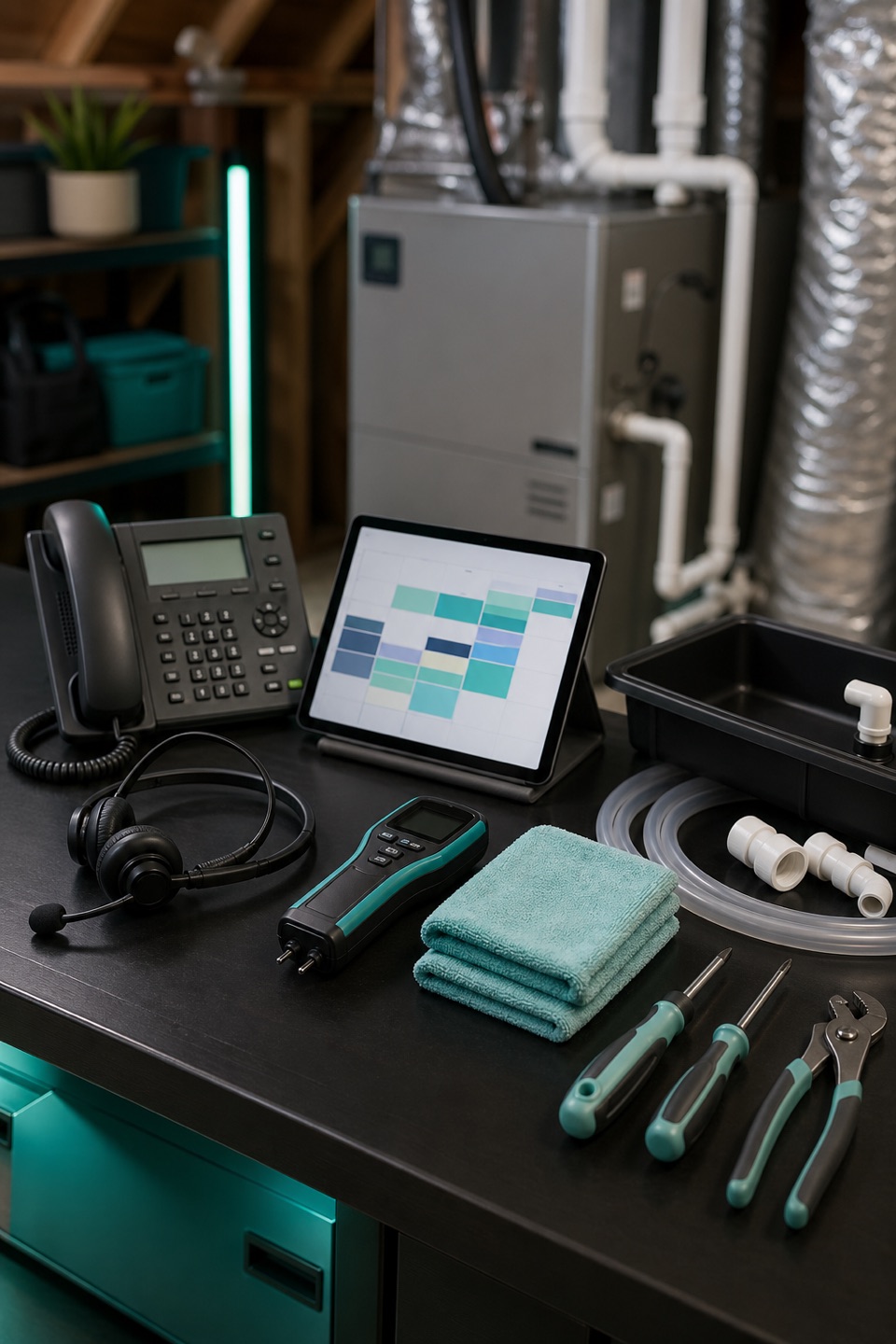
Prove the HVAC dispatch path before peak demand
Start with one approved hvac missed call roi source and staff owner. Confirm contact, suppression, routing, and staff-review rules before expanding.
Use fictional concurrent no-cool, maintenance, and estimate calls to test the setup. Verify that the right dispatcher gets the address, caller role, reported issue, access information, and callback number. Confirm what happens when an appointment is unavailable or the on-call person does not answer.
- Scheduling: a requested window stays a request until the configured calendar accepts it.
- Urgency: follow staff-approved escalation; do not provide diagnosis, repair instructions, or invented arrival times.
- Capacity: route out-of-area or fully booked requests honestly instead of promising unavailable service.
- Measurement: compare eligible missed or overflow calls with confirmed appointments and completed jobs, not total calls answered.
Why missed HVAC calls are unusually expensive
Heating and cooling demand is mainstream. DOE reports that most U.S. homes have air conditioning, and EIA data shows that space heating and air conditioning dominate household energy consumption.
When a system fails on a hot or cold day, the caller is trying to solve a real problem. If they hit voicemail, they keep calling competitors until someone gives a credible next step.
Use a simple missed-call ROI model first
A useful first model only needs four inputs: calls per month, the share of calls that represent dispatchable or estimate-ready work, the recovered booking rate from immediate answering, and average value per booked next step.
Example: 520 calls/month x 40% intent x 25% lift x $650 value = about $33,800/month in modeled recovered HVAC next-step value. Use a lower value for a conservative floor and split diagnostics, repairs, maintenance, and replacements once your call tags are clean.
- Calls/month: include open hours overflow, nights, weekends, and weather spikes
- Intent rate: cooling outage, heating outage, water leak, tune up, maintenance plan, warranty, and estimate intent
- Lift: recovered bookings, escalated calls, and staff-ready callbacks from immediate answering
- Average value: diagnostic fees, repairs, maintenance saves, and first replacement opportunities
Separate no-cool, no-heat, service, and estimate calls early
HVAC calls are not one thing. A no-cool call, no-heat call, condensate leak, tune-up request, warranty question, and replacement estimate need different handling, urgency, and routing.
The first operational win is classification. Answer immediately, identify the call type, collect the details dispatch needs, and send the call forward under approved rules. The goal is fewer missed calls and fewer callbacks that start from zero.
- No cooling, weak airflow, frozen coil, thermostat issue, or hot bedroom
- No heat, weak heat, furnace issue, boiler concern, or cold-night pressure
- AC water leak, condensate drain, drain pan, attic unit, or ceiling drip
- Replacement, financing, warranty, maintenance-plan, and property-manager calls
After-hours coverage is where the lift hides
After-hours calls are where the phone goes dark and the leak becomes invisible. In HVAC, that leak is often the highest-intent slice of demand: stressed homeowners, tenants, and property managers making a fast decision.
A useful after-hours call path gives the caller a clear next step aligned with company policy, captures context, and escalates only when approved on-call rules say it should.
Property-manager HVAC calls need extra context
Some HVAC calls are not just homeowner demand. They are tenant-impact, owner-update, access-window, photo-proof, no-access, and vendor-shopping calls where the caller needs words they can use with someone else.
A strong call path captures the unit, caller role, resident impact, access, owner pressure, photo status, prior ticket, and deadline before staff call back. It should not decide authorization, habitability, warranty, exact ETA, pricing, or safety exceptions.
- Caller role: homeowner, tenant, owner, property manager, or vendor
- Access: gate, lockbox, pet, parking, appointment window, or no-access risk
- Proof: photos, active water, thermostat reading, prior visit, or repeat complaint
- Staff-only decisions: authorization, diagnosis, safety, exact price, warranty, or schedule promise
What to measure in the first 30 days
Treat it like an operations project. The goal is more booked work, fewer missed calls, and fewer repeat calls that clog dispatch.
Track answer rate by hour, call-type mix, booked appointments, dispatch-ready callbacks, replacement estimate requests, and how many callbacks were shortened because iando collected the right details up front.
- Answer rate by hour (especially nights, weekends, and peak afternoons)
- Booked jobs, estimates, and staff-ready callbacks attributed to answered calls
- Urgent escalation events reviewed against approved policy
More details
- Callback quality: did staff get symptoms, location, access, timing, and caller role?
- Repeat-call reduction across no-cool, no-heat, warranty, tune-up, and property-manager calls
Where to connect this guide next
Use the broad HVAC path as the hub, then connect callers into specific revenue paths: no-cool, no-heat, HVAC water leak, plumbing, electrical, property management, missed-call recovery, pricing, and Get Started.
For outreach, lead with the operator's exact pressure: a hot-house caller, a cold-night caller, a ceiling drip below an attic unit, or a replacement estimate that hit voicemail while dispatch was full.