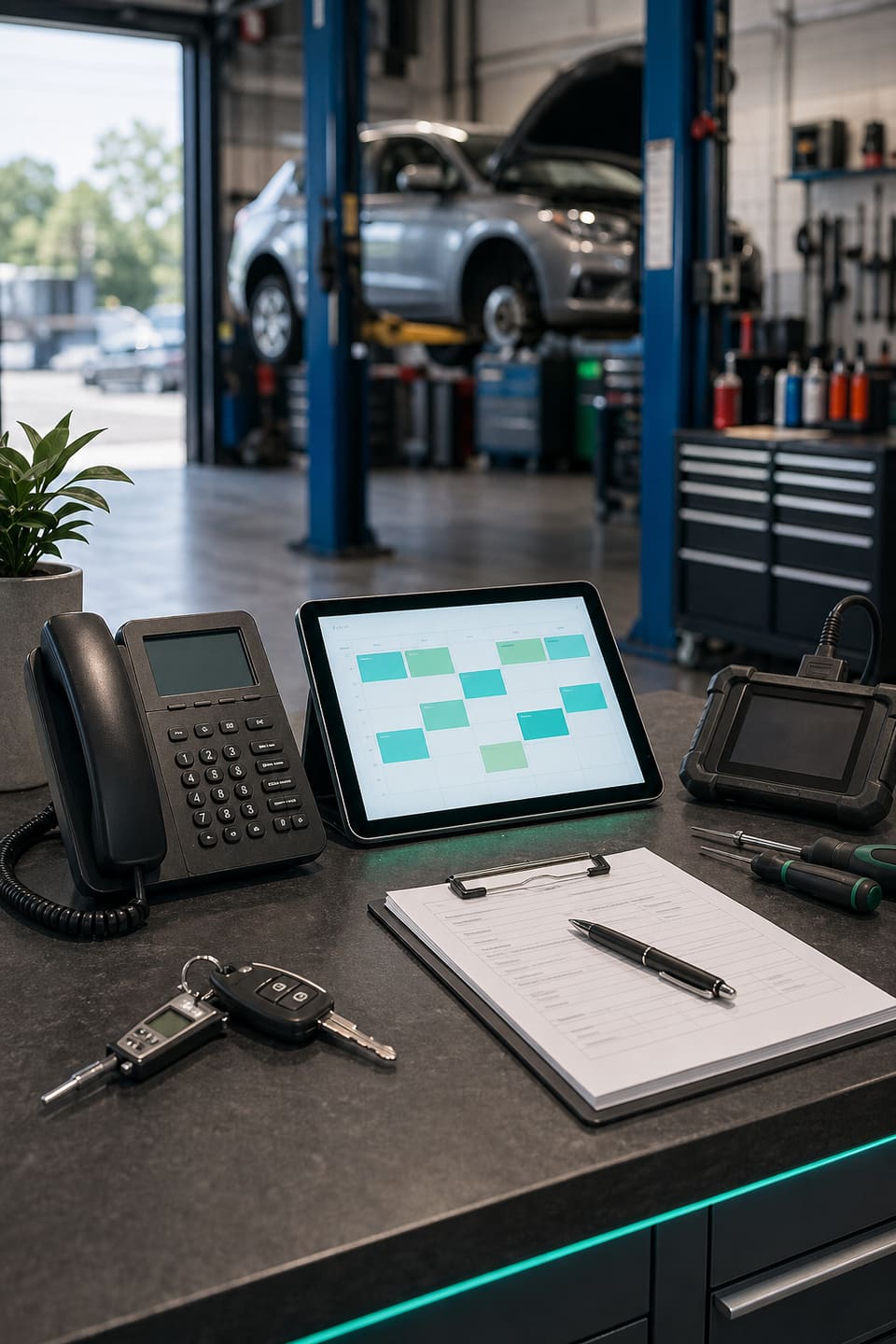
iando.ai answers inbound auto repair calls about no starts, dead batteries, check-engine lights, brake lights, overheating, charging issues, tow ins, drop offs, and after-hours repair needs, then sends advisor-only questions forward with clean context.

Built for repair shops where urgent drivers call while advisors are checking vehicles in, quoting work, collecting approvals, calling on parts, and handling afternoon pickup.

Built around the jobs your phone has to do: answer, schedule, handle approved Q&A, create the next step, and recover missed-call revenue.

  • 360 monthly no-start, battery, warning-light, tow-in, and after-hours calls modeled
  • +49 recovered urgent repair next steps or advisor-ready callbacks per month
  • $247,860 annual modeled value from faster first answers and cleaner intake
  • 24/7 first answer for dead battery, no crank, check-engine, brake, charging, overheating, and tow-in calls
  • Vehicle, location, drivability, light status, tow status, key access, timing, and callback context captured
  • Diagnosis, safe-to-drive, final price, warranty, recall, and repair authorization decisions kept with advisors
Revenue Lift 24/7
Monthly modeled value

Edit call volume, qualified intent, 25% lift, and average repair order.

Monthly lift
$20,655/mo
Recovered calls that turn into booked, escalated, or staff ready next steps.
Annualized return Live estimate
$247,860/yr
The number operators use to decide whether better call coverage is worth it.
+49 urgent repair next steps/mo
90-day proof review: compare answered calls, captured next steps, and staff handoffs.
Run your numbers Adjust the four inputs. The return updates instantly.
360 calls/mo, 54% intent, 25% lift 24/7 coverage captures the calls that happen after hours, during peaks, and while staff are busy.
$425 average repair order Average value per converted booking, job, consult, appointment, or documented next step.
90-day review Compare answered calls, captured next steps, booked outcomes, and staff handoffs against the model.

Planning model only. Replace with the shop's no-start call logs, warning-light mix, tow-in close rate, diagnostic policy, average repair order, bay capacity, advisor callback speed, show rate, and actual collected value.

Calls Coming In
Dead battery and no-start calls Drivers calling from home, work, a parking lot, or after a jump attempt because the vehicle clicks, cranks slowly,...
Check-engine and diagnostic calls Drivers asking about solid or flashing check-engine lights, codes, drivability symptoms, fuel-cap questions,...
Brake, oil, temperature, and charging lights Callers worried about brake warnings, oil pressure language, overheating, temperature lights, alternator or...
Tow-in and after-hours drop-off calls Drivers arranging a tow, asking where to leave keys, requesting a morning callback, or trying to decide whether...
Revenue Path

Show the caller a next step before they move on.

iando answers quickly, captures the details that matter, uses approved language, and gives staff a cleaner handoff.

What Staff Gets
Dead battery and no-start calls Capture vehicle, location, key access, tow or roadside status, timing, and advisor-only questions.
Check-engine and diagnostic calls Collect code or light details if volunteered and move diagnostic, safety, and exact-price questions to advisors.
Brake, oil, temperature, and charging lights Document the caller's words and use approved urgency language without telling the driver what is safe.
Tow-in and after-hours drop-off calls Capture tow provider, location, arrival estimate if known, key access, preferred shop contact, and callback window.
Urgent Repair Revenue Paths

Separate stranded-driver intake from advisor-only repair judgment

The first answer should preserve the urgent repair opportunity, capture vehicle context, and avoid unsafe diagnostic or safe-to-drive promises.

1
No-start and dead-battery calls Vehicle, location, key access, jump attempt, battery light, tow status, roadside context, timing, and callback details.
2
Warning-light calls Check-engine, flashing light, brake, oil, temperature, charging, ABS, and traction language captured in the driver's own words.
3
Tow-in and after-hours drop-off Tow provider, vehicle arrival, key drop, contact, shop preference, access notes, and morning callback expectations.
4
Warranty and recall questions Prior repair, warranty, recall, manufacturer, dealer, and eligibility questions flagged for advisor or approved source review.
Industry ROI

The business case for auto repair no start and warning light calls

Start with the calls the business already earned, then estimate which ones can become appointments, jobs, consults, or useful follow-ups.

Urgent repair call recovery
The business case starts with drivers who need a credible next step before they keep searching.

For no-start and warning-light calls, ROI is recovered diagnostics, battery visits, tow-in decisions, warning-light evaluations, advisor-ready callbacks, and fewer blank voicemails during the shop's busiest counter windows.

Call volume x qualified intent x average value x recovery lift
  • Monthly no-start, dead-battery, check-engine, brake, charging, overheating, tow-in, and after-hours calls
  • Diagnostic, tow-in, battery-service, appointment, or advisor-callback share after filtering repair judgment
  • Average repair order or first diagnostic visit value
  • A conservative 25% lift from immediate answering and cleaner advisor handoffs
What to recover first
Prioritize the calls with direct revenue or schedule impact.
  • No-start, dead-battery, check-engine, brake, oil, temperature, charging, tow-in, and after-hours calls answered immediately.
  • Vehicle, location, mileage, light status, drivability, tow status, key access, timing, warranty, recall, and callback context captured.
  • Diagnostic, battery, tow-in, appointment, after-hours drop-off, warranty, recall, and staff-review paths separated.
  • Diagnosis, safe-to-drive, final price, repair scope, warranty, recall remedy, and authorization decisions sent to advisors.
Where Revenue Leaks

What missed calls actually look like for auto repair no start and warning light calls

These are the moments where demand slips away because the team is already busy serving customers, patients, or active jobs.

No-start callers are stranded or late

A driver with a dead battery, no crank, stalled vehicle, charging concern, or car stuck at home needs a clear first answer before the next shop or tow provider wins the next step.

Warning lights create anxiety

Check-engine, brake, temperature, oil, battery, charging, ABS, and traction lights can make drivers worry about safety, cost, and whether the vehicle should move.

Advisors cannot diagnose from a voicemail

A bare missed number does not tell staff the year, make, model, mileage, location, light status, drivability, tow status, key access, or callback window.

Trust depends on boundaries

The first answer should not diagnose the vehicle, say it is safe to drive, promise a final price, or approve work. It should capture facts and hand advisor-only decisions to staff.

Proof And Context

What public data says about this buying behavior

Every stat references a public source below, so the revenue argument stays grounded instead of padded with invented benchmarks.

+49
modeled urgent repair next steps per month 123

360 monthly no-start, battery, warning-light, tow-in, and after-hours calls x 54% urgent repair or advisor-callback intent x 25% lift creates about 49 recovered next steps before shop-specific data is applied.

$248K/yr
modeled annual value from 360 calls, 54% intent, 25% lift, and $425 repair order 456

No-start and warning-light call recovery should be finalized with real tow-in rate, diagnostic policy, advisor callback speed, show rate, average repair order, and collected value.

Advisor
diagnosis, safe-to-drive, final price, warranty, recall, and authorization decisions stay with staff 78910

Warning-light and no-start coverage should capture the driver's words and send sensitive repair decisions forward rather than interpreting symptoms or promising repair outcomes.

12.8 years
average age of U.S. light vehicles in 2025 4

Older vehicles keep maintenance, diagnostics, tires, batteries, brakes, and repair scheduling demand active for independent shops.

70,000
projected auto service technician and mechanic openings per year 5

When skilled labor is scarce, every avoidable phone interruption competes with billable diagnostic and repair time.

Why This Industry Is Different

Auto Repair No Start And Warning Light Calls need phone coverage built around their actual calls

The phone experience should match how the business earns trust, books revenue, and hands off exceptions.

Warning-light calls need fast sorting

AAA explains that check-engine lights can signal many possible issues and that flashing check-engine lights call for immediate service. That makes caller context and safe handoff language important.

Battery issues drive urgent calls

AAA battery guidance lists slow starts, battery lights, electrical issues, corrosion, and battery age as signals that can lead drivers to seek help quickly.

Repair demand is durable

S&P Global Mobility reported that the average age of U.S. light vehicles reached 12.8 years in 2025, and BLS ties older vehicles to ongoing repair and maintenance demand.

Repair guidance favors careful estimates

FTC auto repair guidance tells consumers to compare shops, understand labor pricing, ask for written estimates, and approve extra work. The call path should reinforce that trust.

How It Works

How iando.ai handles these calls

The best first layer is fast answer, clear qualification, then booking or escalation based on your operating rules.

1

Identify the no-start or warning-light issue

iando.ai separates dead battery, no crank, stalled vehicle, check-engine light, flashing light, brake light, temperature concern, oil light, charging issue, tow-in need, and routine maintenance calls.

2

Capture advisor-ready details

It gathers caller, vehicle, mileage, location, light color or behavior if volunteered, drivability, tow status, key access, urgency, prior repair, warranty or recall context, and callback timing.

3

Send the approved next step

Appointment-ready, tow-in, diagnostic, battery, after-hours drop-off, warranty, recall, and staff-review calls follow shop-approved language while repair judgment stays with advisors.

Calls It Handles

Calls iando.ai can answer, escalate, or recover

These conversations are the highest-leverage starting point because they connect directly to revenue, schedule protection, or staff capacity.

Dead battery and no-start calls

Drivers calling from home, work, a parking lot, or after a jump attempt because the vehicle clicks, cranks slowly, will not start, or keeps losing power.

Outcome: Capture vehicle, location, key access, tow or roadside status, timing, and advisor-only questions.

Check-engine and diagnostic calls

Drivers asking about solid or flashing check-engine lights, codes, drivability symptoms, fuel-cap questions, emissions concerns, or whether they should book diagnostics.

Outcome: Collect code or light details if volunteered and move diagnostic, safety, and exact-price questions to advisors.

Brake, oil, temperature, and charging lights

Callers worried about brake warnings, oil pressure language, overheating, temperature lights, alternator or charging messages, and dashboard alerts they cannot interpret.

Outcome: Document the caller's words and use approved urgency language without telling the driver what is safe.

Tow-in and after-hours drop-off calls

Drivers arranging a tow, asking where to leave keys, requesting a morning callback, or trying to decide whether the shop can receive the vehicle.

Outcome: Capture tow provider, location, arrival estimate if known, key access, preferred shop contact, and callback window.

Warranty, recall, and prior repair calls

Callers asking if a warning light is related to a prior repair, manufacturer recall, warranty issue, battery warranty, or dealer-only remedy.

Outcome: Collect context and send recall, warranty, eligibility, and remedy decisions to staff or approved source paths.

Outcomes

What operators actually care about

More urgent repair calls get captured

Drivers with no-start, battery, warning-light, overheating, and tow-in concerns receive a credible first answer before calling another shop.

Advisors start with real context

Callbacks include the vehicle, concern, light status, location, tow details, key access, timing, and staff-only question instead of a bare missed number.

Repair promises stay protected

The AI does not diagnose, price, approve, interpret warranty or recall coverage, or tell the driver whether the vehicle is safe to drive.

Recovered Value

Where the payoff shows up operationally

  • No-start, dead-battery, check-engine, brake, oil, temperature, charging, tow-in, and after-hours calls answered immediately.
  • Vehicle, location, mileage, light status, drivability, tow status, key access, timing, warranty, recall, and callback context captured.
  • Diagnostic, battery, tow-in, appointment, after-hours drop-off, warranty, recall, and staff-review paths separated.
  • Diagnosis, safe-to-drive, final price, repair scope, warranty, recall remedy, and authorization decisions sent to advisors.
  • Recovered urgent repair next steps modeled against real missed-call, tow-in, diagnostic, and average repair order data.
Before And After

How the operation changes when the phone stops leaking revenue

Before

A driver calls after a jump fails and gets voicemail.

After

The no-start call is answered, vehicle and location context are captured, and advisors receive a tow or diagnostic-ready summary.

Before

A check-engine caller asks if they can keep driving while advisors are at lunch.

After

The concern is documented and sent through shop-approved rules without unsafe safe-to-drive advice.

Before

A tow truck drops a vehicle with no key, no callback detail, and no repair concern attached.

After

Tow provider, key access, driver contact, concern words, and morning callback expectations are captured.

Before

Warranty and recall questions interrupt estimate work.

After

Prior repair, recall, warranty, vehicle, and staff-only context arrive before the advisor responds.

Operator Questions

Questions before putting AI on the phone

No-start and warning-light calls need expert judgment

Correct. The call path captures the driver's words, uses approved shop language, and sends repair judgment to advisors instead of guessing.

We cannot tell callers if it is safe to drive

That should remain a stop line. The AI can document the light, symptoms, location, and drivability question, then send the call through shop-approved rules.

Battery calls may belong to roadside assistance

Some do. The call path can capture roadside status, tow needs, battery symptoms, jump attempt, and repair-shop intent before staff decide the next step.

Recall and warranty questions are complicated

The AI should capture VIN or vehicle context if approved, prior repair details, and the caller's question while remedy, eligibility, and coverage decisions stay with staff or approved sources.

Recover Missed Revenue

Turn more calls into urgent repair next steps for auto repair no start and warning light calls.

iando.ai is built for businesses that depend on the phone and lose money when callers do not get a fast, useful answer. Book a demo and map the revenue path to your call volume, hours, booking logic, and staff-only handoffs.

FAQ

Frequently asked questions

Can AI answer no-start auto repair calls?

Yes, when it collects vehicle, location, tow, battery, and callback context while repair diagnosis, safe-to-drive guidance, pricing, and authorization stay with advisors.

Can it answer check-engine light questions?

It can capture whether the light is solid or flashing if volunteered, collect symptoms and code context, and move the caller toward a diagnostic or staff-review path. It should not diagnose the issue.

What should it collect before a tow-in callback?

Caller name, callback, vehicle, current location, tow provider if known, key access, drivability, concern words, arrival timing, and any warranty, recall, or staff-only question.

Can it tell a driver whether the car is safe?

No. Safe-to-drive and repair-scope decisions should stay with qualified staff and shop policy. The AI captures context and uses approved handoff language.

How should shops measure this path?

Track no-start calls, warning-light calls, tow-in next steps, diagnostic appointments, advisor-ready callbacks, average repair order, missed-call rate, and after-hours conversion.

Supporting Guides

Deeper guides for auto repair no start and warning light calls

Each guide gives operators practical depth around staffing, call handling, conversion, and operational efficiency.

No-start and warning-light callers need a credible next step fast

No-start and warning-light callers are often stranded, worried, or comparing shops. A focused first answer can recover urgent repair next steps without making unsafe repair promises.

Read guide

Auto Repair Missed Call ROI: How to Recover More Service Appointments

Missed auto repair calls usually happen when advisors are busiest. A practical call path can capture vehicle details, appointment intent, and urgent concerns without pulling staff away from the counter.

Read guide
Sources

Research behind this page

These references support the phone-demand, local-search, and response-speed claims above.

1. The Check Engine Light: Common Causes and How To Fix It

AAA • Accessed 2026-05-12

AAA guidance explaining that check-engine lights can signal a range of engine or emissions issues and should receive timely attention from an auto repair professional.

Open source
2. Dead Battery? How To Charge a Car Battery Yourself

AAA • Accessed 2026-05-12

AAA battery guidance describing signs such as slow starts, battery or check-engine lights, electrical issues, corrosion, age, and no-start trouble that can lead drivers to seek help.

Open source
3. 2025 PartsTech Report: State of General Auto Repair Shops in the U.S.

PartsTech • 2025-02-06 • Accessed 2026-05-12

PartsTech summary of a survey of 752 U.S. auto repair shops covering average repair order value, labor rates, service advisor staffing, technician shortages, vehicles serviced per bay, and customer experience.

Open source
4. U.S. Vehicle Age Rises Again to 12.8 Years in 2025, According to S&P Global Mobility

S&P Global Mobility / PR Newswire • 2025-05-21 • Accessed 2026-05-07

S&P Global Mobility release reporting that the average age of U.S. light vehicles reached 12.8 years in 2025, supporting durable maintenance and repair demand.

Open source
5. Automotive Service Technicians and Mechanics

U.S. Bureau of Labor Statistics • 2025-09-16 • Accessed 2026-05-07

BLS Occupational Outlook Handbook profile for automotive service technicians and mechanics, including 2024 employment, projected 2024-2034 growth, annual openings, repair duties, and evening/weekend work context.

Open source
6. Invoca Releases Definitive Cross-Channel and Cross-Industry Buyer Conversion Benchmark Report

Invoca • 2025-06-10 • Accessed 2026-05-11

Invoca press release for its 2025 call conversion benchmark report, based on more than 60 million phone calls, reporting cross-industry answer, lead, and conversion benchmarks plus a 42% automotive phone lead conversion rate.

Open source
7. AAA Onboard Diagnostics

AAA • Accessed 2026-05-12

AAA diagnostic-code resource explaining that vehicle computers store diagnostic trouble codes that provide clues auto repair professionals use, and that flashing check-engine lights call for immediate service.

Open source
8. AAA Car Maintenance Guide: Warning Lights

AAA • Accessed 2026-05-12

AAA warning-light guidance explaining that dashboard indicators can vary by vehicle and that drivers should understand warning lights before unexpected situations occur.

Open source
9. Auto Repair Basics

Federal Trade Commission • Accessed 2026-05-12

FTC consumer guidance covering how drivers choose repair shops, compare shops by phone and online, evaluate technician certifications, request written estimates, and approve repair charges.

Open source
10. Check for Recalls: Vehicle, Car Seat, Tire, Equipment

National Highway Traffic Safety Administration • Accessed 2026-05-12

NHTSA recall guidance explaining safety recalls, manufacturer remedies, VIN lookup, owner notification, and the recommendation to check recalls twice a year.

Open source
11. 5 Strategies to Fix Your Call Answer Rate and Stop Losing Revenue

Invoca • 2025-08-18 • Accessed 2026-05-13

Invoca analysis showing live answer-rate benchmarks across industries and calling behavior for high-stakes purchases.

Open source
12. Consumer Search Behavior: Where Are Your Customers?

BrightLocal • 2025 • Accessed 2026-05-13

Survey of 1,000 US consumers about general and local search behavior, maps usage, and business information expectations.

Open source