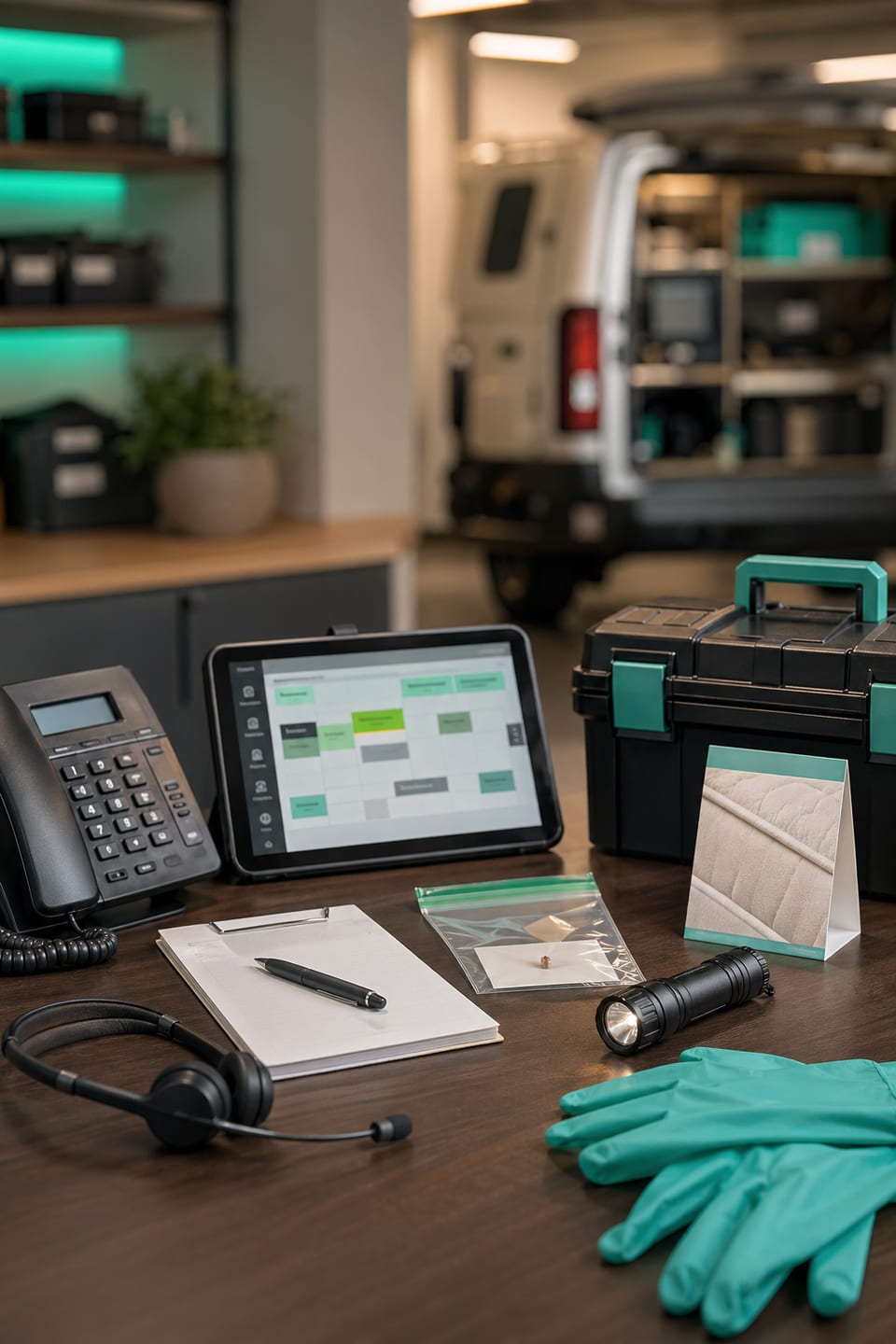
iando.ai answers bed bug concern, suspected bite, hotel exposure, tenant report, inspection, prep, follow-up, and after-hours pest control calls 24/7, then captures the facts your team needs without giving pesticide or treatment advice.
Built for pest control companies where the first answer has to lower anxiety, identify the property context, avoid unsafe promises, and create a believable inspection-or-callback next step.
Start with the buyer's reason for calling. iando captures intent, books what is ready, and hands staff the context that closes.
Edit call volume, qualified intent, 25% lift, and average inspection or first treatment value.
Planning model only. Replace with actual bed bug call logs, after-hours share, inspection fee, treatment close rate, room-count mix, follow-up visit rate, multifamily account value, technician capacity, and local pricing.

Reach the buyer while intent is still hot.
iando answers fast, captures why they raised their hand, books or routes the next step, and gives staff the context to close.
See how unanswered emergency bed bug pest control calls demand becomes booked work.
Start with the demand the business already earned, then replace each assumption with phone logs and completed outcomes. The model follows one direct path: total demand, calls not answered live, and recaptured next steps.
Gross modeled value from bed bug inspections. The model excludes uncollected revenue and outcomes the team cannot fulfill.
Method, assumptions, and value source
Formula: monthly inbound calls × calls not answered live (%) × unanswered calls recovered (%) × average inspection or first treatment value. AI-minute cost uses unanswered share × average AI minutes × $0.35/minute. The model excludes onboarding, telephony, staff labor, refunds, cancellations, and uncollected revenue.
What missed calls actually look like for emergency bed bug pest control calls
These are the moments where demand slips away because the team is already busy serving customers, patients, or active jobs.
Bed bug callers are already uneasy
A caller may be worried about bites, sleep, travel exposure, a child's room, a rental unit, a hotel room, or whether the problem has spread. If the phone goes unanswered, they keep searching for someone who sounds prepared.
The first answer cannot overpromise
Bed bug calls can include health questions, pesticide questions, prep confusion, landlord pressure, and guarantee requests. The answer should capture facts and set an approved next step, not diagnose bites or prescribe treatment.
Multifamily and commercial calls need extra context
A tenant report, hotel exposure, assisted-living concern, property-manager call, or workplace sighting can involve access, documentation, photos, adjacent rooms, and multiple decision makers.
What public data says about this buying behavior
Every stat references a public source below, so the revenue argument stays grounded instead of padded with invented benchmarks.
CDC says bed bugs are not known to spread disease, but bites can cause itching, loss of sleep, anxiety, and rare allergic reactions.
EPA says bed bug control can require coordinated non-chemical and chemical methods, participation by residents or building management, and professional inspection or treatment when needed.
This Old House reports $1,500 to $5,000 as a typical whole-home range, with smaller room treatments and severe cases varying widely.
BLS also notes that evening and weekend work is common, matching the hours when many pest callers need a fast answer.
When money or urgency is involved, buyers still reach for the phone.
Phone-driven SMB pages still need strong local-search and trust signals.
Emergency Bed Bug Pest Control Calls need phone coverage built around their actual calls
The phone experience should match how the business earns trust, books revenue, and hands off exceptions.
The anxiety is real even when the facts are incomplete
CDC says bed bugs are not known to spread disease, but they can cause itching, loss of sleep, anxiety, and rare allergic reactions. The call path should acknowledge concern while staying inside approved pest control language.
Bed bug control is not a one-line answer
EPA describes bed bug control through integrated pest management, resident or building participation, non-chemical and chemical methods, registered products, and professional inspection or treatment when needed.
Evening and weekend coverage matters
BLS notes that evening and weekend work is common for pest control workers. Bed bug worry often appears at night, after travel, or after a tenant discovers signs outside normal office hours.
How I&O handles these calls
The best first layer is fast answer, clear qualification, then booking or escalation based on your operating rules.
Answer and identify the bed bug concern
iando.ai captures suspected sighting, bite concern, travel exposure, tenant report, room location, property type, photos if requested, pets, children, preferred timing, and whether the caller needs inspection, treatment estimate, or staff review.
Keep advice inside approved boundaries
It can answer approved service-area, inspection, scheduling, prep-process, and follow-up questions while sending pesticide, diagnosis, guarantee, severe-infestation, commercial, and landlord-sensitive questions to staff.
Create a useful inspection path
Bookable calls move toward the calendar. Staff-review calls arrive with caller language, location, timing pressure, room count, property context, photos, and decision-maker notes already summarized.
Calls I&O can answer, escalate, or recover
These conversations are the highest-leverage starting point because they connect directly to revenue, schedule protection, or staff capacity.
Suspected sighting or bite calls
Homeowners and renters calling about bites, marks on bedding, a found insect, travel exposure, luggage, furniture, or a bedroom concern.
Outcome: Capture what the caller saw and move inspection-ready demand into the approved next step without diagnosing bites.
Tenant and property-manager reports
Calls involving rental units, adjacent rooms, access windows, photos, documentation, owner updates, repeated reports, or tenant anxiety.
Outcome: Collect property and resident context so the team can coordinate inspection or callback without starting from a voicemail with no context.
Prep and treatment questions
Callers asking about laundry, encasements, heat, chemical treatment, follow-up visits, pets, children, belongings, and what happens before service.
Outcome: Use company-approved language and send exact prep, pesticide, health, and guarantee questions to trained staff.
Hotel, workplace, and commercial calls
Hotels, offices, assisted-living sites, schools, and other properties calling about exposure reports, room isolation, documentation, or urgent inspection windows.
Outcome: Separate commercial review and documentation-sensitive calls from ordinary residential scheduling.
What operators actually care about
More inspection-ready calls captured
Callers get an immediate answer and a practical next step before anxiety pushes them to another local provider.
Cleaner context for technicians and office staff
The summary includes room, property, timing, photos, travel or tenant context, prep questions, and staff-only concerns before callback.
Safer boundaries for sensitive questions
The AI avoids bite diagnosis, pesticide selection, treatment guarantees, and health advice while still giving callers a calm intake path.
Where the payoff shows up operationally
- Bed bug sighting, suspected bite, travel exposure, tenant, prep, and after-hours calls answered immediately.
- Room, property, photo, access, pets, children, tenant, and decision-maker context captured.
- Inspection, estimate, treatment follow-up, commercial, and property-manager paths separated.
- Pesticide, diagnosis, health, guarantee, severe-infestation, and exact-prep questions sent through approved rules.
- Evening and weekend concern calls turned into a next step instead of a missed call with no context.
How the operation changes when the phone stops leaking revenue
A suspected bed bug call hits voicemail at night and the homeowner keeps searching.
AfterThe caller gets a calm first answer, approved intake, and a clear inspection-or-callback path.
Staff call back without room location, photos, tenant status, travel context, or prep questions.
AfterThe summary gives staff the facts needed to inspect, book, or escalate responsibly.
Pesticide, health, and guarantee questions invite risky improvisation.
AfterThe AI stays inside approved language and hands sensitive questions to trained staff.
Residential, tenant, hotel, and follow-up calls all sound the same.
AfterDifferent call paths preserve the operational context before the team responds.
Questions before putting AI on the phone
Bed bug calls are sensitive
Correct. The AI should not diagnose bites, confirm an infestation from a caller description, choose treatment, or make safety promises. It should gather details and move the call to the approved next step.
Prep instructions differ by treatment type
Use approved language only. The system can collect the question, identify the treatment path if known, and send exact prep or pesticide questions to trained staff.
Commercial and multifamily work is complex
That is why the call path separates tenant reports, hotel rooms, workplaces, documentation, access, and manager approval from ordinary residential scheduling.
Pick the call path most likely to create a customer this week.
Book a demo, talk to Adam, or start with one lane: the demo request, quote form, missed call, renewal, no-show, or follow-up list your team already earned but cannot reach fast enough.
Fast answers for AI for bed bug pest control calls.
Use these checks to decide whether this call lane is worth modeling, what staff keeps, and where the next step should route.
Can AI answer bed bug calls safely?
It should not diagnose bites, confirm an infestation, select pesticides, give treatment instructions, or promise a result.
Can it book bed bug inspections?
What happens with prep or pesticide questions?
Can it handle tenant and hotel calls?
Why make a dedicated bed bug call path?
Deeper guides for emergency bed bug pest control calls
Each guide gives operators practical depth around staffing, call handling, conversion, and operational efficiency.
The bed bug call is won by calm intake, not vague voicemail
Bed bug calls are high-anxiety, evidence-light, and easy to lose. The first answer should collect facts, avoid treatment advice, and create a credible inspection or callback path.
Read resourceResearch behind this page
These references support the phone demand, local search, and response speed claims above.
Centers for Disease Control and Prevention • 2024-04-26 • Accessed 2026-04-29
CDC overview explaining that bed bugs are not known to spread disease, but bites can cause itching, loss of sleep, anxiety, allergic reactions, and expensive removal.
Open sourceU.S. Environmental Protection Agency • 2026-03-30 • Accessed 2026-04-29
EPA bed bug guidance describing integrated pest management, resident and building-management participation, non-chemical methods, registered products, and consulting pest management professionals.
Open sourceThis Old House • 2025-12-17 • Accessed 2026-04-29
Consumer cost guide reporting typical whole-home bed bug extermination costs from $1,500 to $5,000, with room-level treatment and follow-up cost ranges varying by severity and method.
Open sourceU.S. Bureau of Labor Statistics • 2025-08-28 • Accessed 2026-05-12
BLS Occupational Outlook Handbook profile for pest control workers covering 2024 employment, projected 2024-2034 growth, annual openings, licensing, safety requirements, and evening/weekend work.
Open sourceInvoca • 2025-08-18 • Accessed 2026-05-16
Invoca analysis showing live answer-rate benchmarks across industries and calling behavior for high-stakes purchases.
Open sourceBrightLocal • 2025 • Accessed 2026-05-16
Survey of 1,000 US consumers about general and local search behavior, maps usage, and business information expectations.
Open sourceU.S. Environmental Protection Agency • Accessed 2026-05-12
EPA bed bug guidance recommending careful product selection, EPA-registered products, and pest management professional involvement when inspection or treatment is needed.
Open source