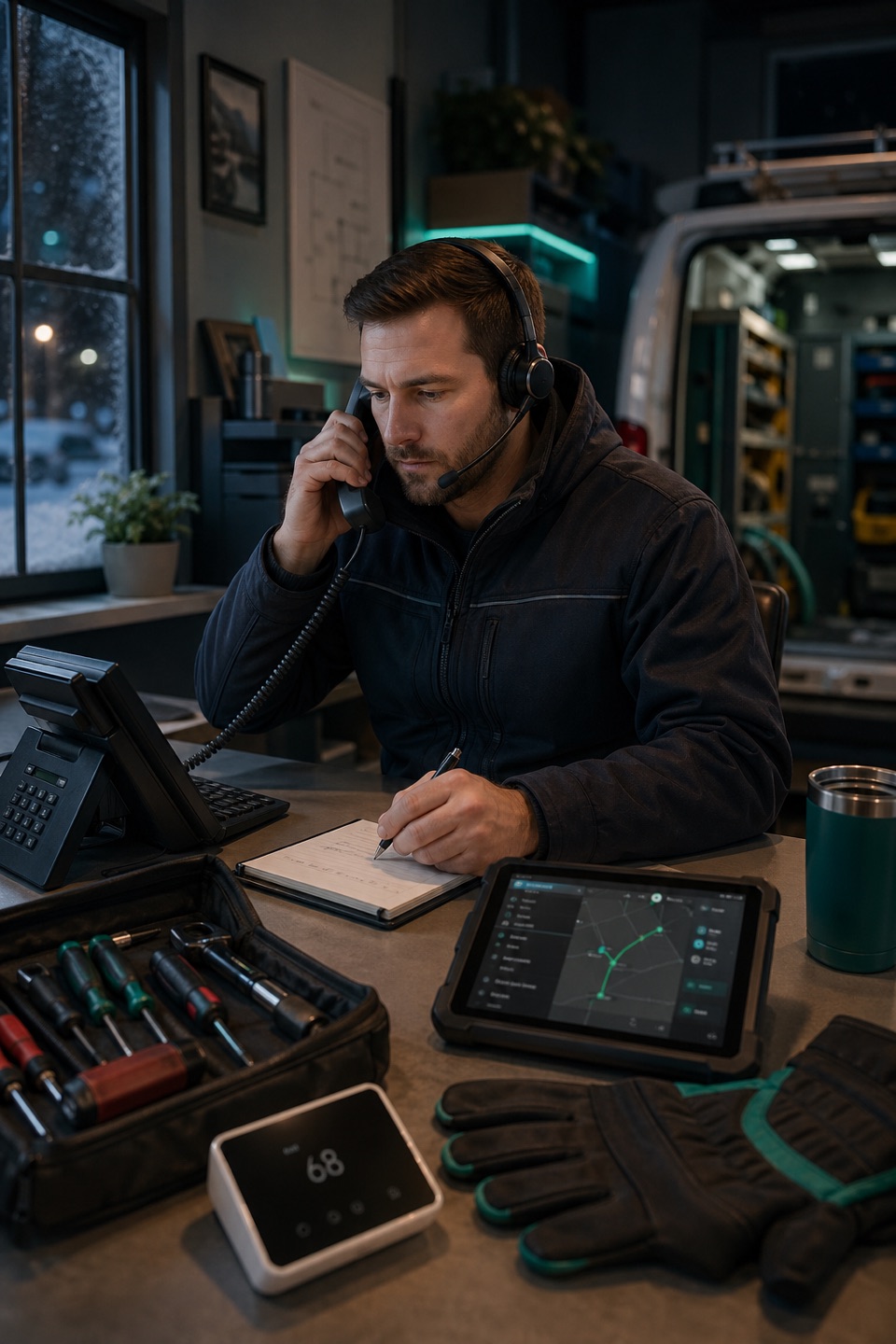
No heat calls become emotional fast
A resident calling about no heat is usually not making a casual request. The issue can affect sleep, children, older adults, pets, remote work, frozen-pipe concern, and confidence that management is paying attention.
The first answer should acknowledge the report, capture the exact impact, avoid equipment or health promises, and create a next step that matches the property manager's approved rules.
- Is the call about no heat, weak heat, cold air, thermostat trouble, or an equipment shutdown?
- Is one unit affected, several units affected, or is the caller unsure?
- Is the resident asking for dispatch now, a morning callback, or an owner update?
- Are access notes, prior tickets, cold-night concern, owner pressure, or vendor details already involved?
Use protected operating value, not generic call volume
Total phone volume hides the value of no heat calls. The stronger model starts with calls where slow answering creates resident anxiety, owner uncertainty, vendor delay, documentation gaps, or staff rework.
For planning, use monthly tenant heating calls; the share that needs documented follow-up, staff review, dispatch, vendor clarification, or owner facing language; a conservative lift from immediate answering; and average protected owner touch or vendor value. The example here uses 210 winter-season monthly calls, 56 percent intent, a 25 percent lift, and $440 in protected operating value.
- Calls per month: no heat, weak heat, thermostat, frozen-pipe worry, repeated complaint, owner update, and vendor access calls
- Intent rate: calls likely to need documented follow-up, staff review, dispatch, vendor clarification, or resident update
- Lift: recovered next steps from fast answering and better notes
- Value: vendor minimums, owner relationship protection, staff time, repeat job implications, and resident retention economics
Heating complaints need approved language
NAA sample maintenance-emergency guidance lists no heat or air conditioning among emergency examples. Operators still need their own market, lease, equipment, vendor, and weather rules.
The intake path should not flatten every call into the same callback pile. It should separate normal callback, urgent review, vendor dispatch, owner update, and staff-only exceptions based on the facts the resident provides.
Separate the resident, owner, and vendor paths
A no heat call often creates more than one audience. The resident needs confirmation and a believable next step. The owner wants status before the relationship gets colder. The vendor needs access, equipment location, and timing details before a useful visit or callback.
Treating all three audiences as one generic maintenance note creates extra phone work. A better call path builds three handoff ready summaries from the same conversation while keeping health, habitability, cost, warranty, equipment, and exact time decisions with staff.
- Resident path: issue, impact, timing, prior request, and approved next step
- Owner path: known facts, missing details, vendor status, weather pressure, and staff review questions
- Vendor path: unit access, system location, pets, parking, gate code, resident availability, and prior ticket context
- Staff path: health sensitive, legal, warranty, cost, equipment, and exact arrival questions
Cold context requires guardrails
CDC winter guidance describes hypothermia as a dangerous cold-exposure condition and identifies people without adequate heating among groups that can face higher risk. That context matters when a resident says the unit is getting cold.
A property-management phone assistant should not give health advice, tell a resident whether they are safe, diagnose a furnace, or improvise heating instructions. It should capture the concern, ask approved intake questions, and send sensitive cases to staff quickly.
- Volunteered concern about older adults, small children, health-sensitive occupants, or pets
- Overnight sleep impact or a unit that will not stay warm
- No heat versus weak heat or thermostat uncertainty
More details
- Repeated request, owner pressure, or multi-unit impact
- Staff-only question about safety, habitability, cost, warranty, or exact timing
Heating work also carries repair and replacement context
DOE Energy Saver explains that furnace and boiler systems need professional inspection and carry carbon monoxide safety context. ENERGY STAR also emphasizes heating and cooling maintenance before seasonal demand.
For property managers, a no heat call may become a repair, replacement, warranty, vendor approval, or owner cost conversation. The first answer should capture system clues without pretending to diagnose the equipment.
Maintenance response affects retention and owner trust
Buildium's 2026 property-management research says maintenance support is a major reason owners hire property managers. The same research connects maintenance responsiveness with renter renewal intent, including renters who would stay if maintenance responses improved.
That is why no heat calls are bigger than one service ticket. A clean first answer can reduce resident frustration, help owners see control, and give vendors enough detail to move faster.
Build resident, owner, and vendor notes from one call
The same conversation can create three useful summaries. A resident note confirms what was captured and what path started. An owner note preserves status, missing details, weather pressure, and timing pressure. A vendor note includes the operational details that make a visit possible.
That structure reduces morning backtracking because the team is not piecing together voicemail, texts, access details, and owner questions from scratch.
- Resident note: issue, impact, timing, callback expectation, and approved next step
- Owner note: known facts, missing details, vendor status, expected follow-up, and relationship pressure
- Vendor note: property, unit, access, equipment location, prior ticket, pets, parking, gates, and resident availability
Use this guide in outreach
For Adam-safe outreach, lead with the concrete maintenance pain: the resident whose unit is cold after dinner, the owner asking whether anyone responded, and the vendor who needs access before a useful callback can happen.
Send the educational guide link first. It teaches the operating problem before asking for a conversation: faster first answer, better resident notes, owner clarity, vendor access, and guardrails around staff only promises.