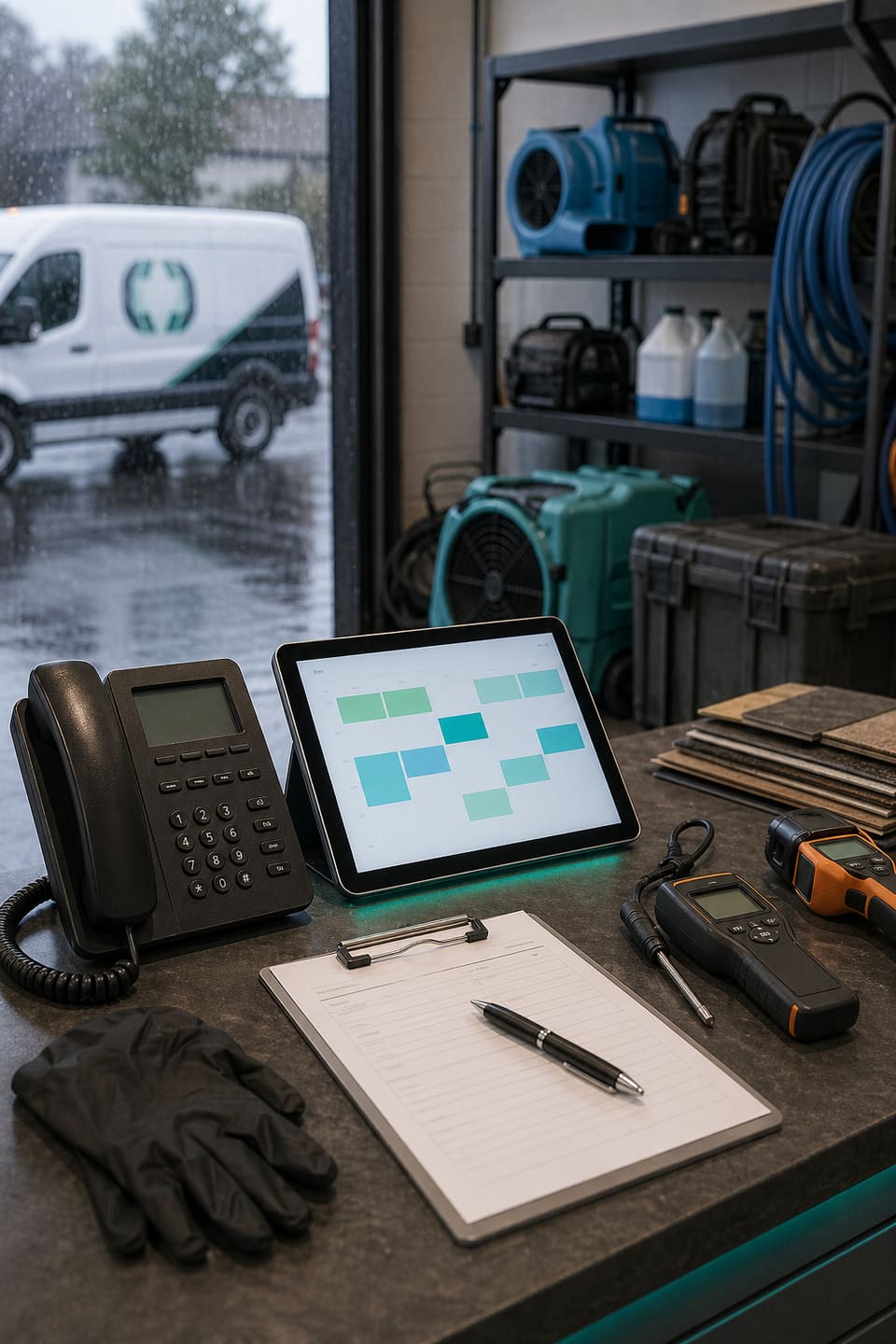
iando.ai answers burst pipe drying, soaked drywall, wet flooring, ceiling drip, freeze event, plumber handoff, tenant, property manager, and after-hours restoration calls 24/7 so urgent callers hear a prepared next step before they keep shopping.

Built for water damage restoration teams where the first answer has to lower panic, capture source-control and wet-material context, avoid unsafe promises, and separate mitigation, plumber, insurance documentation, access, and staff review paths.

Built around the jobs your phone has to do: answer, schedule, handle approved Q&A, create the next step, and recover missed-call revenue.

  • 24/7 first answer for burst pipe water damage and drying calls
  • Source, shutoff, affected materials, photos, access, power, and timing captured
  • Mitigation, extraction, drying, plumber, tenant, manager, and insurance paths separated
  • Mold, electrical, contamination, structural, and coverage questions sent to staff
Revenue Lift 24/7
Monthly modeled value

Edit call volume, qualified intent, 25% lift, and average first mitigation value.

Monthly lift
$49,019/mo
Recovered calls that turn into booked, escalated, or staff ready next steps.
Annualized return Live estimate
$588,225/yr
The number operators use to decide whether better call coverage is worth it.
+32 recovered burst pipe drying jobs/mo
90-day proof review: compare answered calls, captured next steps, and staff handoffs.
Run your numbers Adjust the four inputs. The return updates instantly.
230 calls/mo, 55% intent, 25% lift 24/7 coverage captures the calls that happen after hours, during peaks, and while staff are busy.
$1,550 average first mitigation value Average value per converted booking, job, consult, appointment, or documented next step.
90-day review Compare answered calls, captured next steps, booked outcomes, and staff handoffs against the model.

Planning model only. Replace with restoration call logs, freeze event spikes, after-hours mix, water category, affected materials, plumber referral share, property manager account value, drying equipment capacity, and actual average invoice value.

Calls Coming In
Burst pipe water damage calls Homeowners, tenants, or managers reporting a pipe break, wet drywall, soaked flooring, running water, ceiling...
Freeze event drying demand Calls after frozen lines thaw, supply pipes split, crawlspace lines fail, or multiple units report water in the...
Plumber and restoration handoff calls Callers who already have a plumber, need a restoration crew, want documentation, or need help deciding what...
Tenant and property manager water loss calls Occupied units, resident updates, owner threads, access windows, proof photos, vendor shopping, and...
Revenue Path

Show the caller a next step before they move on.

iando answers quickly, captures the details that matter, uses approved language, and gives staff a cleaner handoff.

What Staff Gets
Burst pipe water damage calls Capture source, shutoff, affected materials, photo status, room impact, and access before staff calls back.
Freeze event drying demand Document timing, water status, affected areas, service-area fit, and capacity signals without promising crew...
Plumber and restoration handoff calls Preserve plumber, source-control, photos, materials, and insurance context for staff review.
Tenant and property manager water loss calls Create a prepared update and response path that protects resident confidence and owner trust.
Industry ROI

The business case for burst pipe drying and water damage teams

Start with the calls the business already earned, then estimate which ones can become appointments, jobs, consults, or useful follow-ups.

Burst pipe drying call recovery
The business case starts with urgent water-loss callers who need drying help before they call another provider.

For burst pipe drying calls, ROI is recovered mitigation jobs, extraction and structural drying work, plumber handoffs, insurance documentation starts, property manager relationships, and fewer urgent callers lost to slow response.

Call volume x qualified intent x average value x recovery lift
  • Monthly burst pipe, freeze event, active leak, soaked material, and urgent drying calls
  • Dispatchable mitigation or drying intent share of those calls
  • Average emergency extraction, drying, or first mitigation value
  • A conservative 25% lift from immediate answering and cleaner intake
What to recover first
Prioritize the calls with direct revenue or schedule impact.
  • Burst pipe water damage, soaked drywall, wet flooring, ceiling drip, and urgent drying calls answered immediately
  • Source, shutoff, affected materials, photos, access, plumber, insurance, and timing context captured
  • Mitigation, extraction, drying, plumber handoff, property manager, and staff review paths separated
  • Mold, contamination, electrical, structural, safe occupancy, and coverage questions kept inside approved human rules
Where Revenue Leaks

What missed calls actually look like for burst pipe drying and water damage teams

These are the moments where demand slips away because the team is already busy serving customers, patients, or active jobs.

The caller knows wet materials can get worse

Water in drywall, flooring, cabinets, insulation, ceilings, or finished basements creates a time-sensitive decision before the caller understands the drying plan.

Plumber calls become restoration calls fast

Once the pipe is shut off or a plumber is on the way, the next question is extraction, drying, documentation, and what needs staff review before equipment is sent.

Freeze events compress local capacity

During cold snaps, many owners and managers call at the same time. A generic voicemail lets a high-intent restoration lead keep dialing.

Slow answers restart the provider search

A caller with wet drywall, a plumber on the way, or a tenant waiting for access keeps comparing local options until one company sounds specific about source, drying, photos, insurance, and timing.

Proof And Context

What public data says about this buying behavior

Every stat references a public source below, so the revenue argument stays grounded instead of padded with invented benchmarks.

$3,863
average water damage restoration cost in Angi's 2026 guide 1

Average job value can justify better missed-call coverage, especially when the caller needs emergency extraction, drying, mitigation, or repair coordination.

$1.38K-$6.38K
normal water damage restoration cost range in Angi's 2026 guide 12

Project value changes with water source, affected square footage, materials, drying time, mold risk, and insurance context, making qualified intake commercially important.

1.5%
insured homes with a water damage and freezing loss in 2023 3

Triple-I reports water damage and freezing as a major homeowners claim category, which helps explain why callers often need insurance-aware next steps.

24h+
EPA mold-growth warning for wet building materials 4

EPA says mold can grow on materials such as wood, drywall, carpet, and furniture if they remain wet for more than 24 hours, so fast call handling matters.

S500
ANSI/IICRC standard for professional water damage restoration 5

Water restoration calls need structured intake because professional drying and mitigation depend on inspections, precautions, documentation, and building-material context.

Why This Industry Is Different

Burst Pipe Drying And Water Damage Teams need phone coverage built around their actual calls

The phone experience should match how the business earns trust, books revenue, and hands off exceptions.

Drying calls are a confidence race

Homeowners, tenants, and property managers want to hear that the company understands water source, shutoff, materials, access, photos, and timing before they trust the next step.

Water category and affected materials change the path

Clean supply water, gray water, sewage concerns, wall cavities, hardwood, carpet pad, cabinets, ceilings, crawlspaces, and basement finishes do not need the same callback summary.

Guardrails protect the company

The call path should not decide mold, electrical safety, contamination, structural drying scope, insurance coverage, or safe occupancy. It should capture facts and send sensitive decisions to staff.

The first summary should reduce repeat questions

A prepared drying summary gives staff the caller role, source-control status, wet materials, photos, access, plumber context, insurance notes, and staff-only exceptions before the callback starts.

How It Works

How iando.ai handles these calls

The best first layer is fast answer, clear qualification, then booking or escalation based on your operating rules.

1

Answer and classify the drying call

iando.ai identifies burst pipe, frozen pipe thaw leak, active water, soaked drywall, wet flooring, ceiling drip, basement water, plumber handoff, tenant escalation, or property manager request right away.

2

Capture what mitigation needs

It gathers caller role, address, source and shutoff status, affected materials, rooms, square-foot clues, photo status, electricity or odor concerns, access, insurance context, and timing pressure.

3

Create the dispatch or staff review path

Extraction, drying, equipment, plumber coordination, after-hours, property manager, documentation, and staff review calls move through approved rules with a useful summary attached.

Calls It Handles

Calls iando.ai can answer, escalate, or recover

These conversations are the highest-leverage starting point because they connect directly to revenue, schedule protection, or staff capacity.

Burst pipe water damage calls

Homeowners, tenants, or managers reporting a pipe break, wet drywall, soaked flooring, running water, ceiling stains, or water spreading after the source is controlled.

Outcome: Capture source, shutoff, affected materials, photo status, room impact, and access before staff calls back.

Freeze event drying demand

Calls after frozen lines thaw, supply pipes split, crawlspace lines fail, or multiple units report water in the same cold snap.

Outcome: Document timing, water status, affected areas, service-area fit, and capacity signals without promising crew availability.

Plumber and restoration handoff calls

Callers who already have a plumber, need a restoration crew, want documentation, or need help deciding what information to send next.

Outcome: Preserve plumber, source-control, photos, materials, and insurance context for staff review.

Tenant and property manager water loss calls

Occupied units, resident updates, owner threads, access windows, proof photos, vendor shopping, and open-by-morning expectations.

Outcome: Create a prepared update and response path that protects resident confidence and owner trust.

After-hours documentation and insurance pressure

Callers asking what to photograph, whether to start drying, how to coordinate a plumber, or how to prepare for an adjuster before staff are back online.

Outcome: Capture documentation context and send coverage, scope, price, and safety-sensitive questions to staff.

Outcomes

What operators actually care about

More urgent drying jobs captured

Burst pipe, freeze event, soaked material, plumber handoff, ceiling drip, basement water, tenant, and property manager callers get an immediate restoration-specific answer instead of voicemail.

Cleaner mitigation decisions

Staff receives source, shutoff, affected material, photos, access, electricity, odor, insurance, plumber, tenant, and timing context before deciding whether to dispatch, call back, or coordinate a partner.

Stronger plumber and manager handoffs

Plumber referrals, property manager updates, tenant impact, owner pressure, access windows, and documentation requests are captured before the next human response.

Recovered Value

Where the payoff shows up operationally

  • Burst pipe water damage, soaked drywall, wet flooring, ceiling drip, and urgent drying calls answered immediately
  • Source, shutoff, affected materials, photos, access, plumber, insurance, and timing context captured
  • Mitigation, extraction, drying, plumber handoff, property manager, and staff review paths separated
  • Mold, contamination, electrical, structural, safe occupancy, and coverage questions kept inside approved human rules
  • Pricing, setup, missed-call recovery, 24/7 coverage, and adjacent water-entry paths available from the page
Before And After

How the operation changes when the phone stops leaking revenue

Before

A burst pipe drying call hits voicemail while water sits in walls, floors, or ceilings and the caller keeps searching.

After

The call is answered, classified, and moved toward mitigation, plumber coordination, or a prepared callback.

Before

Staff calls back without source, shutoff, affected material, photo, access, or insurance context.

After

The summary includes the facts needed to make the next restoration response credible.

Before

Plumbing repair, drying, equipment, mold, insurance, and tenant questions mix together.

After

The first answer separates the next step while sensitive decisions stay with qualified staff.

Before

After-hours coverage sounds generic during a stressful water-loss event.

After

The caller hears a burst pipe drying path built around urgency, facts, and next-step clarity.

Operator Questions

Questions before putting AI on the phone

Drying calls can involve safety and mold questions

Correct. The AI should not make safety, mold, contamination, electrical, structural, or coverage decisions. It should gather facts and use approved escalation language.

Our lead tech decides what equipment to send

Keep that rule. iando.ai handles the first answer and context capture so the lead tech starts from water source, materials, access, and timing context instead of a blank callback.

Freeze events can overload our crews

That is when structured intake matters most. Calls can be classified by source, water status, affected materials, photos, access, service-area fit, and urgency while staff protect available capacity.

Recover Missed Revenue

Turn more calls into recovered burst pipe drying jobs for burst pipe drying and water damage teams.

iando.ai is built for businesses that depend on the phone and lose money when callers do not get a fast, useful answer. Book a demo and map the revenue path to your call volume, hours, booking logic, and staff-only handoffs.

FAQ

Frequently asked questions

Can AI answer burst pipe drying calls safely?

Yes, when it stays inside approved intake language. It should not diagnose mold, water category, electrical safety, structure, coverage, or drying scope.

Can it handle plumber handoff calls?

Yes. It captures whether a plumber is involved, whether the source is controlled, which materials are wet, whether photos exist, and what callback or dispatch decision staff need to make.

Does it decide what drying equipment to send?

No. It follows the company's rules. Staff decide equipment, scope, safety, contamination, documentation, pricing, and crew dispatch.

Why create a burst pipe drying path separate from plumbing?

Because the caller's next problem changes after the source is controlled. Restoration buyers care about wet materials, drying, documentation, access, and whether the company sounds prepared now.

What should staff see before calling back a burst pipe caller?

Staff should see caller role, source and shutoff status, affected materials, affected rooms, photo status, plumber context, power or odor concerns, access constraints, tenant or owner pressure, insurance documentation context, and staff-only safety or coverage questions.

Supporting Guides

Deeper guides for burst pipe drying and water damage teams

Each guide gives operators practical depth around staffing, call handling, conversion, and operational efficiency.

Burst pipe drying calls are won by the first prepared answer

Burst pipe drying callers need a fast answer that captures source control, wet materials, photos, access, insurance context, and a credible next step before they keep searching.

Read guide

When water is overhead, the first prepared answer keeps the job moving

Ceiling leak callers need a prepared first answer that captures active water, source clues, photos, ceiling condition, access, and a credible next step before another restorer, roofer, plumber, or property vendor wins the call.

Read guide

Top 5 water damage restoration companies in Miami to check first

Miami water loss demand is urgent, local, and phone-led. This sourced shortlist helps property owners compare public restoration options while showing operators why first-answer speed protects mitigation revenue.

Read guide
Related Industries

More phone-revenue paths

Sources

Research behind this page

These references support the phone-demand, local-search, and response-speed claims above.

1. How Much Does Water Damage Restoration Cost? [2026 Data]

Angi • 2026-03-17 • Accessed 2026-05-11

Angi 2026 cost guide reporting average water damage restoration cost of $3,863, a normal range of $1,383-$6,381, and possible costs from $450 to $16,000 depending on source and extent.

Open source
2. How Much Does Water Damage Restoration Cost? (2026)

HomeGuide • Accessed 2026-05-07

HomeGuide 2026 water damage restoration cost guide covering national cost ranges and factors such as water category, affected square footage, materials, drying time, mold, and insurance coverage.

Open source
3. Facts + Statistics: Homeowners and Renters Insurance

Insurance Information Institute • Accessed 2026-05-07

Triple-I homeowners insurance statistics reporting 2023 homeowners claims frequency and severity, including water damage and freezing as the second-largest claim category by frequency.

Open source
4. Flood Cleanup to Protect Indoor Air and Your Health

U.S. Environmental Protection Agency • Accessed 2026-05-11

EPA flood cleanup guidance noting that mold can grow on wood, drywall, carpet, and furniture if they remain wet for more than 24 hours, and that qualified professionals may have water damage restoration or mold-removal certification.

Open source
5. ANSI/IICRC S500-2021 Standard for Professional Water Damage Restoration

ANSI Webstore • 2021 • Accessed 2026-05-11

ANSI listing for the IICRC S500 standard describing procedures and precautions for professional water damage restoration in residential, commercial, and institutional buildings.

Open source
6. Safety Guidelines: Reentering Your Flooded Home

CDC • 2024-02-06 • Accessed 2026-05-11

CDC flood reentry guidance telling homeowners to dry out flooded homes as soon as possible, use pumps, fans, and dehumidifiers safely, and have flooded HVAC systems checked by professionals experienced in mold cleanup.

Open source
7. Homeowners and Renters Guide to Mold Cleanup After Disasters

CDC • 2024-03-28 • Accessed 2026-05-07

CDC mold cleanup guide from CDC, EPA, FEMA, HUD, and NIH emphasizing PPE, generator safety, complete cleanup before reoccupying, and mold growth where moisture remains.

Open source
8. IBHS Winter Weather Ready Guide Provides Easy-to-Do Actions to Help Prevent Property Damage from Colder Temperatures

Insurance Institute for Business & Home Safety • 2024-11-14 • Accessed 2026-05-07

IBHS winter weather guidance explaining that frozen pipes and leaky roofs are common winter loss drivers and advising homeowners to insulate vulnerable pipes, know the water shutoff, and keep homes warm enough to reduce freeze risk.

Open source
9. How Much Does a Burst Pipe Cost to Repair? [2026 Data]

Angi • 2026-03-18 • Accessed 2026-05-07

Angi 2026 cost guide reporting a normal burst pipe repair range of $200 to $3,000, an average repair cost of $500, per linear foot repair cost drivers, labor factors, emergency fees, and related water damage restoration considerations.

Open source
10. 5 Strategies to Fix Your Call Answer Rate and Stop Losing Revenue

Invoca • 2025-08-18 • Accessed 2026-05-13

Invoca analysis showing live answer-rate benchmarks across industries and calling behavior for high-stakes purchases.

Open source
11. Consumer Search Behavior: Where Are Your Customers?

BrightLocal • 2025 • Accessed 2026-05-13

Survey of 1,000 US consumers about general and local search behavior, maps usage, and business information expectations.

Open source