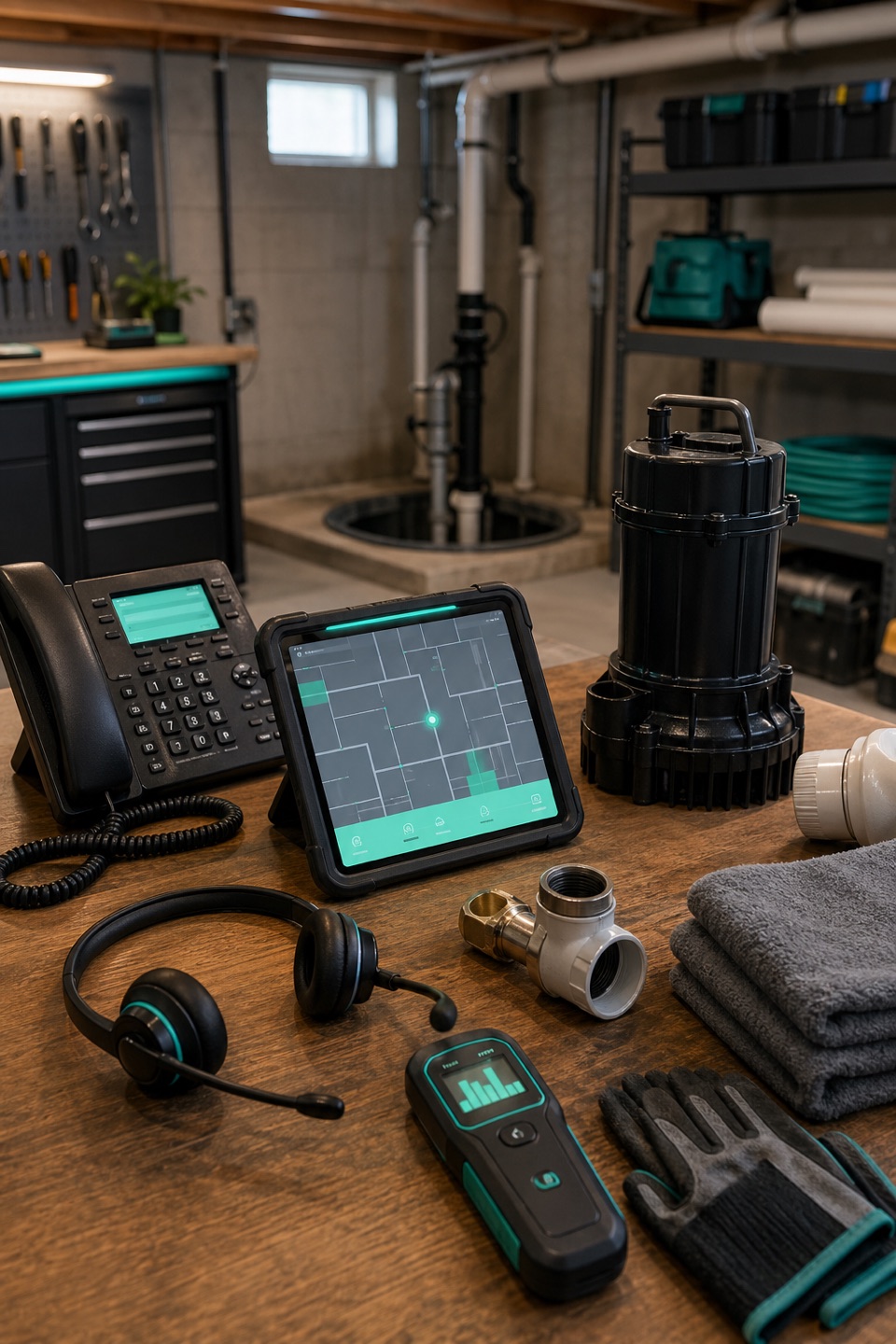
Basement flood callers are not routine repair shoppers
A caller with standing water, soaked carpet, a failed pump, a burst pipe, storm seepage, a floor drain backup, or wet finished space is already worried about time, damage, and whether the water is getting worse.
The right first answer lowers panic, captures the facts a restoration or plumbing team needs, avoids unsafe promises, and moves the caller into a believable dispatch, callback, mitigation, plumber, property manager, or staff review path.
- Where is the water coming from, and is it still entering?
- How deep is the water, and which rooms or materials are affected?
- Were power, odor, sewage, outside water, photos, access, or tenant pressure mentioned?
- Does the call need mitigation, plumbing, property manager, insurance documentation, or staff review?
Why the first answer changes conversion
Water loss buyers keep searching when the first company cannot give them confidence. During storms, freezes, heavy rain, and after hours, that behavior gets sharper because local providers can be busy at the same time.
An I&O AI call plan creates leverage by capturing the caller's exact situation before a human callback. It does not replace dispatch judgment. It makes the next human response faster, more specific, and more believable.
Treat the call like a dispatch board, not a voicemail
A useful basement flood call plan should make the next person smarter in under a minute. The caller should not have to repeat source, water depth, active flow, photos, access, tenant status, or power concerns after already explaining the emergency.
That is also the conversion moment. When the caller hears a prepared intake path, the company sounds like it can handle extraction, drying, plumber coordination, property manager updates, and insurance documentation without improvising.
- Separate pump failure, burst pipe, sewer backup, storm seepage, appliance leak, and unknown-source calls
- Capture whether water is still entering, where it is spreading, and what materials are wet
- Flag photos, access, tenant or owner pressure, after-hours timing, and insurance documentation needs
- Keep crew dispatch, safety, contamination, coverage, scope, and pricing decisions with staff
Build the ROI model around urgent basement water intent
Do not start with total phone volume. Start with basement flood, standing water, water intrusion, pump failure, burst pipe, drain backup, sewage concern, storm seepage, and after hours mitigation calls. Those are the moments where a slow answer sends the caller to the next available company.
A practical planning model uses monthly urgent calls, dispatchable intent, a conservative lift from immediate answering, and average urgent job value. The example on this page uses 190 monthly calls, 54 percent intent, a 25 percent conversion lift, and $1,250 average value.
- Calls per month: basement flood, water intrusion, standing water, and urgent mitigation demand
- Intent rate: callers likely to book extraction, drying, inspection, plumber handoff, or emergency review
- Lift: recovered next steps from immediate answer and better intake
- Average value: extraction, drying, first mitigation, plumber coordination, and related restoration work
Basement flood economics make speed matter
HomeGuide reports that basement flooding repair often ranges from $2,000 to $8,000 for a small to medium sized basement, with many homeowners spending around $5,000. It also notes that water depth, basement finish level, response time, water category, drying, sanitation, and repair scope all influence cost.
Angi's 2026 water damage restoration guide gives another planning lens: average water damage restoration cost of $3,863, with a normal range of $1,383 to $6,381 and larger outliers depending on source and extent. Those figures are not a guaranteed ticket for every caller. They give operators a practical starting point for modeling extraction, drying, mitigation, repair coordination, and property manager account value before local pricing and capacity are applied.
The best call plan separates source control from drying demand
Basement water calls can start as plumbing, sump pump, storm seepage, sewer backup, appliance leak, roof runoff, foundation seepage, or property manager pressure. The caller may need a plumber first, a mitigation crew first, or a staff callback that decides how the two fit together.
That is why the first answer should collect source-control status instead of pretending every water-loss call is the same. If the source is still active, staff need to know. If the source is stopped but materials are wet, drying, documentation, access, and equipment decisions move to the front.
- Is water still entering or has the source been stopped?
- Is there standing water, wet carpet, wet drywall, or water below finished space?
- Is a plumber, roofer, property manager, insurer, or tenant already involved?
- What photos, access notes, power concerns, odor, or deadline pressure came up?
Insurance and documentation context is part of the call
Triple-I reports that water damage and freezing were the second-largest homeowners claim category by frequency in its 2019-2023 data, and about one in 67 insured homes has a property damage claim caused by water damage or freezing each year.
The phone path should not answer coverage questions casually. It should capture the caller's reported source, timing, photos, affected materials, and whether insurance documentation is part of the next step.
Mold and safety language needs guardrails
CDC backed flood cleanup guidance says that if a home was flooded and could not be dried within 24 to 48 hours, mold growth should be assumed. EPA flood cleanup guidance also warns that wet materials can support mold growth quickly.
That supports fast intake, not improvised advice. The AI should not decide whether a room is safe, whether electricity is dangerous, whether water is contaminated, whether mold is present, or how a restoration job should be scoped.
Professional restoration depends on details
The ANSI/IICRC S500 water damage restoration standard covers procedures and precautions for restoration in residential, commercial, and institutional buildings. It reinforces why water category, affected materials, drying context, documentation, and risk management matter before the crew response is shaped.
A phone answer does not perform that professional evaluation. Its value is capturing the details that help qualified staff start the evaluation faster and with fewer repeat explanations.
Answer-ready basement flood questions
What should a basement flood AI ask first? It should identify whether water is still entering, the reported source, approximate depth, affected rooms, power or odor concerns, photo status, caller role, access, and timing pressure. It should then send staff-only decisions forward with context.
What should it avoid? It should avoid declaring the water category, diagnosing mold, telling the caller an area is safe, promising insurance coverage, quoting final scope, or guaranteeing crew arrival. The strongest call path creates a clean revenue path while protecting professional judgment.
What to capture before dispatch calls back
A useful basement flood summary should make the callback materially better. The dispatcher, owner, or lead technician should know whether water is still entering, the likely source, the depth, the affected area, whether photos exist, whether access is clear, and whether power, odor, sewage, or tenant pressure came up.
That is the difference between a callback that starts over and a callback that sounds like the company is already working the job.
- Water source, depth, affected rooms, active water, odor, sewage clues, power context, and photo status
- Homeowner, tenant, owner, property manager, business, or neighbor role
- Basement access, gate codes, pets, occupancy, parking, key instructions, and preferred callback number
- After hours, storm surge, open by morning, resident update, insurance documentation, or owner deadline pressure
Follow up should use the exact water loss pain
For buyer context, this guide should connect to water damage restoration, sump pump failure, burst pipe drying, ceiling leak, active roof leak, roof tarp, sewer backup, crawlspace flooding, mold remediation, and property management pages. Follow up should lead with the exact pain: basement water calls, standing water, drying urgency, after hours pressure, and lost mitigation jobs.
The guide link works better than a direct commercial link because it reads like an operating resource: how to capture urgent context, protect crew time, avoid unsafe promises, and create a credible next step before the caller keeps searching.